Chapter 4 · The Way Forward
Understanding Multidistrict Litigation
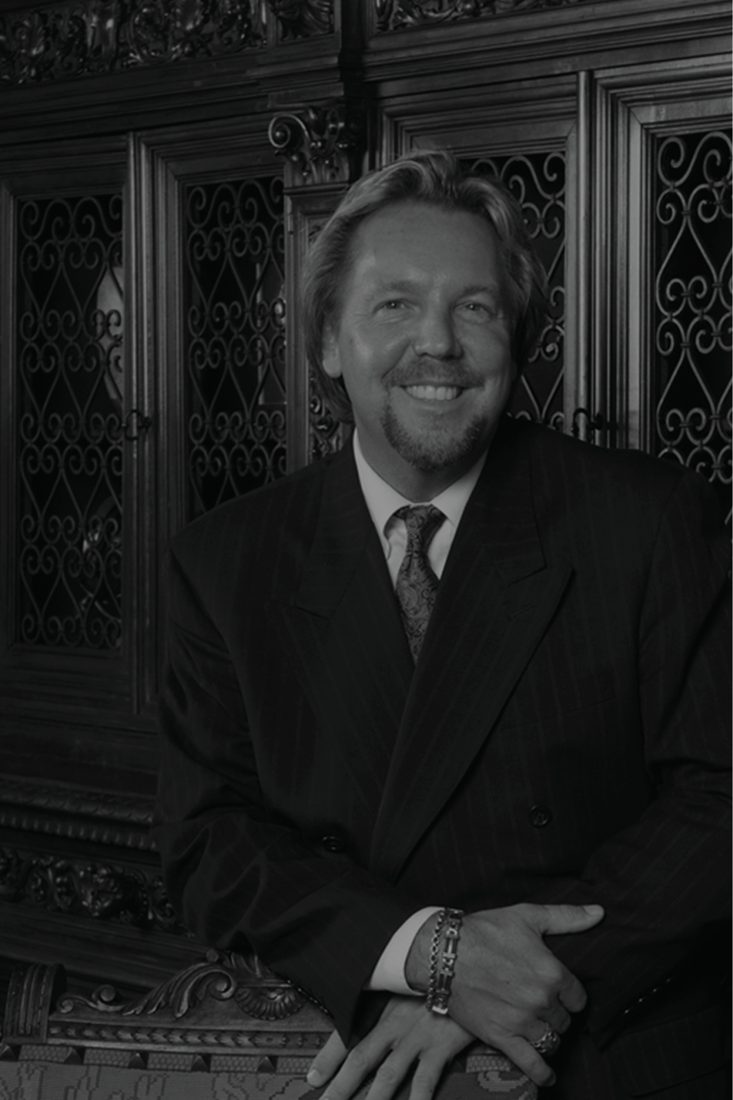
MDLs have eliminated redundancies, while reducing overall cost-per-case rates as well as the transactional costs of working up cases for plaintiff-side lawyers.— Brent Coon
I could tell Brent Coon was my kind of guy—and my kind of lawyer—the moment I met him, back in December of 2010. Our initial meeting came as the result of the BP oil spill in the Gulf of Mexico. At the time, I was busy trying to connect oil spill victims, up and down the coast, through a personal website I’d created. There was no such thing as X Social Media at the time, but Brent graciously agreed to a lunchtime chat because he’d already gone to battle with BP over a Texas City explosion.
Over an impressive spread of beer and crayfish, he gave me a thumbnail sketch of his background. Brent is as Texas as Texas gets. He’s an eighth-generation Texan whose family can trace its roots back to a time when the land was under Mexican control. For generations, his family tilled the soil as ranchers and farmers until his father joined the military. As a result, young Brent spent his early years as an army brat before his family decided to head back home to a small town in East Texas.
I think he developed a keen understanding of the struggles experienced by hardworking blue-collar folks because he lived that life for many years. He likes to say his zigzagging career trajectory is either one of two things: a classic American Horatio Alger story or a riff on the 1979 Steve Martin “sharecropper-makes-good” movie, The Jerk.
Growing up where Brent did, there was no expectation that he’d ever go to college, even though he showed incredible aptitude in school and received college scholarship opportunities. Instead, young Brent grew his hair out, strummed the nights away in a rock band, and opened up, with the help of a buddy, a relatively successful construction company that built beach houses and renovated and flipped old homes.
Then tragedy came calling with the passing of his mother. Brent’s mom always wanted him to be a lawyer, so he decided to honor her wishes by pursuing a law degree. He got a job driving a bus to and from New Orleans every night—fifty hours a week at times—to put himself through college. He wound up earning his undergrad degree in two years, then went off to the University of Houston Law School.
He went straight to work at a personal injury law firm in the Beaumont area, where he met a local legal legend, Walter Umphrey, and was given free rein to take on as many cases, especially in the refining sector, as he could handle.
In time, he’d turned down a big paycheck job from another firm, the regional utility company, to earn significantly less working as a plaintiff-side attorney because he identified with overlooked working-class laborers who gave their all from nine-to-five but were often rewarded for their efforts with life-threatening working conditions.
Within a few years, he was heading up a number of big cases and trying them on his own. He’s never looked back. His CV is beyond impressive, having won numerous verdicts and hefty settlements against everyone from petrochemical plants and trucking companies to asbestos manufacturers. He obtained his first million-dollar verdict as a third-year lawyer going up against a well-known defense counsel and state senator. Shortly thereafter, he was part of a small legal team that spent a year in federal court obtaining a billion-dollar verdict in a two-thousandclaimant asbestos trial. Decades later, he won dozens of million- and multimillion-dollar verdicts in courtrooms all across America. He remains a trial lawyer’s trial lawyer—a plain-speaking, extremely knowledgeable force for good who’s gotten to a point in his career where he can take on cases he really believes in. I could think of no one better suited to provide an overview of the MDL process than Brent Coon. —JAcoB MALHerBe to FuLLY understAnd MdLs (multidistrict litigations), a short, pithy history lesson is in order, which I promise will be neither as long nor as painful as anything you had to nap through in high school.
It’s important to remember that multidistrict litigation—in which a group of similar individual lawsuits are gathered together, either at the federal or state level, and transferred to a single location before a single judge—is a relatively new legal process.
The first MDL in the history of the US judiciary occurred in 1990 on a mass tort involving asbestos cases. If I had the time to rifle through old files and calendars, I could probably pinpoint the exact date—or maybe even the time of day—it was birthed into existence because I had a front-row seat for the decision.
I was one of the lawyers—as green as a stick of Wrigley’s chewing gum—who was working up some of those cases. One afternoon, we were told that our whole docket of asbestos cases—every last one of them—was going to be rounded up and sent to a judge in Philadelphia.
Prior to that moment, mass tort plaintiff lawyers tried each of their cases individually. Personally, I didn’t mind the extra work, as I felt I was able to present, for each and every one of my clients, the best case possible based on their individual circumstances. But truth be told, the court system didn’t have enough bandwidth to process all those individual cases.
Think of the paperwork needed to process hundreds—and sometimes tens of thousands—of cases. Given the fact that this was before electronic filing options were available, court clerks were not only overwhelmed but they faced the prospect of death by a thousand paper cuts. Whole storage rooms were stacked—from wainscoting to wainscoting, floor to fluorescent lights—with paperwork. That was particularly true for my asbestos cases, which involved studying a complex mix of scientific data, manufacturing documents, purchase invoices, medical records, and corporate histories.
The court system wanted to rethink its processes and create some sort of relief. So our particular judge down in Beaumont, Texas, gathered all the cases filed in the Eastern District over a several-year period (two thousand of them in all) and threw them into one giant pot. With the help of the judge and several magistrates, all of those cases were deposed, and over 150 of them were then tried to verdicts as “test cases” to extrapolate average verdicts for the rest of the cases.
It proved to be a very novel approach to a nagging logistical problem. That process resulted in a massive verdict but also a lengthy appeal. In the interim, the federal judiciary stepped in and established the first major multidistrict litigation order to consolidate all asbestos cases filed across the country into federal court for uniform discovery before one judge.
These were different times. Prior to the 1970s, there was no such thing as a “discovery rule.” Victims were required to file claims within two years of exposure. The notion of latent disease (i.e., that exposure to a product or pharmaceutical could cause an injury that develops or worsens over time) wasn’t in our legal lexicons.
That all changed with the first asbestos cases, which coincidentally were tried in the same federal court in Beaumont as our massive consolidations in the late 1980s. The plaintiffs were asbestos workers who—after decades of exposure to asbestos—manifested asbestos lung injuries. The court grappled with this “latent injury” concept and began carving out exceptions to the traditional two-year statute of limitations.
Moreover, the court accepted arguments that manufacturers were not shielded by ignorance but instead were held to the “duty of an expert” with respect to products they placed in the stream of commerce. These early cases opened the gates for the development of the 402A product liability law and toxic litigation for decades to come and established the foundations for the viability of pharmaceutical claims and other latent injury cases that stand today.
So we witnessed, firsthand, both of those major legal advances— massive consolidations of individual claims (a precursor to MDLs) and latent disease theory—working in little old Beaumont, Texas. As a result, the federal court co-opted this newfangled consolidation system to create what we now call multidistrict litigation.
To be perfectly honest, the advent of MDLs proved disadvantageous to many trial lawyers like me. First, there was the issue of travel. If we were working a bunch of cases in our own backyard, we weren’t particularly excited about having to fly across the country to New York or Los Angeles to try them.
More importantly, we knew it was easier to receive a trial setting when you had a manageable group of cases—say ten or fifteen asbestos cases—and could present them in front of a jury rather than trying to wrangle hundreds of them together into one group.
Which leads me to one of my major complaints about MDLs. When it comes to MDLs, I feel there’s less pressure on defendants to settle than in individual trials. The defense’s thought process can usually be distilled down to something like this: Why in the world would we ever settle now, with absolutely no threat of a jury verdict looming, when we can wait and see which way the wind is blowing and then settle later, should the heat ratchet up? Likewise, when it comes to the valuation of claims, why pay what a typical jury might award when very few of them will ever get to a jury due to the sheer volume of cases?
I don’t think it would be controversial to say that mass tort lawyers had far more control over the process prior to the advent of
MDLs. Whereas successful mass torts are now decided, to a much larger degree, on who scores the plum appointments on plaintiff steering committees (PSCs) and how effectively consensus can be built among multiple law firms.
On the plus side, MDLs have eliminated redundancies, while reducing overall cost-per-case rates as well as the transactional costs of working up cases for plaintiff-side lawyers. This is because we’re all sharing the time required and resources needed to find liability experts, handle document reviews, and perform trial presentations in an MDL. Thus, the economies of scale tend to work in favor of claimants.
That being said, within MDLs, we often see more forced aggregate settlements from defendants (i.e., large corporates are prepared to pay X amount of dollars to settle a block of cases), which dilutes the final settlement amounts awarded to victims. I firmly believe that the negotiated values of these cases are now significantly lower than what we could obtain for our clients if we tried many of these cases individually.
The Difference between MDLs and Civil Actions It’s important for lawyers who are new to the mass tort arena to understand the difference between MDLs and other multiplaintiff suits. An MDL is not a trial consolidation nor is it a class action lawsuit.
The differences between each of these distinct types of lawsuits are relevant because so many people—including lawyers—get them confused. A trial consolidation involves the act of bundling together cases that are similar in nature and setting them for trial together. This was a common practice with asbestos and other types of cases where a court would set ten or twenty individual claims for trial at the same time and let the jury determine the fate of each. Think of these types of consolidations as an informal and scaled down MDL. A consolidation can occur at any time, including near the end of a trial. These are also typical of a group of similar claims filed by one firm in one court, not something imposed on many cases filed in other courts that are all transferred to a single court for disposition.
Case in point: A refinery blew up in my own backyard, near Galveston, Texas, in 2005. A lot of people signed on with different lawyers. And we found ourselves with a bunch of different judges.
All these judges pretty much said the same thing. They said, “We don’t all need to hear these issues. Why don’t we just give them to one judge (in this case Judge Susan Criss) and let her handle them all?” So all the judges agreed to hand over their cases to Judge Criss, in part because they all originated in the same general area.
In essence, it was a consolidation without the need for a formal order to come from a judicial panel upstairs. As an added bonus, this could be accommodated when all the cases were still pending in the same jurisdiction.
Let’s say, for example, that you have one hundred cases of one type—say one hundred asbestos cases—and you file them all in one petition. Now you have one case with a hundred different clients, all in one court. That’s a consolidation. Then the court can try them together or break them out. You can take them one at a time, five at a time, or one hundred at a time. An MDL is different because it’s a formalized and mandated process with a set of distinctive rules.
Now, let’s consider class actions, a group lawsuit in which you usually have just a few plaintiffs in the lawsuit. Instead of everybody shunting individual cases into an MDL, a few exemplar plaintiffs file and request class status. In this case, one person or a small group of people steps forward and acts as a representative/representatives for a much-larger group of people spread across the general population. The parameters for what works for MDL cases versus what works for class actions depends on a number of factors, including the similarity of injuries and damages, or lack thereof.
In a class action case, you might see a small handful of people step forward and claim they were exposed to a dangerous product. This would suggest that the “representative” claimants are all situated the same as everyone else who has a claim but has yet to file it.
The threshold for most of these cases requires uniformity as measured by the typicality of claims, commonality of claims, and numerosity of claims. The more that the claims of all the other putative claimants are similar to each other—in terms of injuries and damages, typicality and commonality tests, and the more there are of the total potential individual cases, the numerosity test—the more likely a court is to certify the case as a class action.
You see class actions a lot when it comes to product recall cases, say the Volkswagen defective emissions cases or the defective Ford gas tank cases. A few people raise their hands and say, “I’ve got a claim here. Ford sold a million vehicles just like mine. And they all have the same defect and the same damages, which means that Ford needs to pay everyone the cost associated with replacing the defective product.” Let’s say the final price tag is $3,000 per car. That’s going to generate the same determined value for every claim. They’re all identical for everyone who owns that particular vehicle. Same problem. Same damages. Same remedy or remuneration.
A judge will say, “I’ll let a few people go forward with the case, and I’ll certify it as a class, and whatever happens will result in a settlement proposal for everybody who bought X vehicle. They’ll all receive the same settlement, even though some car owners haven’t formally put their respective names on the list and haven’t yet filed a claim.” (In fact, in these types of cases, some eligible claimants don’t even participate and seek their available recovery.)
Once sufficient discovery has occurred—to the point where both sides think they know the lay of the land, the liability factors, the damage factors, and the number of potential claimants—they usually negotiate a proposed settlement. Often this is a standard amount per claim, but sometimes it may involve other factors that allow for certain categories of claimants to maintain higher levels of compensation.
Once those terms are agreed to by the class action counsel attorneys and defense counsels, it is up to the court to accept them. Assuming the court is satisfied with those terms, the judge will say, “I’m approving X settlement. I think it’s fair, which puts everyone on notice as to what’s coming.”
As a result, the courts don’t see a million little cases pop up all over the country based on the same complaint. Class actions can be a more efficient way for a company to get rid of their exposures because they can deal with a cluster of cases at one time.
Now that we’ve separated out mass torts from consolidations and class actions, let’s circle back around to the MDLs. It’s important to note that we will be focusing the lion’s share of this chapter on federal MDLs.
State MDLs operate according to the same general principles as federal MDLs. It’s possible for different state MDLs to run concurrently in different parts of the country. And it’s possible for small pockets of state MDLs to continue progressing—even though a federal MDL has been established—if the federal courts don’t have jurisdiction to accept the cases.
This has led to the development of a kind of cottage industry on the part of some defendants to attempt to capture them through unilateral transfers of state-filed cases to the federal court system. In doing so, they hope to effectuate a transfer of those state court cases into the federal MDL, thus controlling the process more tightly and reducing the risk of concurrent state court trial settings.
Why would a plaintiff-side lawyer pursue a state MDL rather than go the federal route? In most cases, the answer comes down to just one word: control. It can be advantageous for some lawyers to keep things closer to home and avoid the fight that comes with wrestling with other national law firms for a seat on key MDL committees and panels. In this way, a mass tort trial lawyer may be able to try a small number of cases and deliver their clients settlements more quickly.
The problem, however, is that you can’t file a cause of action against a big national corporation in state court just because you’d rather try it close to home. First of all, not all states have MDLs. And second, you have to ensure a defendant is operating in that state in order to “bust diversity.” If the defendant isn’t in a state, they can tell the judge, “Even though our product may have been used over there, we’re not headquartered in that state. It’s beyond the court’s jurisdiction.” In that case, the judge can move your bundle of cases to federal court anyway, where they’re vacuumed up and diverted right back into the federal MDL. The principal place of business criteria for the ability to keep a defendant in a state court usually requires that they have a primary base of operations in that state.
The Essential Architecture of Federal MDLs It’s best to think of the MDL process as a kind of algorithm, comprised of a series of discrete junctions: If path A is taken, X may result. If it progresses down path B, expect Y to happen. From afar, an MDL looks like it’s composed of complicated circuitry, but if you break it down— junction by junction, switch by switch—it’s much easier to understand.
Think about it this way: When the court system sees a significant number of the same kinds of cases being filed, it begins to sweat a little bit. The system begins to wonder how it’s going to try all of these cases in an efficient manner. So it red flags the cases for consideration by a Judicial Panel on Multidistrict Litigation (or JPML), which is comprised of a number of federal jurists.
This leads to a cattle call hearing, where the merits of consolidation of certain types of cases new to the system are debated. Plaintiff and defense lawyers either support or oppose the prospect of an MDL, while discussing where the hypothetical MDL should be assigned. (This decision is often based on where the cases are coming from or which judge may be best suited to oversee the process.) Often a large number of cases start popping up in the legal system simultaneously due to a “revelation,” which raises the possibility that a product has major side effects or can cause certain injuries.
FDA recalls of pharmaceutical products can trigger these findings. Whistleblower cases that reveal internal corporate wrongdoing, especially those affecting consumers, can trigger a tidal wave of cases as well.
Most of these cases involve products that were not known to produce adverse side effects or spring to life when new findings show that the producer in question knew about the risks but did not disclose them. Suddenly, these findings can crack cases wide open. Perhaps a whistleblower rats the company out, or outside scientific studies start highlighting causal relationships. Regardless of how the word gets out, once it does any number of eager law firms are bound to start pursuing similar clients.
The JPML typically convenes for a day or two—on a rotating geographic schedule—several times a year at various venues across the country. The cases deemed potential MDL candidates are added to the agenda, and those with pending cases are notified.
Other firms without pending cases may also have a say at the hearings. While rather informal affairs, the judicial panel generally allows most of the putative stakeholders to say a few words in support of or in opposition to an MDL and make recommendations as to where the MDL should be arranged, all the way down to the specific judge that should oversee it.
Even the JPML jurists become creatures of habit, and we routinely see many of these cases go to familiar jurisdictions and familiar federal district court judges who have handled them in the past. This, too, generates a great deal of lobbying, as law firms who’ve forged prior relationships with those courts are often given early leadership positions by a selected court, which then puts them in the catbird seat for plaintiff steering committee (PSC) roles.
This not only elevates their standing in the litigation, which helps them procure additional business, but it also increases the chances they will make a claim for a “common benefit fee” that will be taken off the top of any future settlement of the cases in the MDL.
If for some reason the prospect of an MDL is rejected, everybody goes their separate ways and slugs it out back home—although the courts always reserve the right to revisit the issue again later, based upon subsequent developments and reconsiderations.
Jockeying for Position on the Plaintiff Steering Committee (PSC) Should cases proceed to an MDL, a first status conference is held, and all the plaintiff-side trial lawyers begin jockeying for leadership roles, especially when it comes to something we call a PSC (plaintiff steering committee). The court allows members of the PSC to oversee many of the key decisions and responsibilities regarding the mass tort, including who will serve on various subcommittees. If you don’t win a seat at the PSC table or aren’t assigned a leadership role on a committee within the PSC, you’re going to have less say over the legal strategies employed, the final settlement decisions, as well as overall control over the cases within the MDL.
It’s unlikely that lawyers new to the field will be chosen to be part of the PSC, unless they happen to have a personal relationship with the judge. You have to earn your stripes to gain entry into a PSC, so start building relationships and burnishing your reputation as soon as possible. Ultimately, you’re going to want to prove that you and your firm have the ability—and resources—to handle complex litigations.
You have to show, in some way, that you can push the train down the tracks and be a team player as the process chugs along. In recent years, the courts have been pressured to expand the universe of “typical players” to include other firms and add more diversity to the PSC, so try cutting your teeth working for PSC leadership on a case in a committee and build a résumé for future higher-level roles.
That being said, the court will often appoint an interim liaison, someone the judge thinks is suitable for the task, typically someone the judge knows personally. Liaisons are tasked with getting the MDL rolling behind the scenes. After the judicial panel has determined that a group of cases should be consolidated, the judge sets a status conference and chooses the all-important liaison.
This decision leads to a tidal wave of résumés from lawyers, which outline who they are and why they think they should be a part of the PSC. Some judges pore over these applications with care and transparency. Others don’t want to be bothered with the paperwork and just tell their liaison, “Go pick some people you want to work with, but make sure that I don’t look bad by picking unworthy people.”
Some judges will leave it at that, and some will look at the liaison’s proposed list and say, “I’m really tired of seeing these same people on every PSC. Go bring in some other firms that haven’t been here before, or at least get some different lawyers.”
While it sometimes looks like the fix is in when it comes to these selections, the court has to use past experience as a reasonable barometer. Did that firm and their lawyer(s) fulfill financial obligations to the committee in a timely manner? Did they do a good job fulfilling their duties in prior MDLs?
A court may be reticent to invite new parties into the fold without seeing a track record they are comfortable with. Why fix it if it ain’t broken? Nonetheless, that school of thought has produced a significant amount of what some would call “backroom dealings” with other stakeholder firms that may have the court’s ear. The prospect of earning healthy common benefit fees may tempt some law firms to get involved in cases or seek a position on a steering committee even if they aren’t familiar with the litigation.
Either way, the liaison is a critical gatekeeper who may be open to being wined and dined for a seat at the table. This doesn’t mean that a newcomer’s skill set, history, or experience won’t be taken into account, but know that it’s not unusual for some backroom politics to be involved.
Most of the time, experienced plaintiff-side law firms score positions on the PSC, which ultimately benefits victims, as it ensures very good lawyers are spearheading the fight and pouring ideas, time, and money into the process. But sometimes, greed can rear its ugly head because the vast majority of MDLs have what is known as a CBF, or common benefit fund.
In this case, the court says, “We’re going to list all of the lawyers who handled this litigation. And we’re going to take a slice of every contingency settlement from every client and every law firm that participated in the MDL and reallocate those dollars to the CBF.”
Which is why, as I’ve noted previously, a lawyer may be working up a case and file it somewhere else and then suddenly find his or her case has been snatched up by what we call a conditional transfer order (CTO) and added to the federal MDL. When that happens, there’s very little anyone can do about it.
It stands to reason that if you’re on the PSC and you’re doing a lot of the work—not to mention helping pay for experts and handling discovery—that you should be compensated equitably. The problem I’ve found, however, is that members of the PSC don’t have to properly document, in any great detail, the work that they do in the MDL nor justify the time they spent working on the case.
A number of firms have been known to lobby for PSC positions and then go out and hire contract lawyers to work through piles of documentation. These hires track their time for a loadstar award of fees down the road, which is often a multiple of what the PSC firm contract lawyers are paid. In essence, these lawyers have created something of a temporary hiring agency.
Granted, risks are incumbent to all of this, regardless of any altruism, as some MDLs don’t fare well. Some have resulted in determinations that there is insufficient merit to the core arguments on liability or damages, and the entire caseload is dismissed. Sometimes, the money and efforts of lawyers operating on the contingency of recovering on their own cases as well as a piece of the other firms not on the PSC are flushed down the proverbial toilet. This can run into millions of dollars, so high-level participation in MDLs is not for the weak of heart or stomach.
I think it’s best for new lawyers entering our field to be aware of this essential fact. Under this system, you may wind up with lawyers on the PSC who either have little stake in your cases or lack a sound understanding of the history of litigation within that industry. Your own desire to participate needs to be balanced with an understanding of how much time and money you could lose and never recover.
What I’d personally like to see change, as a seasoned trial lawyer, is simply this: Unless a plaintiff-side lawyer has a bunch of cases and they’re willing to do this for free for the benefit of their clients, they shouldn’t volunteer to be on the steering committee. Hopefully, new blood entering the field will rise up and enact this long-overdue change.
Choosing a Location for an MDL Assignment and placement issues are overseen by the JPML, the Judicial Panel on Multidistrict Litigation, a rotating system of federal jurors who listen to lawyers on both sides make recommendations as to where the case should go. Naturally, every lawyer wants the cases to be shipped to their own backyard or given to a judge they’ve worked well with in the past.
The goal of any MDL is to move cases as efficiently through the judicial system as possible. Which is why cases tend to be diverted to federal courts where similar cases have already been handled or given to a judge who’s already up to speed on the rough outline of the tort. But in some instances, cases are sent to a given courtroom simply because it happens to have the capacity to take on the additional caseload.
Two recurring questions tend to be asked most often during these negotiations. Number one: Is the proposed courtroom in a city that lawyers across the nation can get into and out of with relative ease? And number two: Is there a particular area of the country where most of the cases seem to originate from?
Take the BP oil spill mass tort, for example. That MDL was established in New Orleans because the vast majority of claimants lived up and down the Gulf Coast. So the court chose a location that was centrally located—a bulls-eye within the larger radius—which proved convenient for both the claimants and counsel. Not to mention the fact that most of the defendants involved were primarily operating in the Gulf Coast region.
Where the Action Is: Discovery, Master Complaints, and Experts Once a location is selected and PSC membership issues have been sorted out, the process continues along two parallel tracks: one track for the attorneys and another for the judge.
Let’s start with the judge’s responsibilities, which are a little different than you’d see in your typical court proceeding. The court keeps tabs on all new cases (i.e., those that are similar to those established in the MDL) that flow into the system. No one wants an influx of tens of thousands of cases suddenly creating a traffic jam in the courts, so the judge creates a kind of holding pen for all these new cases by crafting something called a master complaint.
Think of the master complaint as a template document that has all the various claims that could theoretically be in the litigation in one omnibus pleading. Once a master complaint is created, every new case needs to be filed in one of two ways. It can be filed in another forum and transferred to the MDL court (usually by a device called a standing conditional transfer order or CTO), or it can be filed directly into the MDL by way of what is called a “short-form joinder” and “attached” to the master complaint. This wrinkle simplifies what is required for newly discovered victims to become claimants. All the victim has to do is sign the short-form joinder, and the claim is linked to the master complaint.
PSC members may ask for additional background information, including medical records, for each victim in order to assess the quality of these new cases. This needs to be done because the value of individual cases can be quite different from one another. A toxic property product may cause a variety of injuries, from mild to serious to potentially fatal. Some cases involve not only potential injury cases but other economic damages. This may entail forensic accounting or appraisal work.
For instance, in an asbestos case, there are different classifications of victims. Perhaps your client is someone we would call an exposure-only victim, meaning they’ve been exposed to asbestos and are afraid of developing cancer in the future. That client is classified differently than someone who already has seen asbestos fibers show up on their lung X-rays. On the other hand, your client may have been exposed to asbestos and developed lung cancer but also happens to be a long-standing smoker, which might have contributed to his or her cancer. These questions have to be carefully analyzed and addressed to determine the value of each individual case.
While asbestos is a classic example, there are a tremendous variety of “connect the dots” issues within MDLs, particularly those involving pharmaceuticals and chemicals. Not only is there a wide array of known injuries that affect potential value but there are a variety of causation issues that are being debated within the scientific community. Some diseases may be clearly linked to the use of or some exposure to a given product, while others are less clear-cut. Those levels of certainty impact values as well.
Beyond meeting these responsibilities, there is very little required for the individual claimants to do—not to mention the acquisitions lawyers who signed them and handed them over to the trial lawyer—beyond getting the initial information to make a threshold case to file. Likewise, even for tier-one firms not assigned any major functions in the MDL by the PSC, it is a waiting game. The PSC is charged with the heavy lifting of proving liability issues and causative issues and rarely invites the uninitiated or those they are not comfortable with to the table.
Meanwhile, those of us who are tier-one trial attorneys are responsible for keeping track of the case. We have to stay in contact with claimants and keep them informed as to developments, handle any motions and discovery actions that may be filed on individual cases during the process, and be prepared to step in to actually try cases, if need be, even if we’re not involved heavily with the PSC.
It’s our responsibility to prove that a victim’s injuries were caused in some way, shape, or form by the defendant or the defendant’s products. The handling firms working on the litigation are typically tasked with a number of individual case discovery issues and proof issues, even before there are any broad-scale settlement talks. Defendants often try to “whittle down” the number of cases in the MDL by exercising innumerable threshold liability and damage hurdles that each claimant must be able to clear.
Discovery is, of course, a very important part of the process. We have to send out document requests and questionnaires for victims to answer, just as you would for any other case, albeit in a different way than your typical personal injury case involving a car wreck.
Collaboration is critical within a successful MDL. One of the lawyers in the PSC might split up dispositions: I’ll take this one over here, and you do that one over there. We go through the process of taking witness statements and depositions. Then, we find experts who will come in and connect the dots, using epidemiological or toxicology evidence, as to why Product X is harmful and why it likely caused Y injury or Z illness.
The defense does much of the same kind of work on their end by performing their own research and hiring their own experts. Then we slug it out in your typical steel-caged legal battle of experts. Who’s right? Who’s wrong? Whose argument and explanation of the facts are more convincing?
At the close of discovery, the judge does one of two things. He or she either (A) declares that they are sending all the cases back home to state courts to be tried on an individual bases or (B) establishes a set of bellwether trials so that both sides can test the waters and determine how juries will decide a subset of cases within the MDL.
If I had to give a ratio as to how many MDLs head to bellwethers versus how many go back to individual cases, I’d put it at 99:1 in favor of bellwethers. Federal courts very rarely send back cases for individual dispositions once common work has been performed within the MDL, for all the reasons previously mentioned.
Once the bellwether process has begun, the die has been cast. All of your cases—whether it’s twenty or twenty thousand—are going to be vetted for the bellwether and are unlikely to ever go to trial back where you originally filed it. You’re in the federal system now—and that’s likely where you’re going to stay.
The Importance of Daubert Hearings In most MDLs, lawyers will eventually encounter a Daubert hearing, in which the court determines whether any or all of the alleged injuries of the various claimants could have been caused by exposure to or use of the defendant’s product(s). While this is a rather subjective test, the court is the initial gatekeeper of what evidence the parties can show the jury. Decades ago, this expert opinion debate was truly left to a “battle of the experts” for each side. The courts let both sides put up their most qualified experts and say whatever they felt like saying, and the jury was left to determine which ones were probably right and which ones were probably wrong.
Anyone with any knowledge of the subject matter greater than a typical juror might possess was allowed to opine on issues—typically without the need for any empirical data, prior case studies, or a proven medical foundation. Over time, the courts have taken a much more active role in predetermining whether an expert is sufficiently “qualified” to render an opinion and whether those opinions were properly grounded in previously established facts that have been revealed in reputable studies.
Daubert v. Merrell Dow Pharmaceuticals was a case that went to the Supreme Court in the early 1990s that established what was required— at a minimum—for expert testimony to be allowed in federal court. Mainly, we’re talking about causation here. If you’re a personal injury lawyer and you have a client who breaks his leg in a car crash, you don’t need to call scientific experts to come in and validate that injury.
Your client simply comes forward and says, “I broke my leg. And here are the medical bills to prove it.” Presumptions are allowed. If someone slams into another driver’s car and breaks his or her leg, there’s evidence of a crash. You don’t need biomechanical experts to explain how a truck doing seventy miles per hour on a freeway can plow into a car and cause a compound fracture of a fibula.
Daubert comes into play during complex engineering or scientific cases. For example, if a pharmaceutical product was recalled and you have to prove that your client’s injury was the result of using a particular product, Daubert will emerge. To prove your case, you’ll likely need expert testimony. In the case of a victim who worked with asbestos and is suffering from lung cancer, you’re going to want to call a qualified doctor—perhaps, a respected oncologist—who will testify to the fact that their cancer was caused by asbestos rather than other factors. Not only will they have to be sufficiently qualified by vocation and experience but they need to be able to back up their opinions with other studies that support their conclusions.
Naturally, defense attorneys will counter testimony from plaintiff-side witnesses by arguing that just because they found causation doesn’t mean it’s necessarily true. The defense will scrutinize the data or studies that these experts are basing their conclusions on. Which is why the court started creating standards through Daubert. If you want to make the connection between injury A and defendant B, there has to be existing literature—trusted and competent research that’s been vetted by the medical community—to support the doctor’s theory. Thus, plaintiff lawyers have to work with doctors to ensure they can say, “I’ve read X piece of literature, which has informed my decision.”
This evidence gets scrutinized from every direction. Is it reasonable? Was it a large enough study to achieve a statistical extrapolation? Was it a published study? Do other studies support those conclusions? How strong was the causal relationship? Were there proper foundations for the background cohort? Was the cohort large enough to be statistically reliable? Were the results of the studies repeatable?
All of these highly technical issues of relative risk, confidence intervals, and other linguistics that were buried in the footnotes of the medical articles are now highly relevant.
Then, the defense will look at the numbers: Let’s say one hundred people were exposed to asbestos and twenty-five of them developed lung cancer. Does that number equate to twenty-five times more people who contracted the disease than your standard background population?
Not necessarily. People contract the same disease from other known sources, such as smoking. You have to start looking at all the other causative issues. You have to look at other studies and see if the cohorts or profiles of the test subjects are similar enough to your case. Dosing issues are relevant. Were they exposed one time or a thousand times? What is the relative impact of the dose/response? Was each time of exposure similar in length and similar in circumstances to those detailed in the studies?
If you’re a plaintiff lawyer and you can rebut the defense by tying all these strings together, the judge and jury will likely accept that your client’s injury was the result of exposure to a certain product.
While Daubert is rooted in how much established scientific evidence is currently available and who performed this research, their credentials as well as the underlying quality and integrity of the review process, even the level of proof required varies to some degree state by state. What is sufficient proof to meet a “Daubert test” for admissibility in one state may not be sufficient in another.
Various states set up different standards for the relative risk necessary. For many states, anything over a 1.1 to 1.0 may get you to a jury. For Texas as an example, it must be at least 2.0 to 1.0, or a full doubling of the risk, to even get to a jury.
This is where some of the real battles take place because the defense will call an expert who will counter those claims, perhaps by saying, “I don’t think that your scientific literature or your argument is very strong based on the scientific literature as I see it. Here is a set of different studies performed by different people, which fails to show the level of causation you are insinuating.”
All of these findings, arguments, and counterarguments are vital in determining whether an MDL will enter into the bellwether phase. If it’s agreed that the opinions of these experts have been sufficient enough to move the case to a jury, things proceed as normal. And in that moment, the judge becomes the de facto gatekeeper, determining who can testify and what the scope of that testimony might be.
That’s why Daubert hearings are so critical. They can have a devastating impact on the ability of plaintiff-side lawyers to proceed on the merits of their client’s case. Even if a company is liable for committing all kinds of heinous acts, if you are unable to present the right testimony and science to prove it, you’re out of luck.
It’s also important to note that every state’s Daubert interpretations are different. Even within the federal system, the threshold in your state and under the law for an expert to testify on scientific causation issues of epidemiology and toxicology varies significantly. Even though a federal MDL may be pending in a state with a low threshold, the court may well apply the law of the individual state that the claimant hails from as a subset of threshold tests for individual cases to survive.
Breaking Down a Bellwether Trial During bellwether trials, a small number of cases are selected from the hundreds or thousands that have already been filed and are tried before the court. Think of bellwethers as test cases to see if a company’s product or conduct was egregious enough to merit punitive damages in the eyes of a jury. Bellwether trials prevent gridlock that would normally occur if the court attempted to try thousands of cases at once.
You usually see bellwethers when juries have yet to rule on a particular set of cases or have yet to establish concrete historical value for the cases. When it comes to an established case—like asbestos— you don’t need bellwethers. For forty years, juries have been hearing asbestos cases. You can win or lose cases on individual issues, but juries decided a very long time ago that asbestos was bad for you and it could kill people. And we have the damage settlements to prove it.
Most of the time, bellwethers arise due to new findings or new litigation. Let’s say a medication has been on the market for some time, and then all of a sudden, the FDA issues a recall because doctors are seeing large clusters or an increase in the incidence of disease within a given population. And it looks like product X is causing disease Y.
No one knew of these side effects when the product first appeared on the market because it can take years before they manifest themselves. So the FDA looks at different doses and rates of injury as well as how long people have used the product. Upon concluding its investigation, the FDA might say, “Yeah, this product may pose a danger to users. We’re going to mandate that this product is taken off the market or mandate that a warning label be applied to ensure people understand the risks involved with taking it.”
If the pharmaceutical company didn’t choose to issue a warning in the past, it may have exposure to liability due to the lack of an adequate warning. It’s at that point that additional mass tort lawyers start rushing in, including acquisitions lawyers who hope to scoop up clients and hand them off to trial lawyers as the bellwether process heats up.
The process for selecting bellwether cases varies from judge to judge. Since the plaintiff has the burden of proof, some judges allow plaintiff-side lawyers to select their best cases and nominate them for bellwethers because the burden of proof is on us. But in most cases, judges want to look impartial, so they split things up. A judge might pick a few. The plaintiff-side might pick a few. And the defense will be allowed to choose some as well.
Plaintiffs will always pick the most legally sound and harrowing cases. The defense will pick the weakest. And the battle ensues. If the defense wins its bellwether trial case, the plaintiff-side lawyers might agree to dismiss similar cases and argue that those weak links were mere outliers. But if the plaintiff’s side wins their bellwethers, it forces the defense to reevaluate what it wants to do regarding settlement. Sometimes you can use bellwethers to prove that a company knew there was something wrong with their products years before any cases were fielded and the statute of limitations passed.
It’s all up to the individual judge in each case. Maybe the judge applies the law based on where victims lived at the time of injury, and it’s possible that those state laws are so unfavorable to plaintiffs that they can’t get past Daubert even though the federal court has allowed general causation to proceed. Maybe the expert in your case isn’t allowed to testify because your client is from Texas and Texas law applies to a Daubert standard, which prevents you from proceeding. It’s important to note that there are all kinds of trip wires you have to avoid in order to actually go to trial and try a bellwether.
If all goes well, you present your liability case to a jury. You present all the documents. Your client testifies about their injuries— what happened to them and why. And we, as plaintiff-side lawyers, try to prove that the product caused a certain problem.
The jury panel soaks everything in and, at the end of the trial, arrives at a verdict, which is either accepted or rejected by the judge. Now, the plaintiffs have one bellwether case settled but ten thousand that didn’t make it as a bellwether.
This is where the real horse-trading between lawyers begins. Defense attorneys might point to their bellwether victories and say, “Look, we only got hit for $1,000 on this weak case over here, so you guys on the plaintiffs’ side better settle most of these cases for pennies on the dollar.”
Then the plaintiffs will jump in and say, “Wait a minute, what about this $10 million verdict over here. Juries absolutely loathed your client in that particular bellwether, and that’s likely to happen over and over. You better pay up. We’re looking for an average of $100,000 per case.” Thus, the average verdicts for particular injuries and cases are often dependent on the effect of the bellwether trials.
In the rare case that the two sides can’t come to an agreement regarding settlement averages, the judge might say, “We’ve gone as far as we can here. We can’t seem to agree on an aggregate case settlement, so I’m going to let everyone go home and throw it back to the states to litigate them.”
That being said, nobody—the judge, the plaintiffs, nor the defense—has much motivation to see this happen. The judge sees it as his or her responsibility to ensure this huge haul of cases doesn’t bog down the courts and that future MDLs will come their way. The PSC doesn’t want to see negotiations collapse because it wants to maintain control over the big bundle of cases that they’ve been working on. And the defense certainly doesn’t want these cases being broken up again and exposed to jury trials—as that may lead to large individual verdicts across the country, as well as a spike in litigation costs that inevitably follows.
The only people who ultimately benefit from cases being sent back to states are the really good trial lawyers who know how to try these cases in state courts and have the ability to maximize the returns for their clients.
What You Need to Do to Be Successful in an MDL Trial lawyers hoping to enter the mass tort arena should remember this: You need to be a team player and maintain strong working relationships with your fellow plaintiff-side lawyers as well as opposing counsel. If you’re overtly combative, you’ll be shunned. You need to work in collaboration with other firms to reach a common goal, even if that end goal runs at slightly oblique angles from what you want. Lawyers who succeed in MDLs tend to be skilled at compartmentalizing goals and strategies and assessing what’s best for everyone involved in the MDL.
If you’re a trial lawyer, you also need to have the financial resources to be able to carry your share of the costs, not to mention the time to see things to their rightful conclusion. Reputations matter, but a lot of great trial lawyers simply don’t have the time for MDLs.
Trial lawyers hoping to enter the mass tort arena should remember this: You need to be a team player and maintain strong working relationships with your fellow plaintiff-side lawyers as well as opposing counsel.
The reality is that MDLs have become increasingly viewed as the act of a PSC overseeing and administrating cases rather than litigating them. Frankly, for a war-battled trial lawyer like myself, this shift has compromised the ultimate outcome of the cases. Sometimes, the paper pushers underestimate the skill and experience required to try complex cases.
That being said, it should now be clear, based on this survey course in MDLs, why I encourage lawyers from other fields to join the mass torts space by becoming acquisitions lawyers first. There are a host of trial lawyers and firms—like my firm, Brent Coon & Associates—who can provide all the help they need to get their mass tort cases to settlement.
I personally believe that the more incoming acquisitions lawyers understand about the MDL process, the more confident they’ll be in making the transition. Given the complexities of MDLs, you should hand over your cases to tier-one lawyers with excellent credentials and experience—lawyers who can provide some level of assurance that they will produce positive outcomes.
If you can acquire the cases inexpensively through a trusted advertising vendor and in a joint venture with the right litigation firm, you are likely to experience a very impressive return on your investment, especially considering you only have a nominal—and very passive role—in the process thereafter.
If you work with a seasoned lawyer or mass tort firm, you don’t have to worry about taking depositions, trying cases, or contributing any costs. As an acquisitions lawyer, your time commitment and level of risk is very low.
Take it from someone like me who’s been litigating for over thirty-five years: This is an area of the law that pays extraordinary emotional dividends.
There’s a sense of satisfaction and self-fulfillment that you receive from helping victims that you can’t get anywhere else. It comes from the knowledge that you’ve helped the little guys find equal footing under the law against the big guys. The MDL process plays an indispensable role in leveling the playing field, which otherwise might have been unavailable to victims who have suffered injuries and pain through no fault of their own.
I hope in further understanding the infrastructure of a typical MDL, you are encouraged to join our forces and fight the good fight for victims’ rights.
Take it from someone like me who’s been litigating for over thirty-five years: This is an area of the law that pays extraordinary emotional dividends.