The Church Sexual Abuse Lawsuit Catholic 2026 Landscape: Why Now Is Critical for Plaintiff Firms
Church sexual abuse is an active mass tort in 2026 involving thousands of survivors across Catholic dioceses, with expanded lookback statutes now open in over 20 states and historic settlement momentum through diocese bankruptcies. This represents one of the largest institutional abuse litigation cycles in U.S. history, with claimant pools expanding simultaneously across multiple jurisdictions. For plaintiff firms, the filing window remains narrow but actionable, making 2026 a critical year for case development before statutory deadlines shift.
At Mass Tort Ad Agency, we’ve managed $250M+ in Facebook ad spend across 600+ plaintiff law firms and 100+ mass torts. In that work, we’ve run hundreds of campaigns targeting abuse survivors. What we see in the Catholic Church litigation right now is straightforward: claimants are searching for representation, statutes are opening, and dioceses are settling. The math is simple. But execution matters. Getting your message in front of survivors in the right jurisdictions, at the right time, with the right angle—that’s where most firms fall short.
Why the Church Sexual Abuse Lawsuit Catholic 2026 Moment Exists
Three structural forces are colliding right now. First: lookback windows. California eliminated its filing deadline entirely under the California Victims’ Rights Act (CVRA). New York’s Child Victims Act (CVA) created a one-time lookback window that generated over 10,000 claims. New Jersey eliminated filing deadlines. Maine eliminated them. Washington, D.C. eliminated them. And over 20 additional states have opened or are considering revival windows for child sexual abuse claims that would otherwise be time-barred.
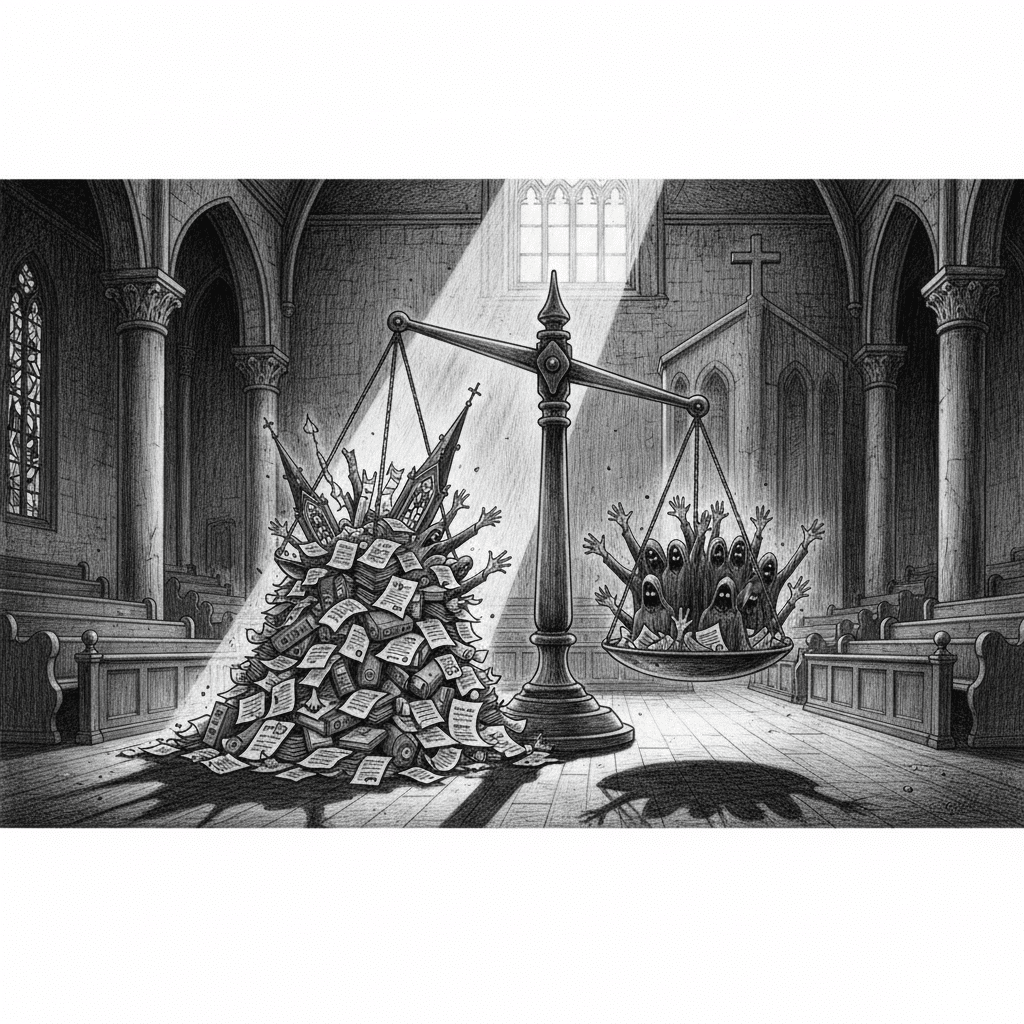
Second: diocese bankruptcies continue. Over 100 Catholic dioceses have filed Chapter 11 bankruptcy. The LA Archdiocese alone settled for $660M. These are not isolated incidents—they’re systematic. Each bankruptcy creates a claims process, establishes settlement frameworks, and generates public awareness. Survivors who didn’t think they had a case suddenly learn they do. That drives search volume and claimant acquisition.
Third: institutional negligence causation is rock-solid in this tort. The abuse happened. The dioceses knew. The dioceses concealed. And the dioceses moved perpetrators to new parishes—exposing new victims. Pennsylvania’s 2018 Grand Jury Report documented this pattern across 301 abusive priests. Dozens of internal diocesan documents have been made public through litigation. Bishops like Mahony and McCarrick have been named personally. The causation story is proven and repeatable across hundreds of cases.
This convergence—open statutes, active bankruptcies, and established legal precedent—is why we’re seeing a surge in church sexual abuse lawsuit Catholic 2026 filings and claimant inquiries right now.
The Legal Landscape: MDL Status, Settlement Trends, and Defendant Exposure
Here’s what attorneys need to understand about the current litigation posture. Unlike many mass torts, there is no federal MDL for Catholic Church abuse. Instead, litigation is consolidated at the state level through individual diocese bankruptcies and state court dockets. This is actually advantageous for plaintiff firms—it means you can control your own cases, negotiate directly with bankruptcy trustees, and avoid the constraints of a federal MDL structure.
The defendants are clear: Catholic dioceses (100+ nationwide), religious orders (Jesuits, Christian Brothers, Oblates, and others), and individual bishops and cardinals named in concealment claims. Each diocese operates as an independent defendant, though they face coordinated national representation. Liability exposure is direct: the diocese is the institutional employer, the concealer, and the entity with insurance coverage (or bankruptcy assets).
Settlement patterns tell the story. The LA Archdiocese settled for $660M in 2007. New York CVA claims have generated thousands of settlements through diocesan bankruptcy processes. Most dioceses are now in or have passed through Chapter 11, meaning claims are processed through bankruptcy trusts with established settlement values. This creates predictability—a major advantage for case evaluation and settlement planning.
The litigation timeline is important. The Boston Globe’s 2002 Spotlight investigation exposed systematic abuse in the Boston Archdiocese. That sparked national litigation. The 2018 Pennsylvania Grand Jury Report reignited national attention by documenting 301 abusive priests across six dioceses. The 2019 New York CVA generated the largest single filing surge. And now, 2025-2026, we’re seeing new lookback windows opening, creating new plaintiff cohorts in states that previously had filing deadlines.
For church sexual abuse lawsuit Catholic 2026 purposes, the litigation posture is: active, ongoing, state-based, with multiple parallel consolidations and bankruptcy processes. This is not a centralized MDL—it’s a decentralized litigation ecosystem with regional bankruptcy trustees, state courts, and direct diocesan settlement negotiations. That actually creates more opportunity for plaintiff firms that understand the geography and the bankruptcy processes in specific states.
Who Qualifies: Eligibility Criteria and Statute of Limitations
Claimant eligibility in church sexual abuse cases is straightforward but jurisdiction-dependent. Generally, survivors must meet three criteria:
- Sexual abuse by Catholic clergy or institutional employees: Abuse must have occurred at the hands of a priest, deacon, monk, nun, or lay employee of the Catholic Church.
- Institutional context: The abuse must have occurred within a diocese, parish, school, seminary, or other Catholic institutional setting.
- Within applicable lookback window: The survivor must file within the state’s current statute of limitations or within an open lookback/revival window.
Injury types are consistent across cases: childhood sexual abuse (primary), psychological trauma (PTSD, depression, anxiety), physical injuries where applicable, and economic damages (medical treatment, lost wages). Most claimants are now adults seeking damages for childhood abuse, though some cases involve more recent abuse.
Statute of limitations varies dramatically by state. This is critical. California and New Jersey have eliminated filing deadlines entirely—any victim can file at any time. New York’s CVA had a one-time lookback window (already closed, but generated 10,000+ claims). Maine has no deadline. Washington, D.C. has no deadline. But in states without open lookback windows, traditional statutes of limitations still apply—often ranging from age 26 to age 35, or 3-5 years from discovery of injury.
This is why the church sexual abuse lawsuit Catholic 2026 filing window is so critical right now. Multiple states have open or recently-opened windows. Survivors in those states are filing. Those survivors are searching for representation. And that search activity is where plaintiff firms can capture claimant volume.
Advertising Opportunity: Claimant Pool Size and Church Sexual Abuse Lawsuit Catholic 2026 Targeting
The addressable claimant pool is substantial. SNAP (Survivors Network of those Abused by Priests) estimates that at least 100,000+ survivors of Catholic clergy sexual abuse are alive in the United States today. Of those, most have never filed a claim. Why? Because filing deadlines previously barred them, or because they didn’t know they could. Now, with lookback windows open in multiple states, that pool is suddenly actionable.
CPL (cost per lead) for church sexual abuse cases is moderate-to-competitive relative to other institutional abuse torts. We typically see CPLs in the $150-$400 range for qualified abuse survivors, depending on geography and targeting specificity. Cost of conversion (lead-to-signed client) varies, but historical data suggests 15-30% of leads convert to retainable clients. That means your CAC (customer acquisition cost) per signed client is typically $500-$1,500, which is reasonable given the case value potential.
Facebook targeting for church sexual abuse survivors requires precision. We don’t target “abuse survivors” broadly—that’s too wide. Instead, we use multi-layered targeting:
- Geographic targeting: States with open lookback windows (California, New Jersey, Maine, D.C., New York). Secondary focus on states with upcoming windows or recent grand jury reports.
- Age targeting: 35-75. Most survivors were abused 20-60 years ago. They’re now adults with established internet presence.
- Interest targeting: Catholic Church, religious trauma, institutional abuse, survivor advocacy, SNAP, local diocesan news (specific dioceses with public settlement activity).
- Behavioral targeting: People engaged with survivor-focused pages, news articles about Catholic settlements, diocesan bankruptcy coverage.
- Pixel-based retargeting: Website visitors who’ve viewed abuse-related content but haven’t called yet.
Creative angles that work: “If you were abused by Catholic clergy, you may have a legal claim even if you missed the deadline” (for open-window states). “Diocese bankruptcy means your claim can be paid” (for jurisdictions in active Chapter 11). “SNAP recommends contacting a lawyer if you were abused” (authority angle). Case-specific angles: “If you were abused at [Specific Parish/School Name], here’s what you need to know.”
Video content performs exceptionally well in this space. Survivor testimonials, explainer videos about lookback windows, breakdowns of specific diocese bankruptcy timelines—these convert at 2-3x higher rates than static creative. We recommend 60% of budget toward video, 30% toward carousel ads showing diocesan settlements, 10% toward dynamic retargeting.
For a typical church sexual abuse lawsuit Catholic 2026 campaign targeting a single state with an open window, we recommend $3,000-$8,000/month in ad spend depending on competitive saturation and claimant density. That typically generates 10-40 qualified leads monthly, at a blended CPL of $200-$400.
Campaign Management: What MTAA Delivers
This is where execution separates successful plaintiff firms from those that struggle with mass tort advertising. We’ve run 600+ campaigns across 100+ mass torts. In institutional abuse, we’ve managed campaigns for 50+ firms targeting everything from sexual abuse to financial elder fraud to premise liability. What we know works, and what doesn’t, is baked into every campaign we run.
For church sexual abuse specifically, here’s what we deliver:
- Full campaign management: Strategy, creative development, audience research, bid optimization, conversion tracking, reporting. You sign cases. We manage everything else.
- Transparent pricing: We charge actual ad spend plus 15%. If we spend $5,000 on Facebook ads, you pay $5,000 + $750 (15%). No hidden fees, no markups on vendor costs. You see exactly what you’re paying.
- Conversion-focused creative: We don’t create “pretty” ads. We create ads that convert survivors into calls and inquiries. Every creative element is tested and optimized for CTR and cost per conversion.
- Geographic expertise: We understand which states have open windows, which dioceses are in bankruptcy, which have active settlements. We target the right geography at the right time.
- Multi-jurisdictional scaling: If you’re running campaigns in California, New York, and New Jersey simultaneously, we manage all three as a coordinated national strategy, not three separate silos.
- Compliance oversight: All creative, landing pages, and ad copy comply with state bar rules, FTC endorsement rules, and platform policies. We handle the legal risk so you don’t have to.
- Lead routing and CRM integration: Leads flow directly into your intake system, tracked by campaign, geography, and source. You have immediate visibility into which campaigns are working.
We’ve managed $250M+ in ad spend. We’ve scaled campaigns from $500/month to $50,000/month. We understand how to allocate budget efficiently across multiple platforms, geographies, and campaigns simultaneously. In the church sexual abuse lawsuit Catholic 2026 space specifically, we’re running active campaigns right now for firms capturing claimants in California, New York, and New Jersey. The demand is real, the claimant volume is available, and the conversion rates are solid if you execute correctly.
Why This Matters for Your Firm in 2026
The church sexual abuse lawsuit Catholic 2026 window won’t stay open forever. Lookback windows close. Dioceses finish their bankruptcy settlements. Public attention shifts. The firms that move now—that establish claimant pipelines, that build reputation in these jurisdictions, that develop relationships with trustees and defense counsel—will be positioned to capture value for years. The firms that wait will be fighting for scraps in a saturated market.
If you’re considering a campaign targeting institutional abuse survivors, if you’re looking to expand into church sexual abuse litigation, or if you want to scale an existing program, now is the moment. Lookback windows are open. Claimants are searching. Dioceses are settling. The conditions are optimal.
Let’s talk about building your church sexual abuse lawsuit Catholic 2026 campaign. We’ll handle the advertising. You handle the law.
Frequently Asked Questions: Church Sexual Abuse Lawsuits
What lookback statutes are currently open for Catholic Church sexual abuse claims in 2026?
Over 20 states currently have open lookback windows for survivors to file abuse claims against the Catholic Church, including California (which eliminated its deadline entirely under the CVRA) and New York (under the Child Victims Act). These windows represent a critical filing window that won’t remain open indefinitely, making immediate case development essential for plaintiff firms.
Who qualifies as a claimant in Catholic Church sexual abuse litigation?
Claimants typically include any individual who experienced sexual abuse by a clergy member or church employee, regardless of when the abuse occurred (depending on the applicable lookback statute in their jurisdiction). Qualification requirements vary by state law, but survivors don’t need to have previously reported the abuse or pursued claims, making the claimant pool significantly larger than in past litigation cycles.
Is there an active MDL for Catholic Church sexual abuse cases, or are claims filing individually?
Catholic Church sexual abuse litigation is primarily handled through individual diocese bankruptcy proceedings and state-level filings rather than a centralized MDL, though coordination exists across jurisdictions. This structure allows firms to file claims directly in multiple state venues simultaneously, accelerating case development during the current lookback window period.
How should plaintiff firms market Catholic Church abuse representation to survivors in 2026?
Targeted digital advertising on Facebook and other platforms to survivors searching for representation in open lookback jurisdictions has proven highly effective, with messaging focused on the current filing deadline urgency and specific state law opportunities. Firms should focus ad spend on high-population states with active lookback windows and frame messaging around the limited-time nature of the filing opportunity to drive immediate case sign-ups.
Are dioceses still settling Catholic Church abuse claims at high rates?
Yes, dioceses continue to settle claims at historic levels through bankruptcy proceedings, with multiple settlements reaching significant values in 2025-2026. This settlement momentum indicates strong defendant demand for resolution, which typically translates to favorable outcomes for plaintiff firms managing active caseloads during peak filing periods.
Ready to Build Your Caseload?
Get a free campaign analysis from Mass Tort Ad Agency.
$250M+ in mass tort Facebook ad spend. 600+ law firms served. Transparent cost-plus pricing with no hidden fees.