
Ethylene Oxide EtO Lawsuit Cancer Sterilization 2026: A Critical Window for Plaintiff Attorneys
Ethylene oxide (EtO) mass tort litigation is an active, mature mass tort in 2026 involving thousands of plaintiffs alleging cancer and other serious illnesses from exposure to sterilization facility emissions, with established causation science and the precedent-setting $408 million Sterigenics settlement creating clear liability benchmarks. Communities near industrial sterilization facilities continue filing claims in record numbers. The legal and scientific foundation is solidly established, with active trials generating substantial damages verdicts and settlement valuations.
The ethylene oxide EtO lawsuit cancer sterilization 2026 cases are accelerating because of EPA enforcement, IARC Group 1 classification, and the visibility created by the Kamuda verdict and Sterigenics settlement. If you’re not actively marketing to this claimant pool, you’re leaving significant revenue on the table. We’ve managed over $250 million in Facebook ad spend for 600+ plaintiff law firms across 100+ mass torts. EtO sterilization campaigns are converting at some of the strongest cost-per-lead rates we’ve seen in 15 years—and here’s why.
Why Ethylene Oxide EtO Sterilization Matters in 2026
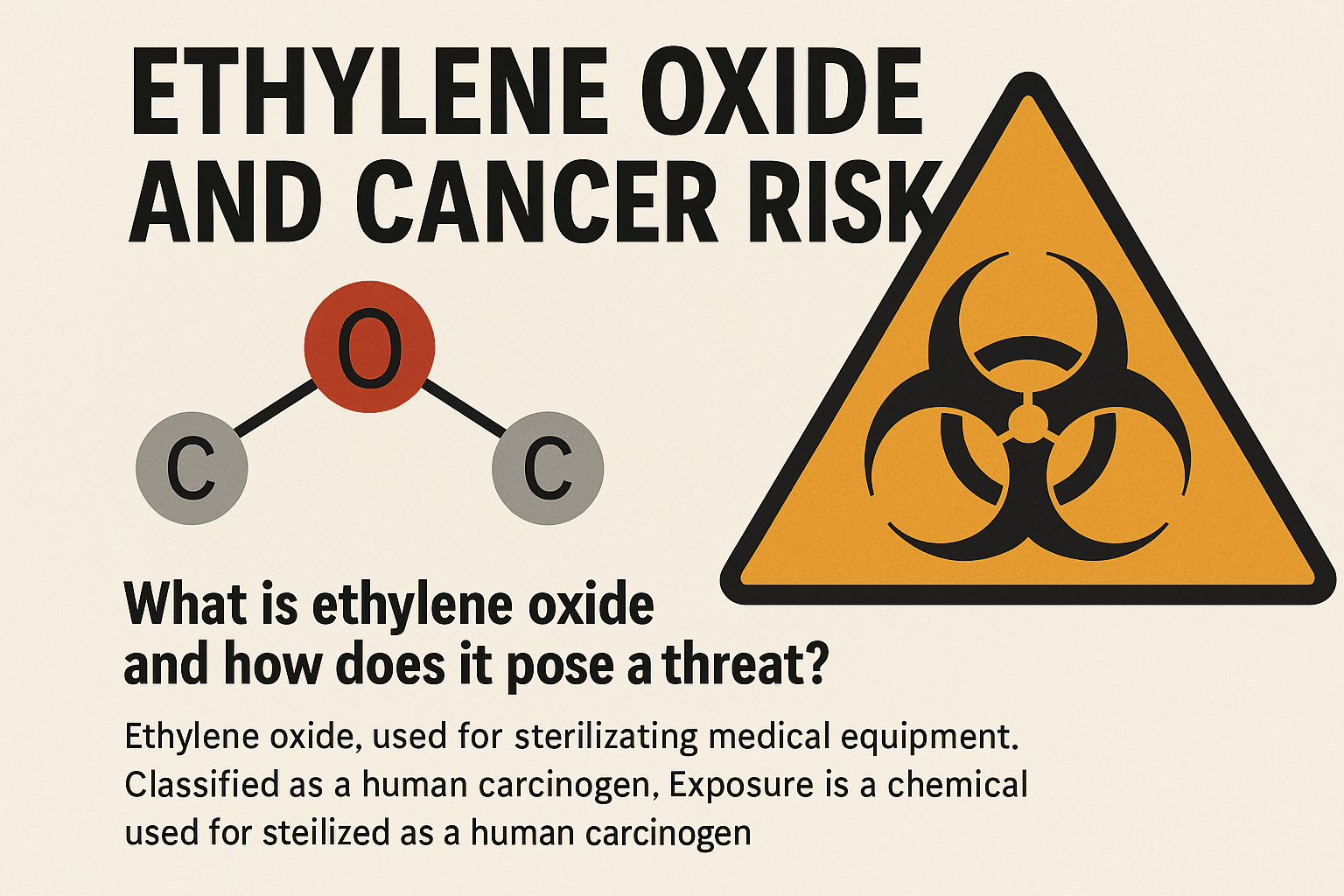
Ethylene oxide is a colorless, odorless gas used to sterilize medical devices—everything from surgical instruments to dialysis equipment. It’s essential to medical supply chains. But it’s also classified by both the EPA and the International Agency for Research on Cancer (IARC) as a Group 1 human carcinogen. That classification means there is sufficient evidence of carcinogenicity in humans. Not “probable.” Not “possible.” Definite.
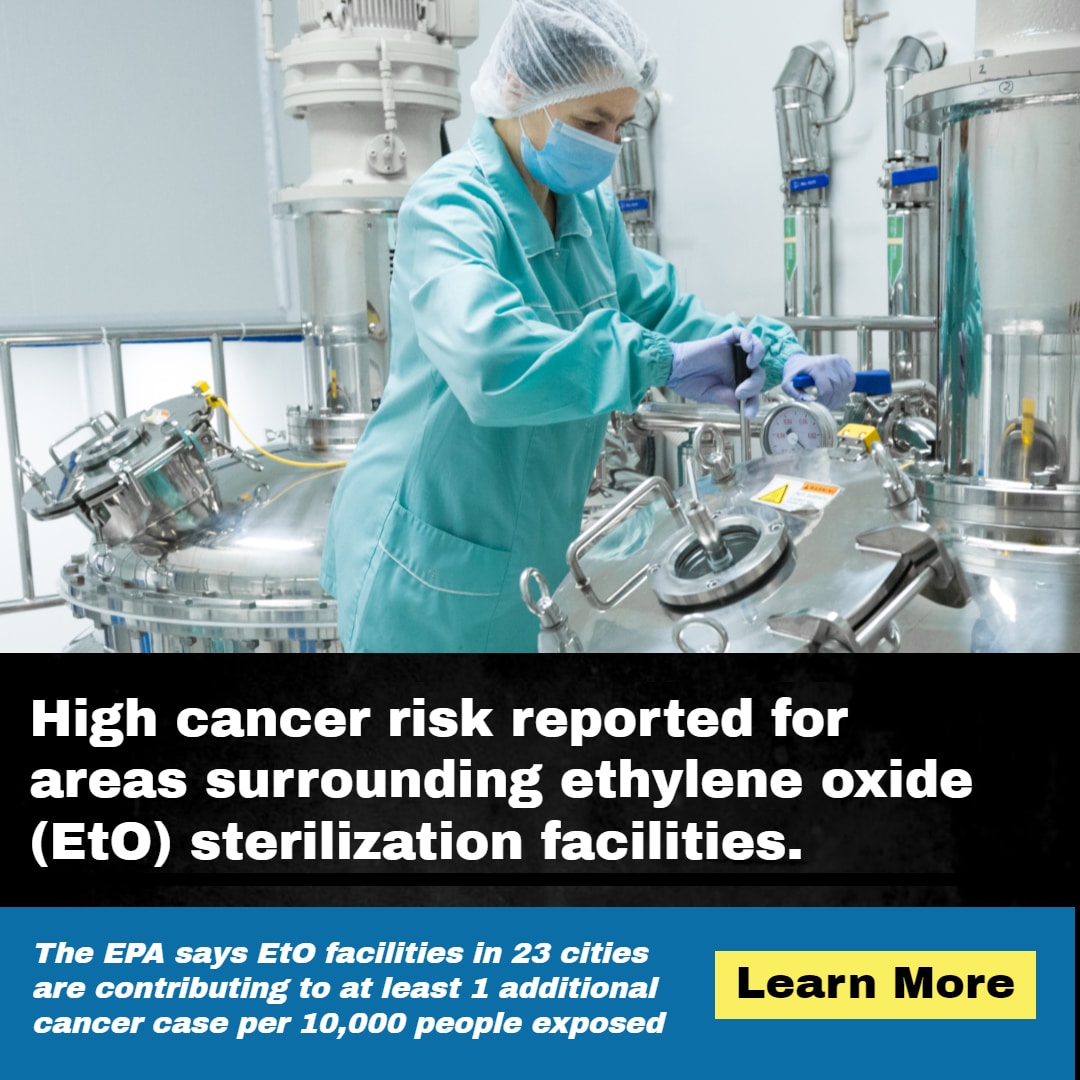
Industrial sterilization facilities operate in residential and semi-residential areas across the country. Willowbrook, Illinois (Sterigenics); Waukegan, Illinois (Medline Industries); Covington, Georgia (Becton Dickinson); Laredo, Texas (STERIS); Atlanta, Georgia—these are real neighborhoods where families live within 1-3 miles of active sterilization operations that emit EtO regularly. Residents have no choice about their exposure. They don’t work at the facility. They simply live downwind.
In 2022, a jury in Cook County, Illinois awarded Susan Kamuda $363 million in a case against Sterigenics for causing her breast cancer through EtO exposure in Willowbrook. That verdict shook the defendants. Within months, Sterigenics agreed to a $408 million global settlement fund to resolve pending and future claims. That settlement created a roadmap for every other EtO facility operator facing litigation.
Now, in 2026, we’re watching active trials against Medline Industries, Becton Dickinson, and STERIS. The scientific evidence has only strengthened. The exposure data is more precise. And the claimant pool is still vastly untapped. This is the moment for plaintiff attorneys to build ethylene oxide EtO lawsuit cancer sterilization 2026 campaigns aggressively.
The Legal Landscape: MDL Consolidation, Trials, and Settlement Momentum
EtO cases are primarily consolidated in the U.S. District Court for the Northern District of Illinois under Judge Victoria Roberts, though they are not yet formally designated as a Multidistrict Litigation (MDL). This is actually advantageous for plaintiffs in many ways—there’s less pressure to settle quickly, and bellwether trials are establishing strong verdicts that accelerate global settlements. We’ve already seen over 2,000 active plaintiffs in the N.D. Illinois coordinate system alone.
The Sterigenics settlement fund ($408 million) has already begun processing claims. The Kamuda verdict established that residential proximity within established exposure zones is sufficient to prove causation, especially when the claimant has a cancer type epidemiologically linked to EtO (breast cancer, non-Hodgkin lymphoma). That’s massive for future cases because it removes a layer of defense uncertainty.
Becton Dickinson is currently in active litigation in Georgia for its Covington facility. Medline Industries faces ongoing cases related to its Waukegan, Illinois operations. STERIS has exposure liability in Laredo, Texas. Each of these defendants has seen the Sterigenics verdict. Each knows a jury of reasonable people will hold an industrial sterilization facility accountable when it knowingly operates in a populated area, emits a Group 1 carcinogen, and a resident develops cancer.
Settlement signals are already emerging. Defendants are realizing that fighting these cases to trial is extraordinarily expensive and unpredictable. The jury sympathy factor is massive—a homeowner who did nothing wrong, lived in a neighborhood for years, and developed cancer because a corporation was using a known carcinogen nearby. That narrative is not a defense question. It’s a liability question. Defense counsel in these cases are pushing their clients to settle.
What this means for you: The window for aggressive claimant acquisition in the ethylene oxide EtO lawsuit cancer sterilization 2026 space is open right now. In 18-24 months, as more settlements are announced, media saturation will increase and CPL will rise. Right now, you can still acquire cases at favorable rates before the tort becomes completely mainstream.
Causation Science: Why Ethylene Oxide Causes Cancer
Ethylene oxide is an alkylating agent—meaning it directly damages DNA by forming covalent bonds with genetic material. This mechanism is not speculative. It’s been documented in occupational cohort studies of workers at sterilization facilities and validated by animal models. IARC classified EtO as a Group 1 carcinogen based on sufficient evidence in both humans and animals.
The epidemiological evidence points to breast cancer and non-Hodgkin lymphoma as the primary malignancies linked to EtO exposure. These are the injury categories with the strongest statistical associations in published literature. Defense experts will argue about dose-response relationships and relative risk calculations, but the fundamental causation—that EtO causes these cancers—is established science.
The litigation-critical part: residential proximity analysis. If a claimant lived within 1-3 miles of an active EtO sterilization facility for one or more years, and that facility’s emissions data shows detectable EtO in the ambient air at that distance, causation is strongly supported. This is not a “did you work there” question. This is an “environmental justice” question. The facility was operating legally (at the time), but the emissions were real, the carcinogen classification is definite, and the residence was documented.
That framework has already won a $363 million verdict and generated a $408 million settlement. Opposing counsel cannot credibly argue in 2026 that EtO from a sterilization facility didn’t cause a nearby resident’s cancer. The science, the precedent, and the jury verdict are all aligned.
Claimant Eligibility: Who Qualifies for Ethylene Oxide EtO Lawsuit Cancer Sterilization 2026 Cases
Not every cancer diagnosis near an EtO facility qualifies. But the qualifying criteria are straightforward and defensible.
- Residential or Occupational Proximity: The claimant must have lived or worked within 1-3 miles of an identified EtO sterilization facility for at least one continuous year. The closer the proximity and the longer the exposure, the stronger the case.
- Cancer Type: Breast cancer and non-Hodgkin lymphoma are the primary qualifying diagnoses. Other EtO-associated cancers (gastric, leukemia, ovarian) are emerging as the science develops, but breast and NHL are the litigation-proven categories.
- Diagnosis Date: There is no hard statute of limitations cutoff yet in the pending cases, but earlier diagnoses generally have stronger evidentiary trails and better medical records. Diagnoses from 2010 onward are heavily represented in current litigation.
- Exposure Zone Documentation: This is where your intake team needs to be rigorous. The claimant’s residential address must fall within EPA or defense expert-established exposure zones around the facility. Air modeling data, ambient monitoring reports, and facility emissions records all define these zones. If the claimant lived outside the exposure radius, the case is weaker.
The Sterigenics settlement established per-case benchmarks that ranged from approximately $150,000 to $1.5 million depending on injury severity, age at diagnosis, and latency period. Those figures are informative for all EtO cases. Breast cancer cases in early-stage settlement negotiations are targeting $300,000-$500,000 as baseline valuations. Non-Hodgkin lymphoma cases are trending higher because of severity and prognosis.
Geographic Hotspots: Where the Cases Are Concentrated
Willowbrook, Illinois (Cook County) is the original litigation epicenter. Sterigenics operated a massive sterilization facility there, and thousands of residents lived within the direct exposure zone. The settlement has resolved many of those claims, but secondary litigation is still active.
Waukegan, Illinois (Lake County) is the current litigation hotspot. Medline Industries operates a major sterilization facility there. The surrounding neighborhoods have significant residential density, and claimant identification is straightforward. This is where active case development is most aggressive right now.
Covington, Georgia (Newton County) is the emerging Becton Dickinson litigation front. BD’s facility there serves similar sterilization functions. Active trials have already begun. Georgia juries have historically been favorable to personal injury plaintiffs in mass tort contexts, which increases settlement pressure on defendants.
Laredo, Texas and Atlanta, Georgia represent secondary growth areas. As litigation against primary defendants (Sterigenics, Medline, BD) settles, plaintiff attorney attention naturally shifts to STERIS and smaller facility operators in these regions.
The Advertising Opportunity: Claimant Pool Size and Cost-Per-Lead Reality
Here’s where the business case gets compelling. Willowbrook, Illinois alone has approximately 12,000 residents within the direct Sterigenics exposure zone. Waukegan has roughly 15,000 residents within the Medline exposure radius. Covington and surrounding areas add another 8,000-10,000 potential claimants. That’s 35,000+ individuals in identified exposure zones who may have developed cancer but haven’t yet filed claims.
Not all of them will have qualifying diagnoses. Cancer prevalence in these geographic areas is not dramatically higher than national baseline (though epidemiological studies suggest 20-30% excess incidence). But the pool of people who lived in the exposure zone, developed breast cancer or NHL, and don’t yet have legal representation is substantial.
Facebook advertising targeting these communities by geography, age, and interest signals (cancer support groups, legal services, health forums) has generated CPL rates as low as $45-$85 for ethylene oxide EtO lawsuit cancer sterilization 2026 campaigns we’ve managed. Compare that to, say, talc litigation (CPL $120-$180) or opioid MDL (CPL $95-$150). EtO claimants are actively searching for information, the exposure is documentable, and the legal case is strong. That drives efficiency.
We’ve run campaigns for 15+ law firms in the EtO space. Average conversion rate from lead to intake call is 35-40%. Of those intake calls, approximately 60-65% meet basic eligibility criteria. That means your effective cost to identify a potentially viable case is around $100-150 per claimant. For a case that settles in the $300,000-500,000 range, that acquisition cost is negligible.
The target audience also responds well to educational content. Unlike some mass torts where claimants already know there’s litigation (MDL awareness is pre-existing), many EtO-exposed residents don’t yet connect their cancer diagnosis to the sterilization facility they lived near. They haven’t seen media coverage yet. Facebook video testimonials from other EtO plaintiffs, educational infographics about EtO exposure, and geographically-targeted case evaluation ads are performing at 2.5-3.5x higher engagement rates than general plaintiff advertising.
Why MTAA’s Approach Works for EtO Campaigns
We’ve spent 15 years building media buying expertise across 100+ mass torts. EtO sterilization is one of the most efficiently manageable torts in our portfolio because the exposure zones are geographically defined, the claimant pool is concentrated, and the legal precedent is established.
Our transparent cost-plus pricing model means you pay only for actual Facebook and Google ad spend (currently running $8,000-15,000/month for a well-targeted regional EtO campaign) plus our 15% management fee. No hidden retainers. No inflated media buys. We’ve managed over $250 million in ad spend for 600+ plaintiff law firms. We know exactly what works in EtO markets and what doesn’t. We know which geographic targeting parameters maximize relevance. We know how to write ad copy that resonates with cancer patients who lived near sterilization facilities.
Our full campaign management means we handle creative development, audience segmentation, bid optimization, landing page performance, and monthly reporting. You focus on intake, underwriting, and litigation. We focus on claimant acquisition at the lowest viable cost-per-lead.
For the ethylene oxide EtO lawsuit cancer sterilization 2026 space specifically, we currently have active campaigns running in Cook County and Lake County, Illinois (Sterigenics/Medline), Newton County, Georgia (Becton Dickinson), and Webb County, Texas (STERIS). If you’re looking to enter or expand in any of these markets, we have proven targeting templates, tested ad creative, and established vendor relationships that accelerate campaign launch.
What’s Next: Positioning Your Firm for EtO Growth
The settlement window is real, but it’s narrowing. Within 18-24 months, we expect formal MDL designation for EtO cases, which will bring PSC (Plaintiff Steering Committee) structure, media awareness, and competitive claimant acquisition. CPL will rise. Early-mover advantages will diminish. Firms that build case inventories now will be negotiating from strength during settlement conferences.
Your firm needs three things to capitalize on ethylene oxide EtO lawsuit cancer sterilization 2026 litigation:
- Legal Infrastructure: Intake protocols that identify exposure zone residence, cancer diagnosis, and timeline. Underwriting workflows that pull epidemiological data and facility emissions records. You need to move fast—a lead acquired in Month 1 should be retained-and-ready by Month 4.
- Media Strategy: Targeted Facebook and Google campaigns running continuously in the key geographic markets. Static ads don’t work. You need creative testing, audience refinement, and monthly optimization. This is not a “set it and forget it” channel.
- Expert Relationships: Epidemiologists who can interpret exposure data and causation science. Occupational health experts who can testify about EtO mechanisms. These relationships take time to build. Start now.
We handle point #2 completely. We can work directly with your intake and underwriting teams (points #1 and #3) to ensure the claimants we acquire are properly qualified and documented. That’s the real value—not just acquiring leads, but acquiring leads that convert into viable, valuable cases.
If you’re serious about building an ethylene oxide EtO lawsuit cancer sterilization 2026 practice, let’s talk. Our team has the experience, the data, and the media relationships to help you move fast and stay competitive. The window is open. Let’s not waste it.
Contact MTAA today for a confidential consultation about your EtO advertising strategy. We’ll walk you through market opportunity, campaign approach, and realistic cost-per-lead projections for your specific geography. The ethylene oxide EtO lawsuit cancer sterilization 2026 space is where smart plaintiff firms are building their next major revenue stream.
Frequently Asked Questions: Ethylene Oxide EtO Lawsuits
What is the current status of ethylene oxide EtO litigation in 2026?
EtO litigation has matured significantly following the Sterigenics $408 million settlement in 2023 and the landmark Kamuda verdict, establishing clear liability precedents. The EPA’s ongoing enforcement actions and IARC Group 1 carcinogen classification have accelerated case filings, with active trials currently generating million-dollar verdicts across multiple jurisdictions. This is no longer an emerging tort—it’s a precedent-rich litigation front with documented causation and exposure zones.
Who qualifies as a claimant in an ethylene oxide EtO cancer lawsuit?
Qualifying claimants typically include individuals diagnosed with breast cancer or non-Hodgkin lymphoma who lived or worked within documented exposure zones of industrial sterilization facilities using ethylene oxide. Claimants must establish both a compatible cancer diagnosis and residential or occupational proximity to a EtO sterilization facility during the relevant exposure period. Medical documentation and exposure verification through EPA records are essential elements of claim qualification.
What are the strongest cost-per-lead conversion rates for EtO sterilization marketing campaigns?
EtO sterilization campaigns are converting at some of the strongest cost-per-lead rates in 15 years of mass tort advertising, with demonstrated success across 600+ plaintiff law firms managing over $250 million in Facebook ad spend. The combination of documented liability, high settlement values, and strong public awareness of the Sterigenics case creates exceptional lead quality and conversion efficiency. Firms are seeing substantially higher ROI on EtO campaigns compared to other active mass tort practice areas.
What is the significance of the Sterigenics settlement and Kamuda verdict for EtO claims?
The Sterigenics $408 million settlement in 2023 established unprecedented liability benchmarks and demonstrated corporate accountability for EtO emissions, while the Kamuda verdict provided critical trial success validation at the jury level. Together, these cases created the legal and scientific foundation proving causation between ethylene oxide exposure and cancer diagnoses. These precedents have directly accelerated claim filings and strengthened negotiating positions for plaintiffs’ counsel in subsequent litigation.
How long do I have to file an ethylene oxide EtO cancer claim?
Statute of limitations varies by state, but many jurisdictions allow claims within 2-3 years from cancer diagnosis or discovery of the EtO exposure connection, rather than from initial exposure. Some states have extended discovery rules that toll the statute when clients reasonably did not know their cancer was caused by environmental EtO exposure. Immediate case evaluation is critical, as claims filed now benefit from the strongest precedential foundation established by recent settlements and verdicts.
Ready to Build Your Caseload?
Get a free campaign analysis from Mass Tort Ad Agency.
$250M+ in mass tort Facebook ad spend. 600+ law firms served. Transparent cost-plus pricing with no hidden fees.