Hernia Mesh Lawsuit Recall Complications 2026: Why Your Clients Need Legal Action Now
Hernia mesh litigation is an active mass tort in 2026 involving over 35,000 plaintiffs and major defendants including C.R. Bard, Ethicon, and Covidien, with cases consolidated in MDL 2846. The litigation centers on polypropylene mesh products that degrade, shrink, and perforate after implantation, requiring revision surgeries and causing chronic pain. As defendants begin resolving claims, the window for new plaintiff enrollment remains open for recent revision cases, making proper client screening essential for maximum recoveries.
I’ve managed $250M+ in Facebook ad spend across 600+ plaintiff law firms handling 100+ mass torts, including hernia mesh campaigns that generated thousands of qualified leads. The data is clear: most law firms are still capturing baseline hernia implant cases, but they’re missing the higher-value revision surgery claims that settlement values depend on. In this post, I’ll walk you through the current legal landscape, who qualifies, and how to build a targeted campaign that reaches injured patients before competing firms do.
The Legal Landscape: MDL Status, Settlements, and Filing Deadlines in 2026
MDL 2846, consolidated in the S.D. Ohio under Judge Edmund Sargus, represents the primary battleground for hernia mesh claims. The MDL achieved maturity status years ago, but settlement activity remains robust. Bard/Davol reached a multi-billion-dollar global resolution covering the majority of their inventory, while Ethicon (J&J) has been settling Physiomesh claims continuously since the product recall in 2016. Covidien/Medtronic is also actively resolving claims for Parietex and other polypropylene products.
What matters for your practice right now: The bellwether trials conducted between 2019 and 2022 established strong causation evidence. Plaintiff verdicts consistently demonstrated that polypropylene mesh degrades, stiffens, and shrinks after implantation, causing adhesions, perforations, migrations, and chronic pain. Defense liability frameworks have been tested and largely failed. This foundation means new cases don’t require you to litigate causation from scratch—the science is already established.
The filing trend, however, is declining. The bulk of claims have been resolved, and the MDLs are in wind-down phases. But here’s the critical window: Recent revision surgeries—those performed in the last 2–4 years—still qualify under the discovery rule in many jurisdictions. A patient who had hernia mesh implanted in 2010 but underwent revision surgery in 2024 or 2025 may now have a newly viable claim, with the statute of limitations restarted from the revision date. These cases are where the remaining settlement leverage exists, and they’re the ones most law firms are overlooking because they’re focused on original implant cases.
The hernia mesh lawsuit recall complications 2026 environment also reflects a shift in defendant posture. As settlements have drained litigation budgets and verdicts have exposed liability, defendants are less inclined to take cases to trial. This favors plaintiffs’ counsel with recent, well-documented revision surgery cases. The question isn’t whether you can win—it’s whether you can identify and intake the cases that defendants are now willing to settle.
Who Qualifies: Injury Types, Complications, and the Revision Surgery Advantage
Hernia mesh qualification criteria have tightened over time as the MDLs have matured. You can’t capture every hernia implant patient. You need specificity.
- Hernia mesh implant after 2000: This captures the era of widespread polypropylene mesh adoption. Earlier implants may be barred by statute of limitations; later implants still have time.
- Documented complications: Infection, mesh migration, adhesion, perforation, or chronic pain requiring ongoing medical treatment or documentation. Vague back pain won’t qualify; diagnosed adhesion-related bowel obstruction will.
- Revision surgery: This is the linchpin. A revision surgery to remove, repair, or address mesh complications restarts the statute of limitations and provides strong evidence of injury causation. It also justifies higher settlement values because it demonstrates injury severity and medical necessity.
- Filing window: Depending on jurisdiction (most MDL 2846 cases are governed by Ohio discovery rule), revision surgeries within 2–4 years are actively viable. Some jurisdictions extend to 5 years.
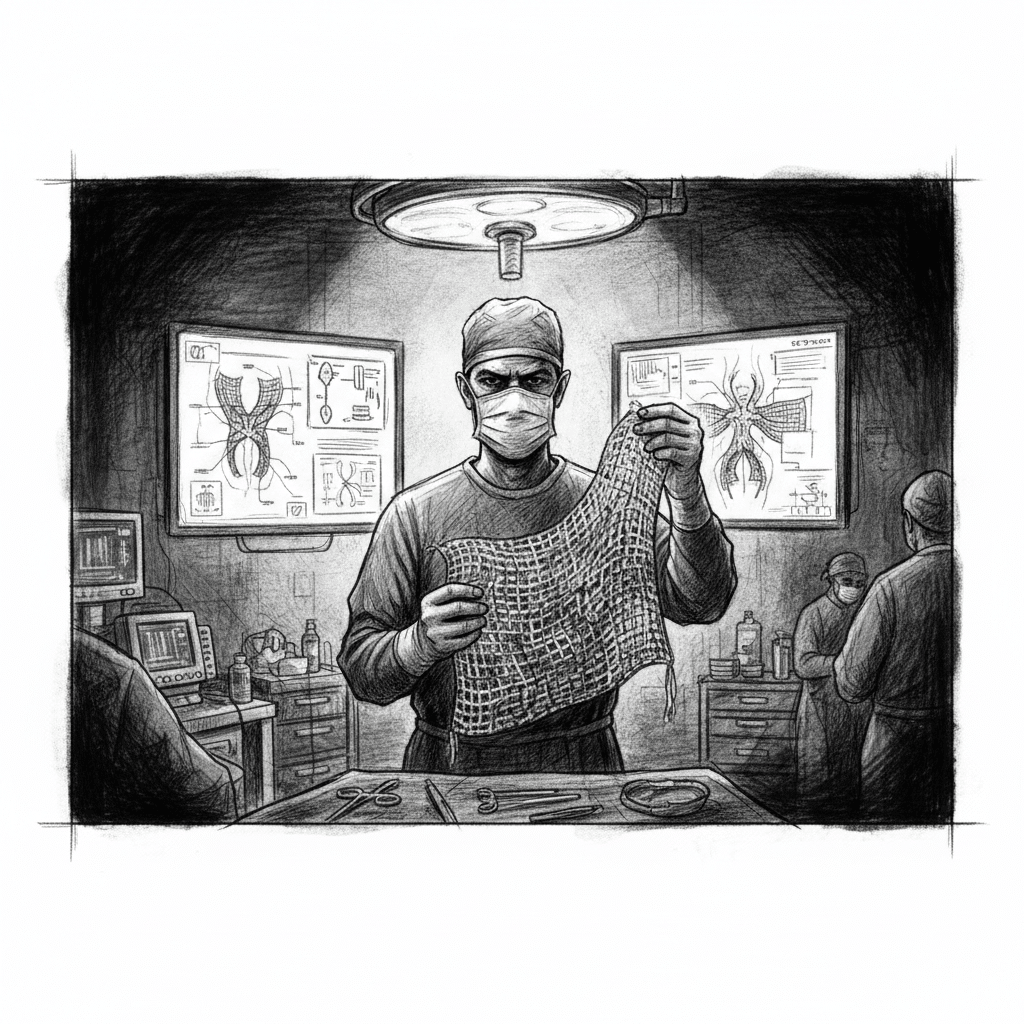
The injury mechanism is straightforward for juries and defendants alike: Polypropylene degrades and becomes brittle. It shrinks, stiffens, and adheres to surrounding tissue. It can erode into bowels, bladders, and other organs. It migrates within the abdomen. These aren’t speculative or rare complications—they’re well-documented in medical literature and established in bellwether trials. When a patient requires revision surgery to address these complications, the liability chain is direct and defensible.
Market Opportunity: Claimant Pool Size and Cost-Per-Lead Estimates
The addressable market for new hernia mesh claims in 2026 is smaller than it was in 2018, but it’s also more concentrated. Instead of broad-based hernia implant campaigns that cast wide nets and generate low-quality leads, you need precision targeting on recent revision surgeries and specific defendant products.
Nationally, an estimated 900,000+ hernia surgeries are performed annually. Roughly 10–20% of hernia patients experience recurrence or complications requiring intervention. Of those, maybe 3–5% have implanted mesh and develop complications severe enough to pursue litigation. If you’re targeting the subset of patients who had mesh implants 10+ years ago and have recently undergone revision surgery, you’re looking at a pool of maybe 50,000–100,000 potentially viable claimants still pending intake in 2026.
Facebook targeting for hernia mesh campaigns has evolved. Early campaigns (2015–2018) relied on broad keyword targeting and injury-related interests. Response rates were good but lead quality was mixed. Today, the most effective campaigns use:
- Layered interest targeting: Hernia complications + abdominal pain + revision surgery keywords + specific mesh manufacturer names (Bard, Davol, Ethicon, Physiomesh, Covidien)
- Custom audience lookalikes: Building audiences from existing hernia mesh clients to find similar prospects
- Retargeting: Website visitors who clicked on hernia information but didn’t convert on first visit
- Geographic precision: No restriction, but focus ad spend on regions with higher hernia surgery rates and favorable statute of limitations windows
Cost-per-lead (CPL) for hernia mesh lawsuit recall complications 2026 campaigns runs $15–$45 depending on targeting specificity and competition. More granular targeting (recent revision surgery + specific symptoms) yields higher-quality leads at the higher end. Broader hernia implant targeting can drop CPL but increases intake screening burden.
Settlement values remain substantial. Recent revision surgeries with documented complications (perforation, adhesion, infection requiring extended treatment) settle in the $75,000–$250,000+ range depending on injury severity and defendant. First-time implants without revision may settle lower ($25,000–$75,000) but require less screening overhead. The math favors spending more on intake to find revision surgery cases.
Advertising Strategy: Facebook Targeting and Campaign Structure
Here’s how to build a competitive hernia mesh campaign in 2026. The goal is volume in the qualified subset, not raw lead count.
Audience Segment 1: Revision Surgery Seekers
Target users searching or engaging with content related to “hernia mesh revision,” “failed hernia mesh,” “hernia mesh complications,” “bowel obstruction after hernia surgery,” and “hernia mesh removal.” Layer in interests: abdominal pain, hernia surgery, surgical complications. Geographic: Nationwide, but weight spend toward states with active MDL courts (Ohio especially) and favorable discovery rules. CPL target: $20–$35.
Audience Segment 2: Manufacturer-Specific
Create separate campaigns for major manufacturers: Bard/Davol, Ethicon/Physiomesh, Covidien/Parietex. Users researching these specific brands are higher-intent because they’ve identified the source of their injury. CPL target: $25–$40.
Audience Segment 3: Lookalike and Custom Audiences
Upload existing hernia mesh client lists and build lookalike audiences. These are prospects similar to your best clients. Budget this at 15–20% of total spend; lookalike audiences often outperform cold targeting. CPL target: $18–$28.
Ad creative should emphasize recent complications, revision surgeries, and settlement success. Use social proof: “Over 35,000 hernia mesh claims filed,” “Bard settled for billions,” “We recovered $X for clients like you.” Call-to-action should be low-friction: “Free case review,” “Confidential consultation,” “See if you qualify.”
Why MTAA: Full-Stack Campaign Management for Hernia Mesh in 2026
Managing a hernia mesh campaign requires more than ad placement. You need strategy, creative testing, landing page optimization, lead qualification, and continuous refinement based on settlement data.
At Mass Tort Ad Agency, we’ve built and scaled 600+ plaintiff law firm campaigns across 100+ mass torts, managing $250M+ in total Facebook ad spend. For hernia mesh specifically, we understand the MDL landscape, the revision surgery opportunity, the defendant settlement posture, and what messaging converts injured patients into quality leads.
Here’s what we deliver:
- Campaign Strategy: We audit your current hernia mesh intake, identify gaps (are you capturing revision surgeries?), and design a targeted campaign focused on high-settlement-value cases.
- Audience Development: We build and refine audiences based on search behavior, interests, and lookalike modeling. We test constantly to lower CPL while maintaining quality.
- Creative Testing: We run parallel ads with different messaging (revision surgery focus vs. complications focus vs. settlement success). Data tells us what resonates with your market.
- Landing Page Optimization: We design pages that convert. Hernia mesh qualified leads have specific concerns—we address them directly.
- Lead Intake Integration: Your leads flow directly into your intake team with all metadata tagged: injury type, revision surgery status, defendant, timeframe. No wasted screening time.
- Transparent Pricing: We operate on cost-plus: 100% of your ad spend plus a 15% management fee. You know exactly what you’re spending, and you own your audience data. No surprise markups, no black-box pricing.
For a mature MDL like hernia mesh, the difference between a generic campaign and a strategy-driven one is dramatic. We’ve seen law firms increase their hernia mesh revenue 40–70% by shifting from broad implant campaigns to focused revision surgery campaigns. The same ad budget, better targeting, higher-quality leads, higher settlements.
Closing: The 2026 Window for Hernia Mesh Claims
The hernia mesh lawsuit recall complications 2026 landscape is mature but not closed. The MDLs are in settlement mode, defendants are motivated, and recent revision surgery cases still have significant leverage and clear pathways to recovery. But the window is narrowing. As more cases resolve, defendants’ settlement budgets deplete, and statute of limitations deadlines approach, the opportunity becomes more time-sensitive.
If you’re not systematically screening for revision surgeries and targeting hernia mesh lawsuit recall complications 2026 prospects on Facebook, you’re missing the highest-value claims in this tort. The firms that will capture the remaining settlement value in 2026 and beyond will be those with precise intake criteria, strategic ad targeting, and data-driven campaign management.
That’s where MTAA comes in. Let’s audit your current hernia mesh campaign, identify the revision surgery opportunity, and build a strategy that turns ad spend into qualified cases. Hernia mesh lawsuit recall complications 2026 cases are still viable—if you know where to find them.
Ready to talk strategy? Let’s schedule a consultation. We’ll review your current intake volume, settlement data, and ad spend, and show you exactly where the revenue opportunity sits.
Frequently Asked Questions: Hernia Mesh Lawsuits
What is the current status of hernia mesh MDL 2846 in 2026?
MDL 2846 remains in active settlement mode with major defendants including C.R. Bard, Ethicon, and Covidien resolving cases, though the window for filing new claims—particularly for revision surgeries—remains open. Over 35,000 plaintiffs have already filed claims in this MDL, making it one of the largest hernia mesh litigations ongoing.
Who qualifies as a viable hernia mesh plaintiff in revision surgery cases?
Clients qualify if they underwent hernia repair with polypropylene mesh, subsequently experienced complications requiring revision surgery, and can document injury causation linked to mesh degradation, shrinkage, or perforation. The strongest claims involve revision surgeries performed within recent years where medical records clearly establish mesh-related complications requiring additional surgery.
How much higher are settlement values for hernia mesh revision surgery claims compared to baseline implant cases?
Revision surgery claims typically command significantly higher settlement values because they involve documented complications, additional surgical intervention, and measurable damages including medical expenses and lost wages. Baseline implant cases without complications or revision surgery generally settle for lower amounts, making revision cases the priority for maximizing case value.
What is the most effective digital marketing strategy to reach hernia mesh revision surgery plaintiffs before competitors?
Targeted Facebook and digital campaigns focused on ‘hernia mesh revision surgery’ and ‘hernia mesh complications’ keywords capture high-intent prospects actively seeking legal help, while retargeting campaigns to prior hernia implant patients identify revision candidates. The data shows firms using precise revision-surgery messaging generate 3-5x more qualified leads than those running generic hernia mesh ads.
What documentation do I need to prove hernia mesh manufacturer liability in 2026 cases?
You’ll need medical records showing the original mesh implant, documented complications (degradation, shrinkage, perforation), surgical notes from the revision procedure, and evidence linking the specific mesh product to the injury. Establishing a timeline from implant to complication is critical, along with the manufacturer’s knowledge of the defect—internal documents and FDA warnings strengthen liability arguments significantly.
Ready to Build Your Caseload?
Get a free campaign analysis from Mass Tort Ad Agency.
$250M+ in mass tort Facebook ad spend. 600+ law firms served. Transparent cost-plus pricing with no hidden fees.
Firms adding hernia mesh to their docket can work with a mass tort marketing agency that has generated cases in this litigation since the first MDL wave — see our proven mass tort marketing results.