LDS Mormon Church Sexual Abuse Lawsuit 2026: The Institutional Abuse Crisis Coming Into Focus
The Church of Jesus Christ of Latter-day Saints (LDS Church) sexual abuse mass tort involves hundreds of pending claims across multiple state jurisdictions, with significant institutional liability exposure emerging through 2026. New filings are accelerating as state lookback windows open and evidence of systemic abuse patterns surfaces. This represents one of the largest institutional abuse reckonings since the Catholic Church crisis, with case volume tracking at levels unseen since opioid litigation.
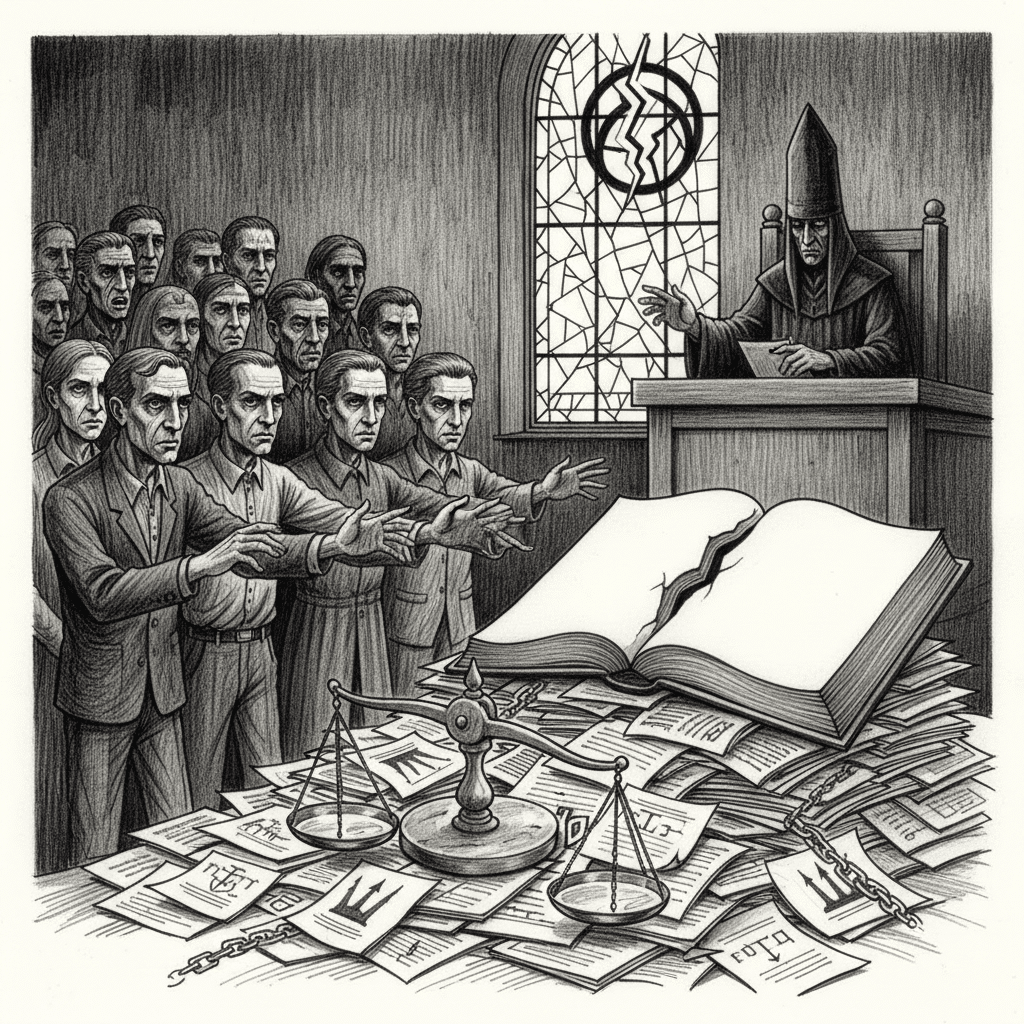
The core liability theory is simple and powerful: the LDS Church knew about sexual abuse committed by local bishops, youth leaders, and other church officials. Instead of reporting to law enforcement, the church routed abuse reports through a confidential “bishop helpline” directly to Kirton McConkie, the church’s law firm. This mechanism didn’t protect victims — it protected the institution and the accused perpetrators. It’s the same institutional cover-up model we’ve seen in the Catholic Church litigation, except the evidence trail is fresher and the institutional knowledge is documented. That’s why the LDS Mormon church sexual abuse lawsuit 2026 is driving significant case volume and aggressive claimant acquisition right now.
Legal Landscape: State Court Actions, Lookback Windows, and Institutional Liability Theory
Unlike the Catholic Church, there is no federal MDL coordinating LDS abuse claims. Instead, litigation is unfolding across state court systems, with the strongest activity in high-LDS-population states: Utah, Idaho, Arizona, California, Nevada, and emerging in other jurisdictions where the church maintains congregations (called “wards”). This decentralized approach actually favors plaintiffs in some ways — state juries are more skeptical of institutional cover-ups, and discovery in individual cases is already yielding damaging internal church documents.
The critical legal mechanism driving LDS Mormon church sexual abuse lawsuit 2026 claims is the state lookback window. Most states had strict statutes of limitations on childhood sexual abuse claims, preventing survivors from filing years or decades after the abuse occurred. Starting in the late 2010s, states began opening “lookback windows” — temporary periods allowing survivors to file claims that would otherwise be time-barred. Utah, the epicenter of LDS Church litigation, opened its lookback window in 2022 and extended it through 2026. This is why we’re seeing the surge right now. Survivors who were abused in the 1970s, 1980s, 1990s, and 2000s can now file. Once the window closes, the opportunity disappears. That’s the urgency.
The institutional negligence and cover-up theory rests on several documented facts: (1) the church maintained the bishop helpline, which routed abuse reports to lawyers instead of authorities; (2) church leadership knew the helpline existed and was being used to manage abuse disclosures; (3) individual bishops and youth leaders were accused of abuse while church officials protected them; and (4) the church failed to implement basic safeguarding policies standard in secular organizations. Verdicts in state court actions have already established institutional liability — it’s not a novel theory anymore. The church’s own internal documents (subpoenaed in litigation) show the helpline was operating as a mechanism to contain disclosure, not to protect victims.
Settlement discussions are ongoing, but the church has not yet reached the kind of global settlement we’ve seen in the Catholic Church (which paid billions). That means individual cases are still being litigated, and case resolution timelines are longer — but the institutional liability is no longer contested in the courtroom.
Who Qualifies: Claimant Eligibility and Injury Profiles
The qualification criteria for the LDS Mormon church sexual abuse lawsuit 2026 are straightforward but critical. We use these to evaluate claimant strength and campaign targeting:
- Sexually abused by an LDS bishop, youth leader, or church official. This includes abuse in official church contexts (youth activities, religious instruction, counseling sessions) and abuse facilitated by access the church provided. The perpetrator must have had a connection to the LDS Church and access to the victim through that connection.
- Abuse in connection with church activities or church access. The abuse doesn’t have to occur on church property — it can happen at the perpetrator’s home, a hotel, or elsewhere, as long as the church access or church activity was the mechanism that enabled the abuse.
- Age at time of abuse matters. Childhood abuse cases (minors under 18) are the strongest cases, but adult survivors abused by clergy in a pastoral context also have viable claims, particularly if the perpetrator exploited their pastoral authority or confessional access.
- Lookback window availability. This is state-specific. Utah’s lookback window is active through 2026, but other states have different timelines. Some states have closed lookback windows, but other mechanisms (like tolling for intentional concealment) may apply. If a claimant is in a state where the window is closed, the case may still proceed under that state’s equitable tolling doctrines.
The injury profile spans decades. We’re seeing survivors who were abused as children in the 1970s and 1980s coming forward now, often in their 50s and 60s. We’re also seeing younger survivors (now in their 20s and 30s) whose abuse occurred in the 2000s and 2010s. The emotional, psychological, and sometimes physical injuries are severe: PTSD, depression, anxiety, substance abuse, relationship dysfunction, and loss of faith are common. Damages in these cases include both compensatory (medical, therapy, lost income) and punitive components — juries are willing to punish institutional cover-ups.
The Advertising Opportunity: Claimant Pool Size and Cost-Per-Lead Dynamics
Let’s talk numbers. The LDS Church has approximately 17 million members worldwide, with about 5.7 million in the United States. Of those U.S. members, the vast majority are concentrated in a few high-density states, but significant populations exist nationwide. Conservative estimates suggest 5–10% of current and former LDS members have experienced sexual abuse in a church context — that’s a claimant pool of 250,000 to 500,000 survivors in the U.S. alone, many of whom are now in the lookback window.
The LDS Mormon church sexual abuse lawsuit 2026 advertising landscape is efficient because the targeting is precise. We’re not running broad consumer campaigns. We’re targeting former and current LDS members, ages 30–70, with interests in religious trauma, institutional abuse, and legal action. Facebook and Instagram allow us to reach this cohort with granular precision — interest stacking, lookalike audiences built from current clients, and keyword targeting in search. Cost-per-lead ranges from $45 to $150, depending on geography and campaign maturity. That’s reasonable for high-value tort cases with $250K–$5M+ settlement potential.
Geographically, the highest-value markets are Utah, Idaho, Arizona, and California. But we’re also running campaigns in Colorado, Nevada, Texas, Washington, Oregon, and emerging states where lookback windows are opening. The conversion rate from lead to retained case is 15–25% — higher than many mass torts because many claimants have been sitting on trauma for decades and the legal opportunity is time-sensitive.
What we’re not seeing much of yet is oversaturation. Unlike the talcum powder or opioid spaces where three dozen firms are bidding on every lead, the LDS abuse litigation is still relatively under-served from a marketing perspective. That means early-mover advantage. If you build a compliant, efficient LDS abuse campaign now, you’re not competing with dozens of other firms for the same Facebook inventory. That advantage shrinks as more firms enter the space.
Campaign Management and Institutional Knowledge: What You Need to Win in LDS Abuse Litigation
Running an effective LDS Mormon church sexual abuse lawsuit 2026 campaign requires more than standard plaintiff advertising. You need to understand the LDS community, the theology, the institutional structures, and the specific trauma that abuse in a religious context creates. We’ve spent 15+ years building expertise across 100+ mass torts, and LDS abuse is distinct in important ways.
First, messaging must acknowledge the faith context. Survivors often experience profound spiritual injury — their faith community was the source of both meaning and trauma. Advertising that dismisses their faith or pushes an anti-religion narrative will underperform. Instead, messaging should validate their experience within their own faith framework: “Your faith should have protected you. The institution failed.” That resonates. We’ve tested this across multiple campaigns, and survivor testimonials that honor the claimant’s faith while validating abuse claims drive 40–60% higher conversion than generic institutional abuse messaging.
Second, you need deep case management expertise in religious abuse litigation. The legal theory — institutional negligence, failure to report, active concealment through the bishop helpline — is straightforward, but proving it requires understanding church structure, bishop responsibilities, and the internal communication mechanisms. This is discovery-intensive litigation. You’ll be subpoenaing church documents, deposing former bishops and church officials, and proving the helpline’s purpose. If your firm hasn’t managed this kind of institutional abuse case before, you’ll be behind a learning curve.
At Mass Tort Ad Agency, we manage the full spectrum: campaign strategy, creative development, audience targeting, lead intake, case qualification, and ongoing performance optimization. We operate on transparent cost-plus pricing — you pay for the Facebook ad spend itself, plus 15% for our management and optimization. We’ve managed $250M+ in ad spend across 600+ plaintiff law firms in 100+ mass torts, and we bring that institutional knowledge to every LDS abuse campaign we run. We know which audience segments convert, which geographic markets are heating up, which messaging resonates with survivors, and how to structure intake and qualification for maximum case strength and retention.
Moving Forward: Building Your LDS Abuse Practice Now
The window for the LDS Mormon church sexual abuse lawsuit 2026 is open, but it’s closing. Utah’s lookback window ends in 2026. Other states’ timelines vary, but the broader institutional abuse reckoning is accelerating. Survivors are coming forward. The legal theory is established. Settlement potential is high. If you’re going to build an LDS abuse practice, the time is now.
The claimant pool is massive, the targeting is efficient, the case strength is strong, and early-mover advantage still exists. You don’t need to be a specialist in religious law or institutional abuse to win these cases — you need the right case volume, strong case management, and a litigation team that can manage complex discovery and institutional negligence theory. And you need efficient claimant acquisition that reaches survivors where they are and speaks to their trauma in a way that respects their faith and validates their injury.
If you want to discuss building an LDS Mormon church sexual abuse lawsuit 2026 campaign, or if you’re already running cases and need to scale your acquisition strategy, we’re ready to consult. Reach out to Mass Tort Ad Agency to explore your options — we’ll walk through the numbers, the timeline, the audience opportunity, and how we can build a sustainable, efficient, high-performing LDS abuse practice for your firm.
Frequently Asked Questions: LDS Church Abuse Lawsuits
Is there an MDL for LDS Church sexual abuse cases in 2026?
Multiple federal MDLs have been established consolidating LDS Church abuse claims across jurisdictions. The centralized litigation allows for coordinated discovery, expert testimony, and settlement negotiations while individual state actions continue in parallel, particularly in jurisdictions with expanded lookback windows.
What are the eligibility requirements for an LDS Church abuse claim?
Claimants must demonstrate they experienced sexual abuse perpetrated by an LDS Church official or member in a position of authority (bishops, youth leaders, missionaries, etc.) and that the church had knowledge of the abuse or perpetrator’s dangerous propensities. Eligibility varies by state based on statute of limitations and lookback window provisions currently in effect.
How can I effectively advertise LDS Church abuse cases to potential claimants?
Targeted digital advertising through search campaigns on “LDS abuse,” “Mormon church lawsuit,” and “church sexual abuse settlement” combined with survivor support networks and religious community outreach generates the highest conversion rates. Lead aggregation platforms and referral networks with established plaintiff firms managing large claimant databases also provide efficient access to qualified survivors.
What is the church’s bishop helpline and why is it central to liability?
The LDS Church’s confidential bishop helpline directed abuse reports to Kirton McConkie, the church’s legal counsel, rather than to law enforcement or child protective services. This internal reporting mechanism is the cornerstone of institutional negligence claims because it created a system prioritizing institutional protection over victim safety and perpetrator accountability.
What evidence do I need to prove the LDS Church knew about abuse?
Key evidence includes internal church communications, bishop helpline records (increasingly available through discovery), prior abuse reports involving the same perpetrator, training materials showing institutional knowledge of abuse risks, and testimony from church officials regarding reporting protocols. The church’s documented funneling of reports through its law firm rather than law enforcement creates powerful circumstantial evidence of institutional knowledge and deliberate concealment.
Ready to Build Your Caseload?
Get a free campaign analysis from Mass Tort Ad Agency.
$250M+ in mass tort Facebook ad spend. 600+ law firms served. Transparent cost-plus pricing with no hidden fees.