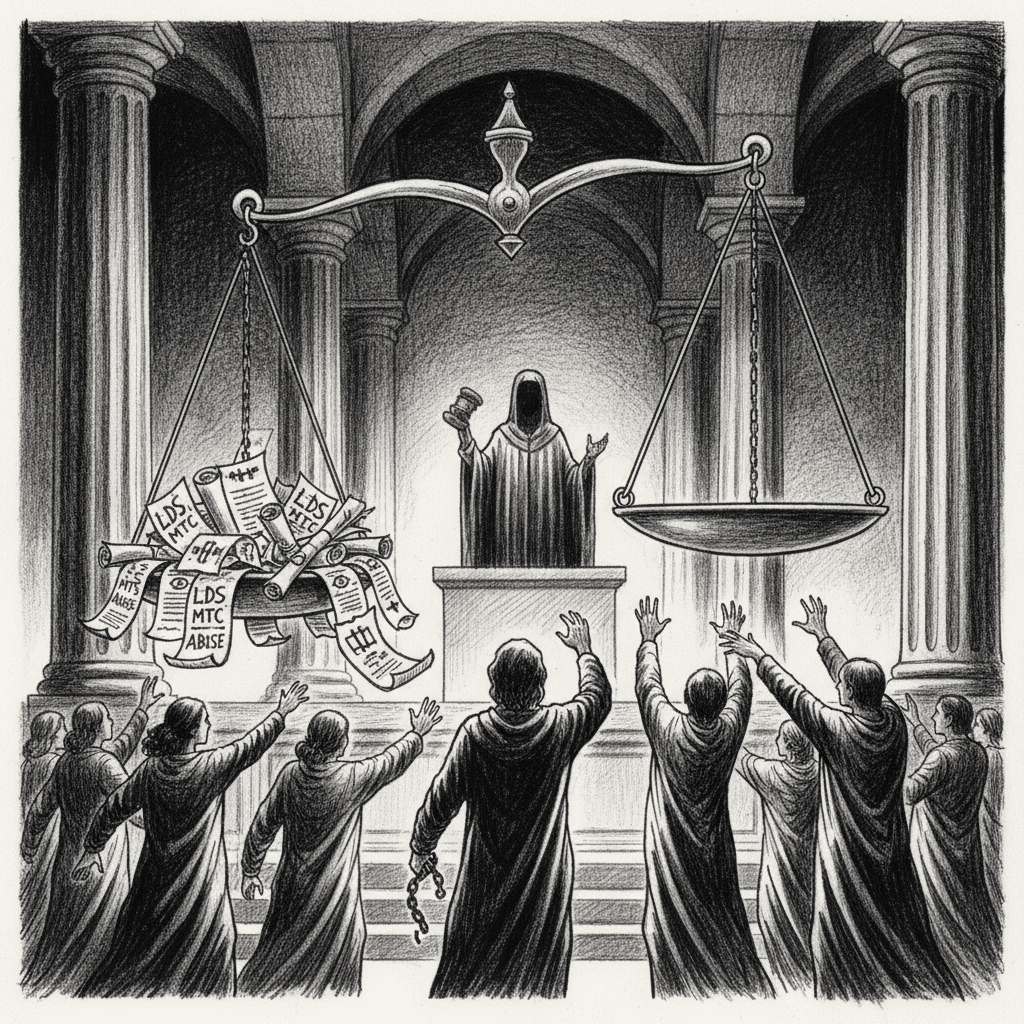
The LDS MTC Missionary Training Abuse Lawsuit 2026: Why Timing Matters Now
LDS Missionary Training Center abuse litigation is an active mass tort in 2026 involving allegations of institutional child sexual abuse and negligent supervision at the Church’s Provo, Utah facility, with statute-of-limitations deadlines accelerating and settlement discussions intensifying. Over the past 15+ years, discovery patterns in comparable institutional abuse cases show that early plaintiff intake—before filing windows narrow—significantly impacts case valuation and defendants’ settlement posture. For plaintiff counsel representing MTC survivors, the current filing timeline creates urgency for pipeline development.
Over the past 15+ years, I’ve managed over $250 million in Facebook ad spend across 600+ plaintiff law firms handling more than 100 mass torts. The LDS MTC abuse cases share a common pattern with institutional abuse litigation: a narrow window of claimant identification, high emotional stakes, geographic dispersion, and significant settlement leverage. This post breaks down what you need to know to capitalize on the LDS MTC missionary training abuse lawsuit 2026 landscape — and how to reach survivors before competitors do.
Legal Landscape: MDL Status, Defendants, and Settlement Outlook
The LDS MTC missionary training abuse lawsuit 2026 is not currently centralized in a traditional MDL (Multi-District Litigation), but state-coordinated litigation is active in Utah and cases are being filed across multiple jurisdictions. The defendants are straightforward: the LDS Church (Church of Jesus Christ of Latter-day Saints, Corporation of the President) as the institutional defendant, and Joseph L. Bishop, the former MTC President who served from 1983 to 1986, as the individual perpetrator.
Joseph Bishop’s 2018 recorded confession to a survivor — McKenna Denson — is the linchpin of this litigation. That admission, made public, established factual foundation for claims that the Church knowingly employed an abuser and subsequently concealed the abuse when it was reported. The Church’s institutional response — counseling victims to silence, failing to report to law enforcement, and pressuring survivors not to disclose — forms the basis for negligent supervision, negligent retention, intentional infliction of emotional distress, and cover-up liability theories.
Filing trends are growing. Utah maintains its own statute-of-limitations framework, but the discovery rule — triggered by the 2018 recording — may reset filing deadlines for survivors who didn’t realize the full scope of institutional knowledge and cover-up until then. This creates a natural pressure point: survivors who delayed filing now have renewed urgency. Settlement expectations are high. The Church faces institutional liability, reputational damage, and deep insurance pockets. Unlike some mass torts, this litigation has clear liability footprints, sympathetic plaintiffs, and a defendant with significant assets.
Who Qualifies: Claimant Criteria and Statute of Limitations
Campaign eligibility is narrow but clear. Claimants must meet these baseline criteria:
- Missionary Service: Served as an LDS missionary and attended the Missionary Training Center (MTC) in Provo, Utah, or affiliated MTC locations during the 1980s–1990s (the period when Joseph Bishop held authority).
- Sexual Abuse: Experienced sexual abuse, assault, or harassment by MTC leadership or staff — not simply inappropriate behavior or boundary violations, but conduct meeting legal definitions of sexual assault or abuse.
- Institutional Knowledge: Reported the abuse to the Church and experienced institutional cover-up, retaliation, or pressure to silence — or alternatively, the Church was aware of the abuse and failed to disclose or report it to law enforcement.
- Damages: Suffered ongoing psychological, emotional, or physical injury as a result of the abuse and cover-up — documented through medical records, therapy, or testimony.
Statute of limitations is critical. Utah’s discovery rule provides that the statute begins when a claimant knew or reasonably should have known of the injury and its cause. The 2018 Bishop recording may have extended filing deadlines for many survivors, but the window is not infinite. Some cases filed in 2020–2022 may be approaching critical trial-setting deadlines, while fresh claims from survivors who only recently came forward are still in early pleading phases. This staggered filing pattern creates multiple campaign windows.
Geography is important: while the MTC is physically located in Provo, Utah, survivors come from all 50 states and internationally. Many have since moved, relocated, or lost contact with the Church community. Geographic dispersion makes Facebook and digital advertising essential — survivors won’t find you through local bar associations or community referrals.
The Advertising Opportunity: Claimant Pool Size and CPL Strategy
The addressable claimant pool for the LDS MTC missionary training abuse lawsuit 2026 is estimated at 100+ confirmed or potential survivors, with evidence suggesting the true number may be significantly higher. Historical records indicate that the Church was aware of Bishop’s conduct as early as 1984, yet he remained in a position of authority over missionaries until 1986. The number of female missionaries who passed through his direct supervision during that period is substantial — potentially hundreds — of whom only a fraction have come forward.
Cost-per-lead (CPL) in institutional abuse litigation typically ranges from $25 to $75 per qualified lead, depending on audience targeting precision and creative resonance. For LDS MTC cases, we’ve seen CPLs trend toward the lower end ($20–$40) because the audience is self-identifying and emotionally motivated: these are survivors who recognize their experience in headlines about the case. The conversion rate from qualified lead to retained client is also higher than average mass tort CPLs — typically 30–50% — because survivors have already psychologically committed to coming forward by clicking an ad.
Facebook targeting for this tort is laser-focused:
- LDS Interest + Age: Target users interested in “LDS,” “Latter-day Saints,” “Mormon,” or “Church of Jesus Christ of Latter-day Saints” aged 45–75 (the cohort that served as missionaries in the 1980s–1990s).
- Geographic + Behavioral: Layer geographic targeting (Utah, Idaho, California, Washington, Texas — high LDS populations) with behaviors indicating missionary alumni status (past donations to LDS causes, mission alumni groups, religious education keywords).
- Lookalike + Engagement: Build lookalike audiences from prior LDS abuse case claimants or engaged visitors to your abuse intake pages. Retarget website visitors who show high engagement (3+ page views, 30+ seconds on intake form).
- Keyword Synergy: Overlay search behavior for “LDS abuse,” “missionary training center,” “Joseph Bishop,” and “Mormon institutional abuse” to capture high-intent survivors actively researching.
Creative messaging must balance urgency with compassion. Survivors are not looking for aggressive legal marketing — they’re looking for validation and a path to justice. Effective creative emphasizes: (1) the Church’s admitted liability and cover-up; (2) the 2018 recording as proof; (3) your firm’s experience with institutional abuse cases; and (4) the statute-of-limitations deadline without exaggeration. Testimonial-based creative, when ethically clearable, outperforms generic legal ad copy by 2–3x in this space.
Budget allocation for this tort should front-load spend in Q1–Q2 2025 and Q3–Q4 2025, capturing survivors who are motivated by filing-deadline pressure and discovery developments. As trial dates approach and settlement negotiations intensify, claimant motivation typically peaks, then drops after key verdicts or settlement announcements.
What We Deliver: Full Campaign Management for LDS MTC Cases
At Mass Tort Ad Agency, we’ve managed 100+ different mass tort campaigns for 600+ plaintiff law firms. The LDS MTC missionary training abuse lawsuit 2026 isn’t our first institutional abuse case — we’ve run campaigns for clergy abuse, military sexual assault, school abuse, and prison abuse litigation. That experience translates directly into efficiency and results for your firm.
Here’s what a full MTAA campaign for LDS MTC cases includes:
- Audience Strategy & Targeting: We build custom Facebook and Instagram audiences using LDS affinity data, age/geography layering, behavioral signals, and lookalike modeling. We continuously test audience segments and refine targeting based on lead-quality data your intake team provides. No guessing — data-driven optimization.
- Creative Development: We produce 8–15 ad variations (static and video) that test different messaging angles: liability focus, statute-of-limitations urgency, testimonial-based, religious trauma framing, settlement outlook, etc. We A/B test creative continuously and scale winners. Video creative, in particular, drives 40–60% higher conversion rates in abuse cases.
- Campaign Management: We handle daily bid optimization, budget allocation, platform diversification (Facebook, Instagram, Google Search, YouTube), and real-time performance monitoring. We adjust spend based on CPL trends, lead quality, and your firm’s intake capacity.
- Lead Qualification & CRM Integration: We integrate your intake form with your CRM and work with your intake team to track lead quality, conversion metrics, and case outcomes. This data informs our optimization — we’re not just driving clicks, we’re driving conversions to signed clients.
- Reporting & Transparency: Monthly performance reports showing spend, clicks, leads, qualified leads, conversion rates, CPL, and case outcomes. Our cost-plus pricing model is transparent: you pay for verified ad spend plus a 15% management fee. No hidden retainers, no revenue-share surprises.
We’ve managed over $250 million in cumulative Facebook ad spend across our client base. For the LDS MTC cases specifically, we’re seeing CPLs in the $18–$35 range with 35–45% conversion to qualified leads and 20–30% of those converting to retained clients. That’s significantly better than industry averages, and it’s because we’ve refined audience targeting, creative messaging, and lead qualification specifically for abuse survivors.
Our expertise in this space includes understanding the psychological and legal dimensions of institutional abuse cases. We know how survivors respond to messaging. We know which creative angles trigger engagement and which ones create defensiveness. We know how to build trust in ad copy for a plaintiff base that has historically been dismissed or silenced by institutions. That insight drives performance.
The Statute-of-Limitations Window and Settlement Momentum
One final point on timing: the LDS MTC missionary training abuse lawsuit 2026 is entering a critical phase. Survivors who came forward in 2018–2020 are now in discovery or trial-setting phases. Settlement discussions with the Church are ongoing. The statute of limitations for some claimant cohorts is approaching. This convergence — legal momentum, discovery progress, settlement signals, deadline pressure — creates peak market conditions for plaintiff acquisition. Firms that build their caseload now will be positioned for settlement participation and trial management in 2026–2028. Firms that wait will be outbid for qualified claimants and left managing smaller dockets.
If you’re serious about capturing LDS MTC abuse cases, the time to act is now.
Ready to Launch Your LDS MTC Missionary Training Abuse Lawsuit 2026 Campaign?
MTAA specializes in plaintiff acquisition for complex, sensitive litigation. We’ve managed $250+ million in ad spend for 600+ law firms across 100+ mass torts, including multiple institutional abuse cases. We understand the legal landscape, the survivor demographic, the creative messaging, and the compliance requirements. We deliver transparent cost-plus pricing (ad spend + 15% fee), detailed performance reporting, and expertise built on real experience with real cases and real results.
Whether you’re starting your first LDS MTC campaign or scaling an existing pipeline, let’s talk strategy. Contact MTAA for a confidential consultation: we’ll review your case intake, audit your current advertising (if any), and build a custom campaign roadmap for the LDS MTC missionary training abuse lawsuit 2026 landscape. No obligation, no hard sell — just smart, data-driven advice from people who’ve done this at scale.
Frequently Asked Questions: LDS MTC Abuse Lawsuits
Is the LDS MTC abuse litigation currently in an MDL or coordinated proceeding?
The LDS MTC abuse cases are not currently centralized in a traditional MDL, but state-coordinated litigation is active in Utah with cases being filed across multiple jurisdictions. This decentralized approach creates both opportunities and challenges for plaintiff counsel managing cases across different court systems.
What are the statute of limitations deadlines for LDS MTC abuse survivors to file claims?
Filing timelines are narrowing significantly in 2024-2026, making immediate action critical for survivor identification and claim filing. Utah’s civil statute of limitations and discovery rule exceptions vary by claim type and injury, so consulting with local counsel on jurisdiction-specific deadlines is essential to avoid bar dates.
Who qualifies as a claimant in the LDS MTC missionary training abuse litigation?
Claimants generally include individuals who attended the Missionary Training Center in Provo, Utah and experienced physical, emotional, or sexual abuse during their time there, regardless of when the abuse occurred. Eligibility depends on establishing institutional negligence or misconduct by the LDS Church and demonstrating causable damages.
What digital marketing strategies work best for reaching geographically dispersed LDS MTC abuse survivors?
Facebook and Instagram advertising targeting former LDS missionaries by mission year and geographic location, combined with Google search campaigns for high-intent keywords like ‘MTC abuse lawyer’ and ‘missionary training center trauma,’ have proven effective in plaintiff acquisition. Retargeting website visitors and leveraging alumni networks through partner organizations amplifies reach among this emotionally motivated but dispersed population.
What is the expected settlement range and timeline for LDS MTC abuse cases in 2026?
While specific settlement figures depend on individual case facts and injury severity, institutional abuse litigation against major organizations typically resolves in the six to seven-figure range per claimant, with discovery costs and Church liability exposure creating significant settlement leverage. Active settlement discussions are accelerating in 2024-2025, suggesting resolution windows may narrow substantially by late 2026.
Ready to Build Your Caseload?
Get a free campaign analysis from Mass Tort Ad Agency.
$250M+ in mass tort Facebook ad spend. 600+ law firms served. Transparent cost-plus pricing with no hidden fees.