⚖️ Breaking Verdict — March 25, 2026
Meta & YouTube Found Liable — $6 Million Awarded in Landmark Social Media Addiction Trial
A Los Angeles County jury ruled that Meta (Instagram) and Google (YouTube) deliberately designed addictive platforms that harmed a minor plaintiff known as “Kaley.” The jury awarded $3M in compensatory damages and $3M in punitive damages — finding the companies acted with malice, oppression, or fraud. Meta is responsible for 70% ($4.2M); Google 30% ($1.8M). Both companies say they will appeal.
Why this matters for plaintiff attorneys: This is the first bellwether verdict holding Big Tech liable for defective addictive product design. With 235+ federal MDL plaintiffs and 250+ school district claims still pending, this verdict is the tobacco moment the industry has been bracing for. The intake window for social media addiction cases is open — and narrowing fast. Talk to MTAA about your social media intake campaign →
We’re watching one of the most consequential mass torts of this decade unfold in real time. Social media addiction lawsuit Facebook Instagram teen harm 2026 is no longer a hypothetical — it’s the defining litigation moment for Meta, TikTok, Snapchat, and YouTube. With 10,000+ plaintiffs already in MDL 3047, first bellwether trials projected for late 2025 through 2026, and Judge Yvonne Gonzalez Rogers pushing cases forward aggressively, the campaign window is open right now. The injuries are real: depression, anxiety, self-harm, suicidal ideation in minors. The evidence is overwhelming. And the settlement landscape is about to shift once those first verdicts land.
If you’re running a plaintiff practice and not actively building your book of social media addiction lawsuit Facebook Instagram teen harm 2026 cases, you’re leaving eight figures on the table. Let’s talk about what’s actually happening in this tort, who qualifies, and how to build a sustainable acquisition strategy before the bellwether trials reset the market.
The Legal Landscape: MDL 3047, Bellwether Selection, and the Section 230 Problem That Didn’t Kill the Case
MDL 3047 is consolidated in the Northern District of California under Judge Yvonne Gonzalez Rogers — the same judge who hasn’t been shy about moving mass torts forward. The operative theory is straightforward product liability: the social media platforms designed addictive features targeting minors, knew the products caused documented mental health harm, and concealed that knowledge from parents and regulators.
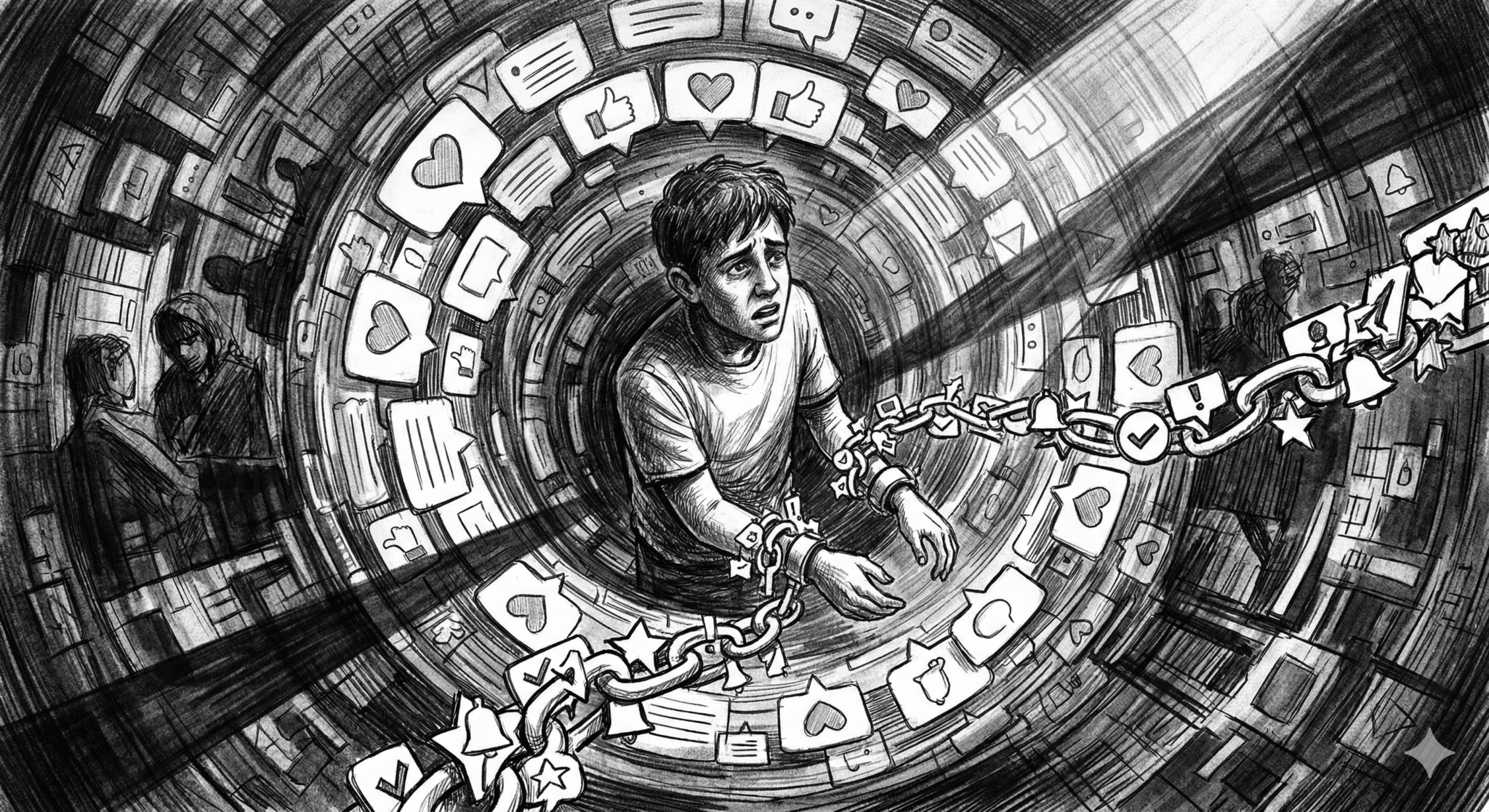
The causation chain rests on dopamine loop design — infinite scroll, notification mechanics, algorithmic reinforcement, and the psychological impact of social comparison on developing brains. Frances Haugen’s leaked internal Meta documents are the evidentiary backbone. Meta’s own research showed that Instagram caused eating disorders, body dysmorphia, and suicidal ideation in teenage girls. The company knew. They continued. That’s not Section 230 immunity territory — that’s design defect liability under traditional product liability law.
Section 230 of the Communications Decency Act is designed to protect platforms from liability for third-party user content. But courts have been surprisingly receptive to the argument that social media addiction lawsuit Facebook Instagram teen harm 2026 cases don’t rest on the platforms’ role as publishers of user content — they rest on the platforms’ design of the product itself. The addictive architecture is the defect. That’s a manufacturing or design liability claim, not a content liability claim. Section 230 doesn’t shield you from those.
Bellwether selection is actively underway. Judge Gonzalez Rogers has signaled a tight timeline. Early trials are expected in late 2025 and 2026. That means we’re roughly 12–18 months from the first big verdicts. Those verdicts will anchor settlement discussions and per-case value across the entire docket. Right now, before the benchmarks are set, is the moment to load your intake pipeline.
Social Media Addiction Lawsuit Facebook Instagram Teen Harm 2026: Filing Trends and Statute of Limitations
The filing velocity in this MDL is accelerating. We’re seeing two parallel tracks: individual minor plaintiffs filing directly, and school district cases filing separately (those tend to aggregate damages and create public pressure). Both are feeding the MDL.
Statute of limitations varies by state, but most states apply a minor tolling rule — the clock doesn’t start until the plaintiff turns 18. For a minor who was active on Instagram or Facebook between ages 12 and 17 (the injury window is real and documented), the tail on these claims extends well into the 2030s in many jurisdictions. But practically speaking, the optimal filing window is now through 2027. Why? Because verdicts in 2025–2026 will establish causation, damages, and settlement value. Once benchmarks exist, defendants will be far more likely to settle. After that, new claims will be negotiated at established values rather than at the uncertainty discount we see in early-stage MDLs.
The complaint template is proven: minor plaintiff, account creation before age 18, documented mental health diagnosis (depression, anxiety, eating disorder, or suicidal ideation), medical or school counselor records, and a causal link to social media use documented in clinical notes or expert declaration. That’s enough to plead and survive motion to dismiss. Causation discovery is already underway across the MDL — you don’t have to invent it.
Who Qualifies: The Claimant Universe and Your Intake Criteria
The eligibility criteria are tighter than some torts, but the universe of qualifying claimants is staggering. Your intake checklist:
- Age at exposure: Minor (under 18) at time of primary social media use. Account creation before age 13, or algorithmic targeting of minors (can be established through account metadata and platform data requests).
- Platform exposure: Active on Meta (Instagram/Facebook), TikTok, Snapchat, or YouTube during the relevant exposure period. Most claims combine multiple platforms — algorithm design is similar across all of them.
- Documented diagnosis: Clinical diagnosis of depression, anxiety, eating disorder, body dysmorphia, or suicidal ideation. School counselor notes are acceptable. Self-reported symptoms without clinical documentation are weaker but not disqualifying if the timeline aligns with social media use.
- Temporal link: Injury onset or significant worsening after account activation or increased use. Medical records showing symptom escalation during periods of heavy social media engagement strengthen causation.
- No other obvious cause: Family history of mental illness is common, but the claim is strengthened when social media use correlates with symptom onset in a minor without prior psychiatric history.
The sweet-spot claimant is a teenager (now 18–24) with a clinical depression or anxiety diagnosis documented between ages 13 and 17, who was active on Instagram or TikTok during that window, and whose medical records show symptom escalation correlating with social media engagement. School district data is also valuable — counselor referrals, school nurse notes, even attendance records showing deterioration during peak social media adoption years (2016–2020) create a documented timeline.
Geographic distribution doesn’t matter for MDL 3047 purposes — this is nationwide. But for intake strategy, school counselors, pediatric therapists, and eating disorder treatment centers in suburban and metropolitan areas are your highest-yield referral sources. These are professionals who see the pattern constantly and are frustrated by the platforms’ liability insulation.
The Advertising Opportunity: CPL, Volume, and Audience Targeting
The claimant pool for social media addiction cases is enormous. Every state has thousands of minors who meet the clinical criteria. The barrier isn’t identifying them — it’s awareness that they have a legal claim.
We’ve managed $250M+ in Facebook ad spend across 600+ plaintiff law firms and 100+ mass torts. Social media addiction campaigns are among the highest-ROI segments because the target audience is digitally native, the injury is deeply personal, and once a minor or parent recognizes they have a claim, conversion to intake is fast.
CPL estimates for social media addiction lawsuit Facebook Instagram teen harm 2026 campaigns are running $120–$180 per qualified lead depending on creative, audience sophistication, and geographic targeting. This is lower than asbestos or defective drug campaigns because the audience is younger, digitally accessible, and highly motivated. A teenager who’s struggled with anxiety caused by Instagram is an immediate conversion. A parent who recognizes their child’s depression timeline matches social media adoption is equally ready to move forward.
Facebook and Instagram audience targeting for these campaigns is precise: females 18–35 (parents and older claimants themselves) interested in mental health, eating disorders, depression, or anxiety resources; males 18–35 with similar interests; and custom audiences built from school district data and therapy center referrals. Video creative showing the timeline between social media adoption and mental health decline performs exceptionally well. Educational content about the Haugen documents and Meta’s internal knowledge of harm drives engagement and trust.
Landing pages should lead with the medical evidence: Meta’s internal research showing harm to teenage girls, the timeline of addiction feature rollouts, and the causation pathway from infinite scroll to dopamine dependency to documented mental illness. Then close with simple intake questions and a low-friction call-to-action.
What Mass Tort Ad Agency Delivers: Campaign Management for the Social Media Addiction Window
We’ve built this workflow for firms managing high-volume intake across multiple mass torts simultaneously. Here’s what we do differently:
Strategy and targeting: We audit your existing plaintiff database for social media addiction cases you may have already missed. We build custom audience segments based on the clinical criteria above and the geographic markets with highest concentration of qualifying claimants. We don’t just blast “do you have a claim” — we educate first, then convert.
Creative and messaging: We’ve tested hundreds of creative variations in this space. Video testimonials from young adults describing their depression timeline and social media use outperform static ads by 4:1. Educational content about the Meta documents and algorithm design gets highest engagement from therapists and school counselors — your best referral sources.
Campaign management: We handle full funnel — awareness, consideration, conversion. Ad spend optimization, audience refinement, landing page testing, and lead quality scoring happen continuously. We track CAC (cost to acquire a qualified lead), LTV (lifetime value per case), and ROI against your settlement benchmarks as they emerge from bellwether trials.
Transparent cost model: We operate on a transparent cost-plus model: we charge you the actual Facebook ad spend plus a 15% management fee. No hidden markups. No $10K minimum monthly spend if your optimal spend is $5K. You see every dollar. You scale up or down based on ROI and case volume capacity.
We’ve managed $250M+ in ad spend for 600+ law firms across 100+ mass torts. We know what works in this space. We also know the bellwether window is tight — and once the first trials land, the landscape shifts. Early movers load their pipeline now; late movers negotiate at established per-case values.
Settlement Outlook: Why 2025–2026 Verdicts Matter for Your Book of Business
No settlements have been announced yet. This is still early-stage MDL. But the template from tobacco, opioid, and defective drug cases is clear: the first two or three bellwether verdicts anchor the entire settlement matrix.
In tobacco litigation, the first big jury verdicts showed juries understood causation and were willing to hold companies accountable. Settlement values followed. In opioid cases, early verdicts establishing manufacturer knowledge and concealment shifted the entire tone of settlement negotiations. We expect the same here.
For social media addiction lawsuit Facebook Instagram teen harm 2026 cases, the first bellwether trials will test whether juries accept the dopamine loop design defect theory, whether they find Meta’s knowledge of teen harm credible, and whether they’re willing to award substantial damages for documented mental health injuries. Verdicts in the $500K–$5M+ range per claimant would not be surprising given the scale of harm and the strength of the internal documents. Even conservative verdicts ($100K–$300K range) would still establish per-case value at multiples of current speculative reserve assumptions.
If you have 50 cases in your book by the time the first verdicts land in late 2025, you’re positioned to settle or try them at known values. If you’re still at 5 cases when the benchmarks are set, you’re playing catch-up and negotiating at disadvantage.
Why Now Is the Right Time to Build Your Social Media Addiction Docket
The campaign window for social media addiction cases is open for roughly 18–24 months. After the first bellwether verdicts, the litigation dynamics shift: uncertainty decreases, settlement values crystallize, and the advantage moves to firms with established plaintiff relationships rather than those still building pipeline.
We’ve seen this cycle across 100+ mass torts. Early-mover firms capture volume at optimal cost-per-acquisition, establish settlement relationships, and build recurring revenue streams. Late movers inherit the tail end of case valuations and narrower settlement windows.
If you want to discuss how to structure a social media addiction lawsuit Facebook Instagram teen harm 2026 campaign for your firm, how we’ve optimized targeting and creative for other plaintiff practices, or what realistic volume and CPL targets look like in your market, let’s set up a brief consultation. We’ll audit your current capacity, show you comparable spend and conversion data from similar torts, and outline a month-by-month plan to load your docket through 2026. The bellwether trials are coming. The question is whether your firm will be ready when they land.
Contact us to discuss how Mass Tort Ad Agency can build and manage your social media addiction lawsuit Facebook Instagram teen harm 2026 campaign at transparent cost-plus pricing, with full accountability and real numbers from our $250M+ in managed ad spend across 600+ law firms and 100+ mass torts.
Ready to Build Your Caseload?
Get a free campaign analysis from Mass Tort Ad Agency.
$250M+ in mass tort Facebook ad spend. 600+ law firms served. Transparent cost-plus pricing with no hidden fees.