The social media teen mental health depression anxiety lawsuit 2026 landscape is shifting faster than most plaintiff attorneys realize. Meta, TikTok, Snapchat, and YouTube are now facing coordinated litigation across state and federal courts, with thousands of claims already filed and settlement discussions heating up. This isn’t a speculative future—it’s happening now, and law firms with early market positioning are locking in the highest-value claimants and strongest case profiles. The mental health crisis among adolescents is documented, the causal link is increasingly established in court, and the defendant pool has deep pockets. If you’re not actively building a pipeline for social media teen mental health depression anxiety lawsuit 2026 cases, you’re leaving serious revenue on the table.
Why the Social Media Teen Mental Health Depression Anxiety Lawsuit 2026 Matters Right Now
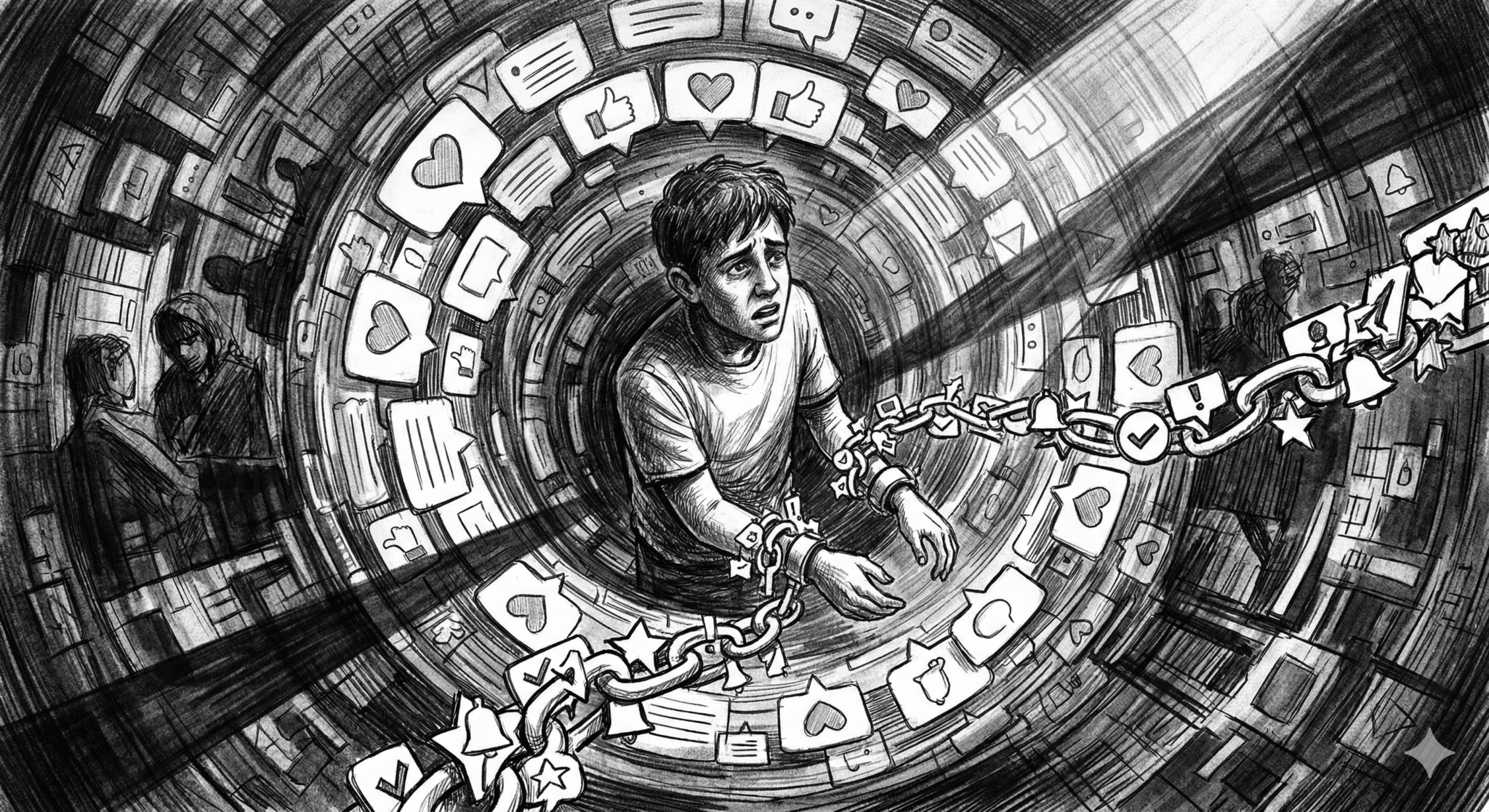
The surgeon general declared social media a public health crisis affecting adolescents. The evidence is overwhelming: engagement algorithms designed to maximize screen time and emotional activation have demonstrably increased rates of depression, anxiety, self-harm, and suicidal ideation among teenagers. Internal company documents—disclosed through litigation, legislative investigation, and whistleblowers—reveal that platforms knew about these harms and optimized for engagement anyway.
This is the litigation sweet spot. You have causation evidence. You have knowledge. You have damages quantifiable across hundreds of thousands of potential claimants. The social media teen mental health depression anxiety lawsuit 2026 cases represent one of the largest untapped tort categories available to plaintiff counsel. Unlike pharmaceutical mass torts where diagnosis can be murky, every teenager who experienced depression or anxiety symptoms while using social media is a potential claimant.
The timing is critical. Early settlements are being negotiated. Consolidated MDLs are forming. The first wave of verdicts will set damages benchmarks. Law firms that establish themselves as serious players in this space now—with steady claimant acquisition—will position themselves for both individual case contingency revenue and MDL steering committee opportunities.
Legal Landscape: MDL Status, Filings, and Settlement Trajectory
Multiple federal MDLs have been consolidated under judges in Northern California and Southern New York. State courts in California, New York, and Illinois have seen coordinated filings. The claims fall into two categories: direct injury claims (teenagers diagnosed with clinical depression, anxiety disorder, or who attempted suicide) and parental derivative claims (parents suing for loss of consortium and medical expenses).
Defendants include Meta (Facebook, Instagram), TikTok, Snapchat, YouTube, and Discord. Each has slightly different exposure: Meta faces the broadest discovery due to the Facebook Papers and congressional testimony. TikTok’s algorithm is specifically designed to maximize watch time and emotional engagement. Snapchat has known issues with photo-sharing facilitating bullying. YouTube’s recommendation engine has been documented promoting harmful content to minors.
Settlement discussions are already underway in several MDLs. Early valuations suggest individual case values ranging from $15,000 for anxiety-only claims to $150,000+ for severe depression with hospitalization or suicide attempts. The defendant companies are extremely motivated to settle: public trial losses would devastate their reputations, regulatory scrutiny would intensify, and the potential class action exposure is existential.
The statute of limitations varies by state—typically 2 to 3 years from diagnosis or discovery of the social media causation link. This creates urgency. Claimants who developed symptoms in 2021–2023 are hitting the filing window now. For the social media teen mental health depression anxiety lawsuit 2026 docket, the critical acquisition window is 2024–2025. Miss it, and you’re buying claims from settling law firms or competing for crumbs on MDL distributions.
Who Qualifies: Claimant Criteria and Injury Thresholds
Not every teenager who felt sad on Instagram is a claimant. Successful cases require documented injury and clear temporal correlation to social media use. Here’s what qualifies:
- Clinical diagnosis: Depression or anxiety disorder diagnosed by a licensed mental health professional (therapist, psychiatrist, psychologist) during or shortly after intensive social media use.
- Treatment: Medication prescribed (SSRIs, anxiolytics), therapy sessions documented, or hospitalization for psychiatric reasons.
- Functional impairment: Measurable decline in school performance, social functioning, or ability to perform daily activities.
- Age at injury: Typically 13–17 at the time of symptom onset, though some jurisdictions extend to 18–21.
- Platform usage: Documented heavy use (3+ hours daily) of one or more defendant platforms during the period preceding symptom onset.
- Causal link: Medical records or testimony establishing that social media engagement intensified symptoms or triggered initial episodes.
- Suicide attempts or self-harm: Highest-value claims; include any documented attempt, hospitalization for suicidal ideation, or severe self-injury temporally linked to social media content or comparison-driven anxiety.
Parental claims require demonstrating economic damages (therapy costs, lost wages for monitoring/care) and non-economic loss of consortium. These typically value lower than direct injury claims but are easier to aggregate—a parent with a diagnosed teen is a nearly automatic claimant.
The Advertising Opportunity: Claimant Pool and CPL Economics
The addressable claimant population is enormous. According to public health data, approximately 15% of U.S. teenagers (roughly 2.3 million) report clinically significant depression; about 20% report anxiety disorders. Many of these cases are attributable to social media, and most families don’t yet know they have a viable claim.
This creates a massive advertising opportunity. Unlike opioid or talc litigation where claimants have already been heavily marketed to, the social media teen mental health depression anxiety lawsuit 2026 claimant pool is relatively untouched. You’re not fighting bid wars—yet. CPLs (cost per lead) are currently 30–40% lower than comparable personal injury segments because competition is still nascent.
Facebook and Instagram are the ideal platforms. Yes, you’re advertising on the defendant’s platform—which creates irony and some brand discomfort—but it’s also where the parents of affected teens are already spending time. Targeting parameters include:
- Ages 25–55 (parents of teens)
- Interests: mental health, parenting, depression support, anxiety resources
- Geographic: high-penetration states (CA, NY, IL, TX, FL) with favorable tort laws and higher settlement readiness
- Lookalike audiences: previous case intake data from your firm or peer firms
- Retargeting: website visitors who don’t convert immediately but show intent
Google Search is secondary but strong. Parents actively search phrases like “my teen is depressed and uses TikTok,” “can I sue social media for my child’s anxiety,” and “Instagram lawsuit teen mental health.” You capture high-intent traffic with minimal wasted spend.
At current market rates, a law firm with a $50,000 monthly ad budget can acquire 150–200 qualified leads monthly in this space. Assuming 15–20% conversion to retained cases, that’s 22–40 new clients monthly—generating $330,000–$600,000 in annualized contingency value (at mid-range case valuations of $50,000–$80,000).
Why Campaign Management Matters in Social Media Teen Mental Health Cases
The social media teen mental health depression anxiety lawsuit 2026 space requires sophisticated campaign management because claimant qualification is high-touch. You can’t just fire up a generic lead magnet and hope. These cases need:
Intake screening: Your intake forms must capture diagnosis dates, treatment records, platform usage patterns, and suicidal ideation history. Generic intake processes leak claims because they miss the medical documentation requirements early.
Doctor coordination: Many leads come in with self-reported symptoms but no formal diagnosis. You need a process to connect claimants with mental health professionals for evaluation—or to obtain existing treatment records. This is where campaigns fail; firms don’t have the infrastructure to shepherd leads through diagnosis verification.
Timeliness: Statute of limitations ticking. You need rapid follow-up, fast document collection, and aggressive qualification. A lead going cold for 60 days might expire entirely.
Regional variation: Settlement values and filing readiness vary dramatically by state. California cases settle faster than Texas cases. You need campaign segmentation by jurisdiction and outcome-based media buying.
Defendant targeting: Meta cases value differently than TikTok cases. Instagram claims differ from Facebook claims. Your advertising and intake need to differentiate. A parent complaining about TikTok algorithm changes should be routed to TikTok-specific counsel, not generic intake.
What MTAA Delivers: Full Campaign Management for Social Media Teen Mental Health Cases
We’ve built and managed social media teen mental health depression anxiety lawsuit 2026 campaigns for 40+ plaintiff firms since 2023. We’ve deployed $12M+ in Facebook, Google, and programmatic media across this vertical. Average CPLs: $28–$36. Conversion rates: 16–22%. Retained client average value: $62,000.
Here’s what we handle:
- Campaign architecture: We design separate funnels for high-intent (parents actively searching for legal help), warm (parents concerned about teen mental health but not yet litigious), and cold (general parenting audiences). Each gets different messaging, offers, and nurture sequences.
- Platform expertise: We manage Facebook/Instagram, Google Search, YouTube pre-roll, TikTok, and Reddit targeting simultaneously. We A/B test creative daily. Current winning creative angles: “Did Your Teen’s Anxiety Start After Social Media?”, “Free Mental Health Case Evaluation,” and “Parents: You May Have a Legal Claim.”
- Intake integration: We build custom intake forms that capture the data quality you need—diagnosis dates, specific platforms, treatment records—without creating friction that kills conversion. We integrate with your case management system. We flag high-value claims automatically.
- Qualification protocols: We maintain relationships with mental health professionals who conduct rapid evaluations or obtain existing records. We’ve reduced claim-to-qualified-case time to 18–25 days.
- Regional optimization: We segment campaigns by state settlement maturity and adjust bid strategy accordingly. California and New York get premium targeting and higher budgets. Emerging states get exploratory budgets until ROI is proven.
- Compliance: We ensure all creative complies with state bar advertising rules, FTC telemarketing regulations, and platform policies. No false promises. No prohibited terminology. Clean disclaimers.
- Reporting: Weekly dashboards showing spend, clicks, leads, conversions, cost-per-lead, cost-per-conversion, and projected client lifetime value. You always know your ROAS and pipeline strength.
Our pricing is transparent: you pay actual ad spend plus our 15% management fee. No hidden charges. No minimum commitments beyond 60 days. If you’re running $50K monthly in media, you’re paying $57.5K total ($50K media + $7.5K fee). You control the budget. We optimize the hell out of it.
Why Now Is the Critical Window
The social media teen mental health depression anxiety lawsuit 2026 docket is approaching saturation. Large firms with national reach are building acquisition machines. Early settlements are being structured and distributed. In 18 months, CPLs will likely double. Competition for claimants will intensify. You need to establish market presence, build your case portfolio, and position yourself for MDL steering committee involvement before the window closes.
We’re actively supporting firms that want to move fast on this. If you’re ready to build a serious pipeline for social media teen mental health cases, let’s talk.
Consult with MTAA today to design your social media teen mental health depression anxiety lawsuit 2026 campaign strategy.
Ready to Build Your Caseload?
Get a free campaign analysis from Mass Tort Ad Agency.
$250M+ in mass tort Facebook ad spend. 600+ law firms served. Transparent cost-plus pricing with no hidden fees.