The Tylenol Autism Litigation: What Every Plaintiff Attorney Needs to Know Right Now
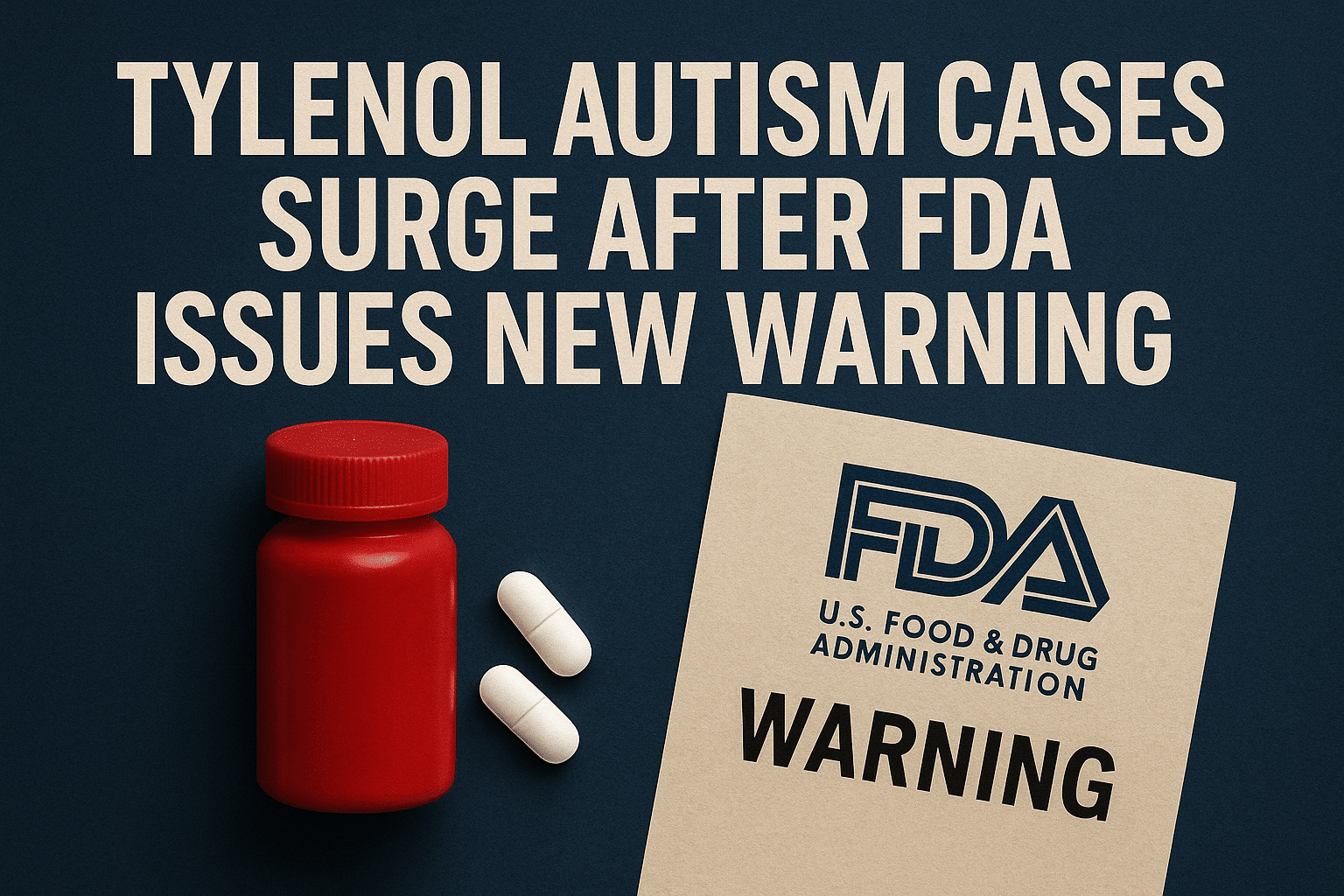
A major public health and legal storm is unfolding. After President Trump urged pregnant women to avoid Tylenol — citing mounting scientific evidence linking prenatal acetaminophen use to autism and ADHD — the FDA announced it will require new warnings on all acetaminophen products. For plaintiff attorneys, this is a watershed moment that has been building for more than a decade.
The case volume is already surging. Legal experts expect individual Tylenol autism cases could settle from $50,000 to over $500,000 per family, making this one of the most significant pharmaceutical liability waves in recent memory. The firms moving now on case acquisition are the ones who will own this docket.
The Evidence That Was Hidden for Over a Decade
What makes this litigation particularly powerful — and particularly dangerous for Johnson & Johnson and Kenvue — is the paper trail of internal knowledge. This isn’t a situation where the science emerged suddenly. Internal documents show that the company knew, debated, and ultimately chose not to act.
In a 2008 internal email, Rachel Weinstein, U.S. Director of Epidemiology for J&J’s Janssen division, wrote after reviewing the available studies: “The weight of evidence is starting to feel heavy to me.” That email sat buried for fifteen years while millions of pregnant women continued using the product without any warning about neurodevelopmental risk.
A 2018 confidential J&J presentation acknowledged “a somewhat consistent” association between prenatal Tylenol exposure and neurodevelopmental disorders. Company scientists debated whether to invest in further research — and ultimately decided against it, with internal notes suggesting concern that new research might validate the existing risk signal.
Meanwhile, FDA scientists were conducting their own analyses. Meta-analyses completed in 2019 and 2022 identified links between acetaminophen and both urogenital and neurodevelopmental risks in exposed children. Yet public warnings lagged for years.
In 2023, when Kenvue had taken over the Tylenol brand from J&J, internal records show the company was actively monitoring consumer concerns and social media discussions through a project internally called “Project Cocoon.” Despite this monitoring — and despite the growing body of scientific literature — Kenvue has publicly maintained there is no proven causal link between Tylenol and autism.
The Legal Landscape in 2026
These disclosures have triggered thousands of lawsuits claiming failure to warn and corporate negligence. The litigation is consolidating rapidly. For plaintiff firms evaluating this tort, here’s where things stand:
- Claimant criteria: Cases involve children diagnosed with autism spectrum disorder or ADHD whose mothers used acetaminophen regularly during pregnancy — typically defined as three or more times per week for an extended period.
- Damages range: Individual case settlement projections range from $50,000 on the low end to over $500,000 for severe autism diagnoses, depending on documented usage and diagnosis severity.
- MDL status: Consolidation proceedings are active. Firms entering the docket now are still in a position to build meaningful case volume before bellwether trials shape settlement dynamics.
- Statute of limitations: Varies by state, but the FDA warning announcement and ongoing media coverage has reset the discovery clock for many potential claimants who are only now connecting their child’s diagnosis to prenatal Tylenol use.
The Advertising Challenge — and How to Solve It
Tylenol autism cases require advertising that is both medically accurate and deeply empathetic. You’re reaching parents — often mothers — who may be experiencing guilt, confusion, and grief about their child’s diagnosis. The messaging has to meet them where they are: validating their experience, explaining the science simply, and offering a clear path to information without overpromising outcomes.
From our experience running pharmaceutical tort campaigns at MTAA, the creative that works in these cases leads with the child — not the lawsuit. It acknowledges the parent’s journey. It explains what the science now shows, what the FDA has said, and what legal options exist. The call to action is information-first, not settlement-first.
Targeting is equally important. The claimant pool for Tylenol autism cases includes parents of children currently between the ages of roughly 4 and 16 — children born during a period of heavy prenatal acetaminophen use. Facebook’s demographic and behavioral targeting tools can reach this population with precision, particularly parents in households with children in that age range who have engaged with content related to autism, ADHD, or child development.
At Mass Tort Ad Agency — with $250M+ in ad spend managed and over 2 million qualified leads delivered across 100+ torts — we have the infrastructure to help plaintiff firms reach affected families quickly, compliantly, and at scale. If your firm is building a Tylenol autism docket, the time to move on advertising is now, before the market becomes saturated and cost-per-lead climbs.
Ready to Scale Your Mass Tort Caseload?
Get a free campaign analysis from Mass Tort Ad Agency.
$250M+ in mass tort Facebook ad spend. 600+ law firms served. Transparent cost-plus pricing with no hidden fees.