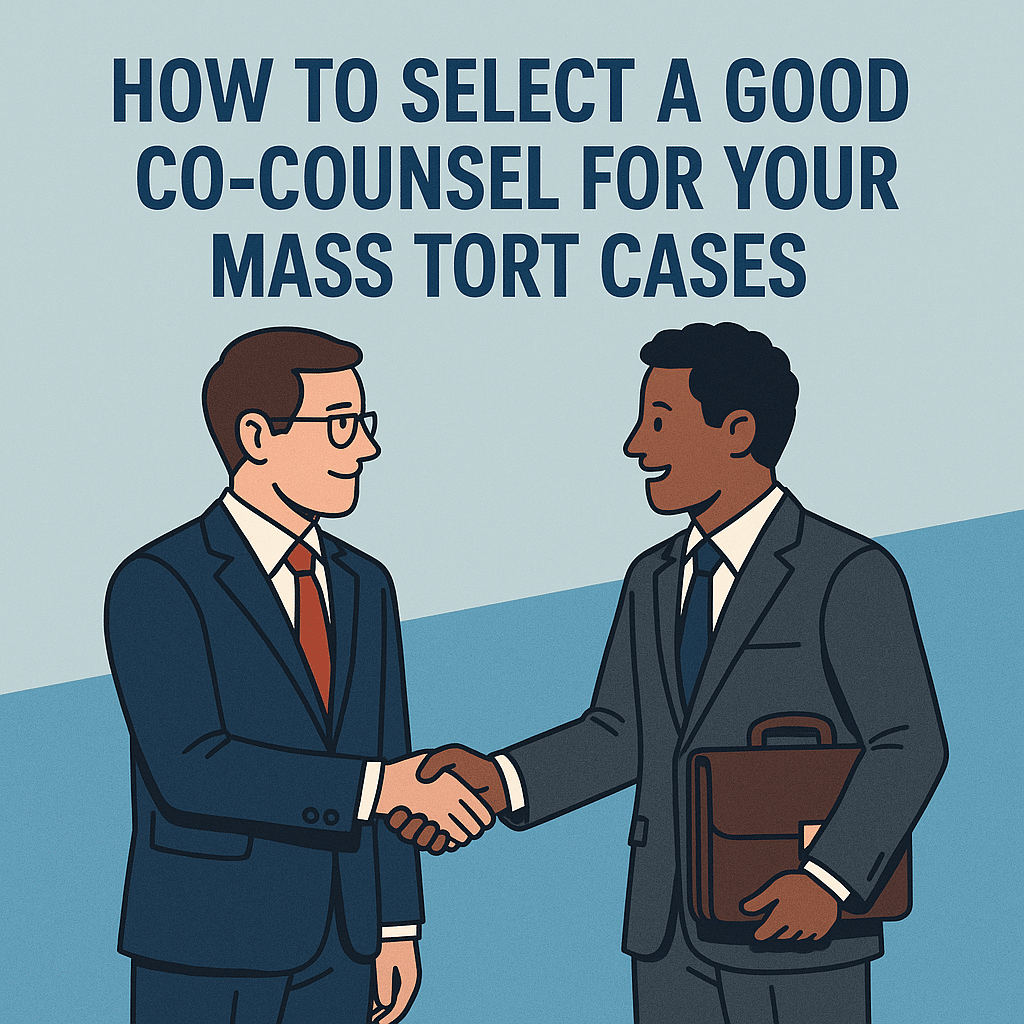
In the high-stakes world of mass tort litigation, choosing the right co-counsel is just as critical as picking the best advertising agency to generate your leads. Why? Because while you’re fronting the ad costs to acquire those cases, your co-counsel gets the benefit of free clients without much initial investment. They might love the influx, but without skin in the game, things can go sideways fast. Over the years at Mass Tort Ad Agency, I’ve seen how poor co-counsel choices lead to lost opportunities, frustrated clients, and diminished returns. In this post, I’ll share practical tips on selecting and managing co-counsel, focusing on ironclad Joint Venture Agreement (JVA) clauses to protect your interests and ensure smooth case progression.
Why Co-Counsel Selection Matters in Mass Tort Litigation
Mass tort cases, like those involving defective products, environmental hazards, or pharmaceutical injuries often require collaboration between firms to handle volume, expertise, and resources. But not all partnerships are created equal. A good co-counsel should complement your strengths, maintain communication, and actively advance cases. Without proper safeguards, you risk delays, lost clients, or even settlement shortfalls.
The key issue? Accountability. You’re investing in lead generation through targeted ads on platforms like Facebook, but if co-counsel drags their feet on follow-up, those clients go cold. I’ve witnessed firms lose 10-20% of clients come settlement time simply because they didn’t stay in touch. That’s why vetting and structuring your agreement upfront is non-negotiable.
Essential Steps to Select the Right Co-Counsel
Before signing on, evaluate potential partners thoroughly:
- Assess Experience and Track Record: Look for firms with proven success in similar mass torts. Review their case history, settlement amounts, and client retention rates. A quick check on legal databases or bar association records can reveal red flags.
- Evaluate Resources and Capacity: Ensure they have the staff, technology, and bandwidth to handle your referrals. Ask about their case management systems and how they track client interactions.
- Check Communication Styles: Opt for co-counsel who prioritize transparency. Discuss expectations early, how often will they update you and shared clients?
- Review Ethical Standards: Confirm they’re in good standing and align with your firm’s values, especially in client-centric practices.
Crafting a Strong JVA: Must-Have Clauses for Accountability
The Joint Venture Agreement (JVA) is your safety net. Don’t treat it as boilerplate, customize it to enforce progress and protect your investment. Here’s what I recommend including:
- Reporting Requirements: Mandate detailed reports starting 30 days after you send over cases, followed by quarterly updates at minimum. These should cover:
- Client contact status: Have they reached out to every referred plaintiff?
- Document collection progress: Are medical records ordered to verify injuries?
- Case milestones: Any filings, discoveries, or hurdles?
- Client Update Obligations: Require co-counsel to send monthly updates to shared clients. This could be via email, portal, or app, covering case status, next steps, and any developments. Include a clause for easy info updates, provide a link or form for clients to report new phone numbers, addresses, or other changes. This simple step combats client attrition, ensuring everyone stays engaged through potentially lengthy litigation.
- Performance Metrics and Remedies: Tie in benchmarks, like response times or retention goals. Add provisions for audits or termination if standards aren’t met.
By embedding these in your JVA, you transform a passive partnership into an active, results-driven one.
Common Pitfalls and How to Avoid Them
From my experience, the biggest mistakes include:
- Skipping Due Diligence: Rushing into partnerships based on reputation alone, always verify.
- Vague Agreements: Ambiguous language leads to disputes; be specific about timelines and deliverables.
- Neglecting Client Experience: Poor communication erodes trust, leading to drop-offs. Monthly updates aren’t just nice, they’re essential for retention.
Final Thoughts on Building Winning Mass Tort Partnerships
Selecting great co-counsel isn’t about finding the biggest name, it’s about alignment, accountability, and shared commitment to clients. With the right setup, you’ll maximize the value of your mass tort cases, turning ad investments into successful settlements. At Mass Tort Ad Agency, we’ve helped countless firms generate those cases; now, arm yourself with these strategies to make the most of them.
Ready to optimize your mass tort advertising? Set up a consultation to learn more about how Mass Tort Ad Agency can help advertise for new clients for this tort.