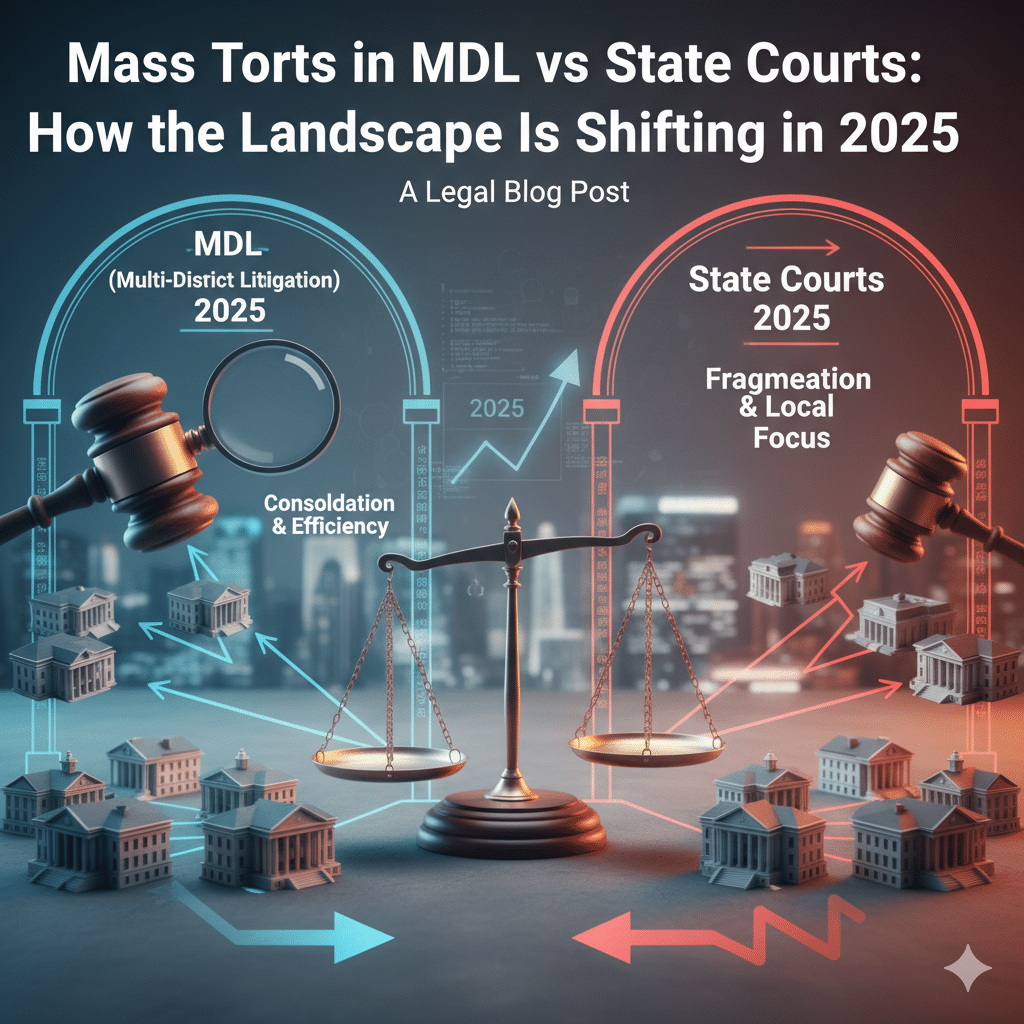
If you’ve been in the mass tort game as long as I have, you know that multidistrict litigation (MDL) used to be the gold standard for handling big cases a decade ago. But times are changing fast. Recent mass torts funneled through MDLs have hit roadblocks and dragged on way longer than one-off trials in state courts. There are plenty of reasons for this shift, but none bigger than the common benefit fund, which can incentivize legacy firms to slow-walk the process for bigger payouts. Don’t get me wrong—MDL firms do stellar work—but the coordination headaches in MDLs often add 12-15 months compared to a single firm pushing a case through state court. In this post, I’ll break down why MDLs are losing some shine, the perks of state court actions, and what this means for law firms chasing efficient settlements in 2025.
The Evolution of MDLs in Mass Tort Litigation
Back in the day, MDLs were a no-brainer for consolidating similar claims from across the country into one federal court, streamlining discovery and pretrial proceedings. They still dominate the federal docket, handling everything from product liability to environmental disasters, and they’ve grown massively accounting for a huge chunk of mass tort cases in the last decade. The benefits are clear: Plaintiffs pool resources, defendants face combined challenges like depositions, and it avoids duplicative efforts across states.
But lately, MDLs have faced criticism for being slow and cumbersome. Coordination among multiple firms can turn into a bureaucratic nightmare, with obstacles like verifying claims and managing massive dockets leading to delays. And when settlements finally hit, that automatic 7-10% cut for the common benefit fund goes to the leadership firms who drove the case, fair in theory, but it adds up and feels outdated in today’s faster-paced legal world.
Why Common Benefit Funds Are a Double-Edged Sword
Let’s talk about the elephant in the room: the common benefit fund (CBF). This fund compensates lead counsel for their work benefiting all plaintiffs, like bellwether trials and discovery. It’s rooted in equity, preventing “free riders” who benefit without contributing. But critics argue it rewards dragging things out, as more billable hours mean bigger shares for legacy firms running the show. We’ve seen disputes over CBF management, with some calling it inefficient or even prone to overreach into non-MDL cases.
Sure, CBFs promote integrity by incentivizing thorough work, but they can slow the entire process. In contrast, state court trials skip this layer, one firm, one case, faster resolutions without the 7-10% haircut. It’s not that MDL work isn’t valuable; it’s just that the system feels antiquated when state courts can deliver verdicts in 12-15 months less time. State court verdicts still produces the same results and that is getting defense to the settlement table.
The Rise of State Court Actions in Mass Torts
State courts are making a comeback for mass torts, especially where local laws or juries favor quicker trials. Unlike MDLs, which centralize everything federally, state actions allow individual lawsuits with personalized strategies, great for nuanced claims where one size doesn’t fit all. Advantages include:
- Speed: Less coordination means faster trials and settlements.
- Higher Individual Payouts: No CBF deductions, and juries can award based on specific damages.
- Strategic Flexibility: File in plaintiff-friendly venues without the MDL lottery.
Of course, state courts aren’t perfectm defendants might face fragmented defenses, and plaintiffs could deal with varying outcomes. But with MDLs under scrutiny for delays and controversies, more firms are opting for state routes to keep momentum.
Navigating the Changing Mass Tort World in 2025
The shift from MDL dominance to a hybrid approach with state courts reflects a broader push for efficiency. Bankruptcy options are even entering the mix for some mass torts, offering global peace but with their own debates. For law firms, the key is adapting: Use MDLs for scale when it makes sense, but don’t overlook state courts for speed and control.
At Mass Tort Ad Agency, we’ve helped firms generate leads for both paths, and we’re seeing more interest in state-focused campaigns to capitalize on these trends.
Ready to optimize your mass tort advertising? Set up a consultation to learn more about how X Social Media can help advertise for new clients for this tort.
Ready to Scale Your Mass Tort Caseload?
Get a free campaign analysis from Mass Tort Ad Agency.
$250M+ in mass tort Facebook ad spend. 600+ law firms served. Transparent cost-plus pricing with no hidden fees.