
Latest Updates
July 16, 2026 update: The Crowell & Moring analysis of Turner v. Epic Games and Roblox is the clearest signal yet that defense-side big law is treating this tort seriously, which historically correlates with accelerating plaintiff-side filings and eventual MDL consolidation. The case targets design mechanics directly, including behavioral loops and in-app purchase systems aimed at minors, keeping the defect theory tight and transferable across defendants. For firms evaluating early entry, this is the kind of institutional attention that tends to compress the window before cost-per-signed-case climbs. Firms already running social media addiction intake have the infrastructure to layer in gaming addiction qualification with minimal friction.
Video Game Addiction Case Acquisition: A High-Risk, High-Reward Bet Worth Watching
Video game addiction case acquisition is emerging as a serious budget consideration for plaintiff firms tracking early-stage mass tort inventory, with thousands of potential claimants, identifiable defendants, and a developing but credible scientific record. The litigation targets major publishers, Activision, EA, Epic Games, and Roblox, whose monetization mechanics are increasingly central to the legal theory. Firms that allocated early capital in social media addiction litigation understand this pattern. The strategic question now is whether to move before claimant acquisition costs rise.
This post is a business evaluation, not a litigation tutorial. The question on the table: is video game addiction worth allocating firm capital and advertising budget to right now, and if so, how much?
The Litigation Landscape and What It Means for Timing
There is no MDL yet. That is the most important fact to hold onto as you read everything else. Video game addiction litigation is at the state court testing phase, where plaintiff attorneys are developing and stress-testing the legal theory before any consolidated federal proceeding takes shape. The MDL formation window is projected for 2025 to 2026, based on current filing trends.
The legal theory maps closely to the social media MDL playbook. Design defect claims allege that variable reward schedules, loot boxes with randomized outcomes, auto-play mechanics, and in-app purchase systems were intentionally engineered to exploit the developing brains of minors. Causation experts who built the framework in the social media MDL have already done significant groundwork that applies here.
Internationally, regulators have moved ahead of U.S. courts. Belgium and the Netherlands classified loot boxes as gambling back in 2018. The WHO added gaming disorder to ICD-11 in 2019. The FTC opened a loot box investigation in 2022. That regulatory record is valuable. It establishes that government bodies with resources and authority looked at these mechanics and found them problematic. That kind of record supports the design defect theory and gives future plaintiff experts a foundation to build on.
No verdicts. No settlements. No bellwether schedule. This is pre-MDL emerging territory, which means case values are theoretical right now. Firms signing cases today are making a thesis investment. The upside, if the litigation consolidates and defendants face the kind of discovery that damaged social media companies, is significant. The risk is that the science stalls, the theory fails to survive Daubert challenges, or Congress steps in with preemptive legislation. Firms need to size their investment accordingly, not the way they would size a mature tort with scheduled bellwether trials.
The Claimant Pool: How Big, How Saturated, How Accessible
The addressable pool is large by any measure. Gaming disorder affects a meaningful slice of the adolescent population, and the defendants named in this litigation operate platforms with hundreds of millions of users, many of them minors. Roblox alone targets children as young as six. EA's FIFA Ultimate Team and Apex Legends loot mechanics are embedded in games marketed aggressively to teenagers. Fortnite's V-Bucks system has been dissected in multiple regulatory proceedings.
The qualification bar tightens the usable pool considerably. The strongest cases involve a documented ICD-11 gaming disorder diagnosis, school records showing functional impairment, medical documentation, and a primary gaming period during which the claimant was under 18. That combination filters out a large percentage of potential claimants who can self-identify as heavy gamers but cannot produce documentation to support a durable case.
Geographic saturation is essentially zero. This tort is not being heavily advertised nationally yet. The firms currently acquiring cases are mostly doing so through organic channels, word of mouth, and co-counsel referrals. Paid media competition is low, which directly affects cost per lead. That window will not stay open once MDL formation becomes a concrete near-term event.
The nationwide eligibility, combined with minor tolling rules that vary by state, means geographic targeting is flexible. Firms do not need to concentrate campaigns in specific markets the way some torts demand.
Video Game Addiction Case Acquisition Economics: Costs, Channels, and Creative
Because this is an emerging tort with low advertising saturation, cost per lead is favorable right now. Early-stage video game addiction case acquisition on paid social is running in ranges significantly below mature torts like Camp Lejeune or AFFF at their peak. That will change as more firms enter the market and CPL climbs with competition.
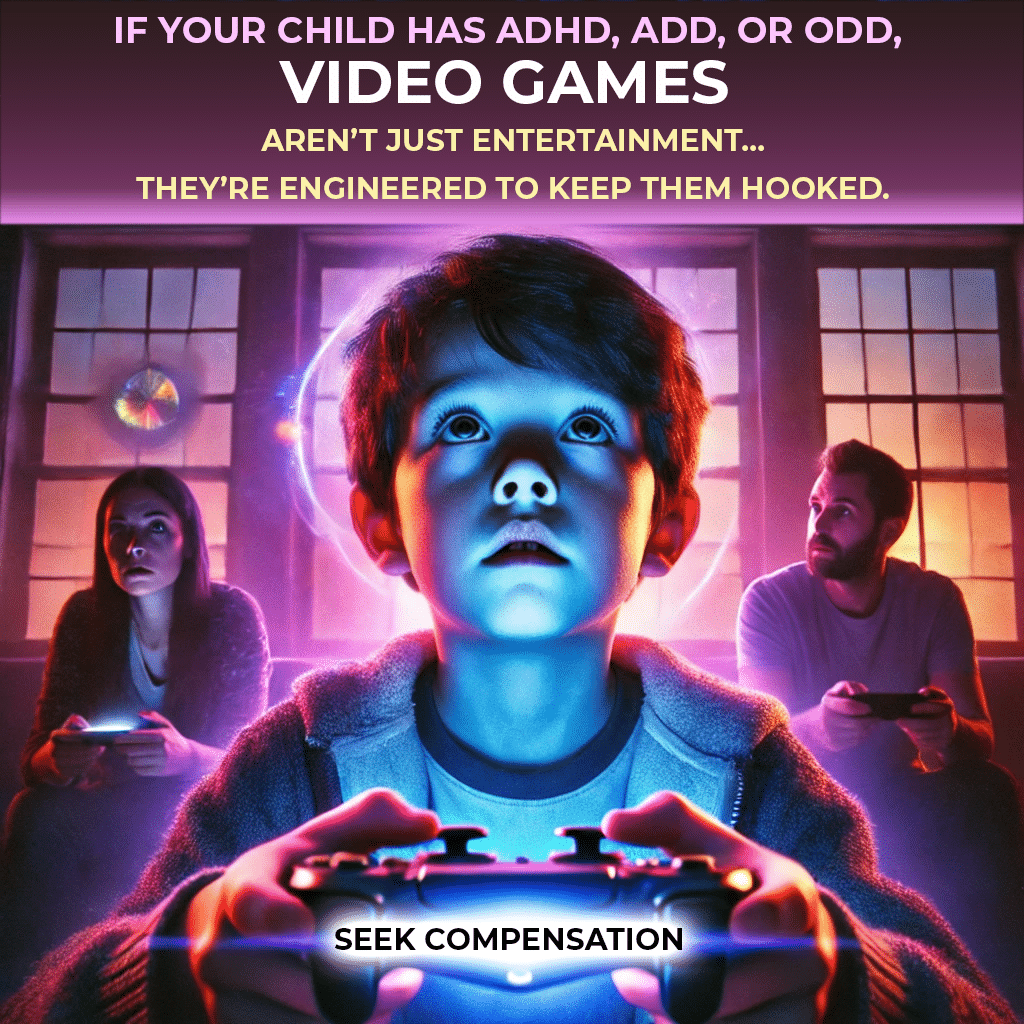
Facebook and Instagram remain the primary paid channels for reaching parents of affected minors, which is the most practical audience for ads focused on documented harm to children. The creative angle that converts is not a symptom checklist. It is a message about accountability, about whether major gaming companies built products designed to keep kids addicted, and whether parents have options. That framing resonates and converts with the parent audience without crossing into claimant-recruitment language that creates intake problems downstream.
YouTube pre-roll can work for awareness and trust-building, particularly for firms that want to build a video presence around the litigation theory. Google search is limited at this stage because search volume for litigation-specific queries is still low. That will shift as media coverage increases around MDL formation.
Cost per signed case in emerging torts is harder to predict than in mature ones because qualification rates vary more widely. Firms running this tort should build their intake math around a conservative signed-case rate and not model acquisition costs on the assumption that early leads will convert like a developed tort with well-understood qualification criteria.
Intake and Qualification: How to Screen and What Makes a Case Stick
The intake challenge in video game addiction is documentation. Almost every parent of a teen gamer can describe compulsive gaming behavior. The cases that hold up in litigation require more than parental observation. Firms need intake processes designed to surface and collect records early.
The core qualification checklist from the firm's side includes: the claimant was a minor during the primary period of heavy gaming, there is a documented ICD-11 gaming disorder diagnosis or a medical record that reflects addiction-related injury, gaming was at a level indicating significant daily use with functional impairment, and school or medical records exist that show harm. The platform matters too. Cases involving EA's Ultimate Team, Fortnite's V-Bucks system, Roblox's in-game purchase structure, and Activision titles with documented loot box mechanics are the clearest targets given defendant exposure.
Retainer flow should build in a documentation collection step before the case is fully signed, or at minimum an immediate post-signing records request. Firms that sign volume without verifying documentation availability will spend money on cases that cannot survive the litigation process. A short intake call specifically designed to probe for medical and school records, not just gaming history, saves money and improves portfolio quality.
AI-assisted intake screening is worth implementing here. Natural language intake tools can run a structured qualification conversation, flag documentation gaps, and route warm leads to a live intake specialist without burning staff hours on every inquiry. We cover specific tools and implementation approaches in "A Lawyer's Guide to AI" for firms that want a practical framework rather than a general overview.
How MTAA Approaches This Tort
At MTAA, we track emerging torts closely precisely because timing is where the acquisition economics are made or lost. We have managed more than $250 million in Facebook ad spend across 600-plus plaintiff firms and more than 100 torts, and the pattern for emerging litigation is consistent: the firms that build volume early at low CPL, with a documented case portfolio, hold a structural advantage when MDL formation accelerates settlement discussions or trial scheduling.
For video game addiction, we work with firms on a transparent cost-plus model, ad spend plus a 15% management fee, with full campaign management covering creative development, audience strategy, compliance review, and performance reporting. For an emerging tort at this stage, we typically recommend a controlled pilot budget that builds a case inventory while the litigation theory matures, rather than a large front-loaded spend that assumes MDL formation on an aggressive timeline.
The creative and compliance considerations for a tort involving minors require careful handling. Ad platforms have specific policies around content involving children, and the legal exposure of a firm running ads that cross into improper territory is real. Firms running this campaign without experienced oversight are taking on unnecessary risk alongside the litigation risk already built into the tort.
The Bottom Line on Video Game Addiction Case Acquisition
Video game addiction case acquisition is a thesis bet, not a mature tort with a clear payout timeline. The defendants are well-capitalized and well-lawyered. The science, while supported by growing regulatory and academic records, has not yet survived Daubert challenges in U.S. courts. MDL formation could accelerate in 2025 to 2026 or take longer. All of that is true, and none of it changes the core calculus for firms that understand how emerging tort economics work: the inventory is cheapest before the market prices in the litigation risk. Firms that build documented case portfolios at today's CPL will be positioned well if this litigation develops the way the social media MDL has. Firms that wait for certainty will pay for it at the cost-per-case level. Video game addiction case acquisition is worth a measured, deliberate allocation of firm capital right now, with clear portfolio benchmarks and a realistic timeline for re-evaluation as the litigation landscape develops.
Ready to Build Your Caseload?
Get a free campaign analysis from Mass Tort Ad Agency.
$250M+ in mass tort Facebook ad spend. 600+ law firms served. Transparent cost-plus pricing with no hidden fees.
Schedule a Free Consultation →Frequently Asked Questions: Advertising Video Game Addiction Cases
What are the current cost-per-lead and cost-per-signed-case economics for video game addiction intake, and how do they compare to social media addiction at the same stage?
Because there is no MDL yet and advertiser competition is minimal, early movers are reporting cost-per-lead figures well below the levels social media addiction commands today, with signed-case costs still in a range that leaves meaningful margin before aggregator pricing inflates. Firms that entered social media litigation early captured inventory at a fraction of current market rates, and the video game addiction market is structurally at that same early-entry inflection point. Locking in volume now, before MDL formation in the projected 2025 to 2026 window, is the primary lever for protecting acquisition economics.
Is the claimant pool large enough to justify a dedicated acquisition budget, or is this a niche with limited volume?
The addressable pool is substantial: roughly 3 billion people play video games globally, and domestic penetration among minors and young adults is high across the primary defendant titles including Roblox, Fortnite, and EA sports franchises. Litigation targets a defined subset, specifically players who developed clinically recognized compulsive use patterns tied to engineered mechanics like loot boxes and variable reward loops, which epidemiological estimates place in the tens of millions in the United States alone. For firms focused on minor plaintiffs with documented parental concern and screen-time data, the intake funnel is wide enough to support aggressive budget allocation.
Which advertising channels are performing for video game addiction case acquisition, and what does a cost-plus media model look like in practice?
Paid search targeting attorney-adjacent and symptom-adjacent queries, Meta campaigns aimed at parents of adolescent heavy users, and YouTube pre-roll tied to gaming content channels are the three channels generating qualified intake volume at this stage. A cost-plus model means the firm pays documented media spend plus a fixed service margin with full transparency into platform invoices, eliminating the markup opacity common in pay-per-lead arrangements and giving the firm direct control over CPL as the market matures. Creative that leads with the engineered-addiction design defect angle, rather than generic injury language, is outperforming because it filters for claimants who already have a framework for liability rather than those simply describing symptoms.
How does the absence of an MDL affect a firm's case acquisition strategy and inventory risk right now?
The pre-MDL phase is when acquisition costs are lowest and claimant inventory can be built without competing against national aggregators who enter aggressively once a federal docket consolidates. The risk is that the legal theory is still being stress-tested at the state court level, so firms are betting on MDL formation materializing in the 2025 to 2026 window rather than signing cases into a confirmed federal proceeding. Firms with risk tolerance for early-stage litigation, similar to those that moved on social media or AFFF before MDL consolidation, are best positioned to absorb that uncertainty in exchange for the acquisition cost advantage.
Who are the named defendants and do they have the financial exposure to make mass tort case acquisition economically viable for a plaintiff firm?
The primary defendants include Activision Blizzard, Electronic Arts, Epic Games, and Roblox Corporation, all of which operate documented monetization systems, specifically loot boxes, battle passes, and in-app purchase loops, that are central to the design defect theory. These companies collectively generate tens of billions in annual revenue directly attributable to the mechanics being challenged, and Activision is now backed by Microsoft, which adds balance sheet depth to the defendant side. The combination of solvent defendants, documented revenue from the allegedly harmful features, and a legal theory borrowed from successful social media litigation makes the damages exposure credible enough to support sustained case acquisition investment.