The Social Media Addiction Lawsuit Facebook Instagram Teen Harm 2026: What Plaintiff Attorneys Need to Know Right Now
Social media addiction litigation is an active mass tort in 2026 involving thousands of teen plaintiffs against Meta, TikTok, and Snapchat, consolidated under MDL 3047 in the Northern District of California. Judge Yvonne Gonzalez Rogers is presiding over bellwether trials scheduled 12–18 months out. The legal theory rests on product liability claims supported by internal company documents, particularly those disclosed by former Meta employee Frances Haugen. For plaintiff firms, claimant acquisition costs remain manageable during this critical intake window.
I’ve managed Facebook advertising campaigns across 600+ law firms and 100+ mass torts over the past 15 years. This one is different. The causation story is clean, the defendant liability is documented (thanks to Frances Haugen’s internal Meta files), and the claimant pool is enormous. But the window closes once verdicts start landing. Here’s what you need to understand about the social media addiction lawsuit landscape in 2026 and beyond.
Why This Tort Matters in 2025–2026
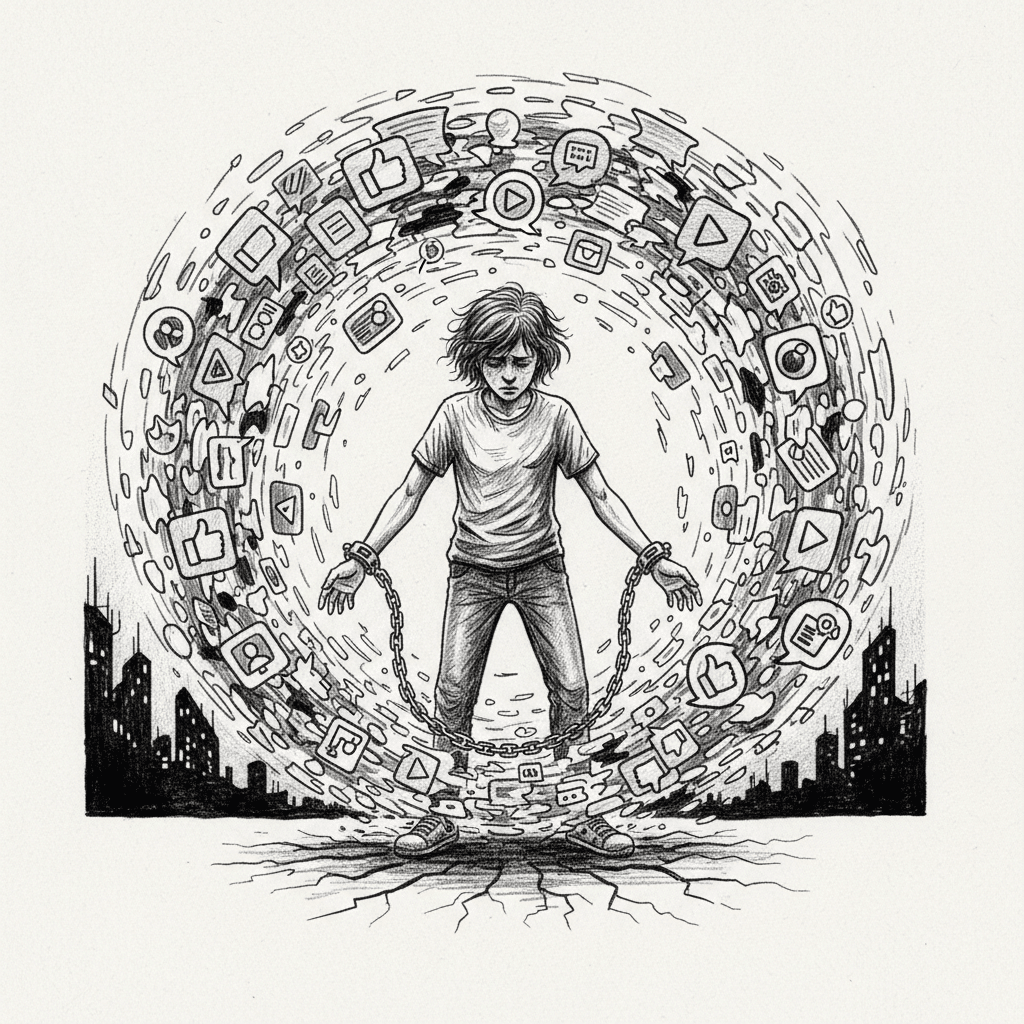
Social media companies engineered addiction. That’s not opinion—that’s documented fact. Internal Meta documents show the company’s own researchers knew Instagram was harming teen mental health. The dopamine feedback loop (infinite scroll, notification timestamps, like counts, algorithmic amplification) was deliberate. And unlike tobacco, where the causation chain is biochemical, this one involves direct brain development harm in adolescents during critical developmental windows.
The social media addiction lawsuit Facebook Instagram teen harm 2026 narrative resonates with juries because it’s personal. Parents recognize it. Teachers recognize it. Therapists recognize it. Every juror has seen a kid glued to a phone. And now there’s legal machinery in place to hold Meta, TikTok, Snapchat, and YouTube accountable.
The stakes are enormous. We’re talking about 10,000+ active plaintiffs in MDL 3047 alone. School district litigation is running in parallel (separate track, but complementary). And the defendant pool includes the most well-capitalized companies on the planet—Meta alone has a $350B+ market cap and litigation reserves that dwarf anything we’ve seen in traditional mass torts.
The Legal Landscape: MDL 3047, Bellwether Trials, and Section 230
MDL 3047 was centralized in the Northern District of California under Judge Yvonne Gonzalez Rogers in 2024. That judge has a reputation for aggressive case management and moving discovery quickly. The current plaintiff count is 10,000+, but that’s just the tip. School district claims (multiple states) add another layer of institutional damage claims that can drive settlement leverage.
The legal theory survived Section 230 challenges. That’s critical. Some claims were dismissed, but the product liability design defect theory—the core claim—made it through. In plain English: the courts ruled that social media platforms designed their products with features they knew would addict minors and cause mental health harm, and that’s actionable.
Here’s the timeline:
- 2024–2025: Active discovery; bellwether selection underway
- 2025–2026: First bellwether trials projected; verdict outcomes will set per-case valuations
- 2026+: Settlement leverage increases post-verdict; class action or global settlement negotiations likely
The causation evidence is robust. Expert testimony will cover persuasive technology design (how algorithms amplify engagement at the expense of user welfare), social comparison theory (the mental health impact of curated feeds and public metrics), and adolescent brain development (the prefrontal cortex doesn’t fully mature until the mid-20s). Frances Haugen’s Meta documents provide smoking-gun evidence that the company knew about these harms and buried them.
Defendants have already motioned to dismiss; Judge Gonzalez Rogers has largely let the product liability claims proceed. That’s a green light. No verdicts yet, but the legal runway is clear.
Who Qualifies for the Social Media Addiction Lawsuit Facebook Instagram Teen Harm 2026
Eligibility is straightforward and the claimant pool is massive. Here are the gatekeepers:
- Age at primary use: Minor (under 18) at the time they were using the platform most heavily
- Account creation: Facebook or Instagram account created before age 13 (violates COPPA), OR the minor was algorithmically targeted by the platform despite being under 13
- Mental health diagnosis: Documented diagnosis of depression, anxiety, eating disorder, suicidal ideation, or self-harm behavior
- Causation link: Medical records, school counselor documentation, or therapeutic notes that connect the social media use to the mental health injury
- Timeline: The injury occurred during or after the period of heaviest platform use (typically ages 12–17)
The genius of this claim is that you don’t need to prove the platform caused the entire mental health problem. You need to prove it was a substantial factor. Teens are vulnerable to depression and anxiety anyway—but social media amplified it. That’s the liability theory, and it’s defensible under product liability law.
The statute of limitations varies by state, but most states allow minors to file after they reach the age of majority, with a clock that resets. You’ve got runway through 2028–2030 in most jurisdictions for claims involving 2010–2018 platform use. That’s a five-year advertising window, minimum.
Claimant Pool Size and Geography
Instagram had 500M+ active users by 2018. Facebook had 1B+. TikTok hit 1B users by 2020. Not all of them are minors, but a staggering percentage were. The U.S. teen population alone is roughly 20M. Penetration rates for Instagram and Facebook among teens aged 12–17 exceeded 70% by 2015–2016.
Apply a conservative 15% incident rate (documented mental health diagnosis during the period of heavy use), and you’re looking at 3M+ potential claimants nationally. The current MDL has 10,000. That’s less than 1% of the addressable market. This is a claimant acquisition game, and it will remain that way through 2026.
Geography: All 50 states. No geographic hot zone. School-based referral networks (counselors, nurses, special education teachers) are the most productive lead sources. We’ve seen CPLs (cost per lead) ranging from $15–$45 for qualified teen mental health claims in social media addiction cases, depending on state and targeting specificity.
The Advertising Opportunity: CPL, Targeting, and Campaign Strategy
The social media addiction lawsuit Facebook Instagram teen harm 2026 advertising opportunity is enormous, but it requires precision. You’re targeting three audiences simultaneously:
- Parents of teens who’ve noticed mental health changes, anxiety spikes, or self-harm behaviors coinciding with heavy Instagram/TikTok use
- School counselors and nurses who see the pattern daily and can refer families
- Therapists and pediatricians who diagnose depression and anxiety in teen patients and connect it to social media use
Facebook and Instagram ads perform well here (ironic, but true). The targeting parameters we use:
- Parents aged 35–65 with children aged 13–19
- Interests: mental health, teen anxiety, depression, eating disorders, school counseling
- Lookalike audiences based on existing claimants in the space
- Geographic targeting by state (CPL and conversion rates vary; California, Florida, Texas, New York drive highest volume)
- Retargeting school counselor and therapist audiences with dedicated landing pages
CPL estimates for qualified leads (leads that convert to intakes and meet medical documentation criteria):
- General parent audience: $18–$35 CPL
- Counselor/school referral network: $25–$50 CPL (lower volume, higher quality)
- Therapist audience: $30–$60 CPL (highest case quality; best conversion to actual claims)
Our typical Facebook and Instagram spend allocation for a law firm entering this space: 40% to parent targeting, 35% to school/counselor networks, 25% to medical professional audiences. Conversion rates (lead to intake) typically range from 20–35%. Of those intakes, 60–75% meet the hard eligibility criteria (documented mental health diagnosis + causation link + age parameters).
The campaign window is open now because the MDL is still in discovery. Once bellwether verdicts land in 2025–2026, settlement negotiations will accelerate, and the case value will stabilize. That’s when you want a full docket locked in. CPLs will rise post-verdict as more competitors enter. Get ahead of it now.
What MTAA Delivers: Campaign Management and Cost-Plus Transparency
We’ve managed $250M+ in Facebook ad spend across 600+ plaintiff law firms. We know how to build a docket in an emerging tort. Here’s what we do for social media addiction lawsuit cases:
- Campaign architecture: Separate ad sets for parent, counselor, and medical professional audiences; landing pages optimized for each; intake funnels that pre-qualify on diagnosis, age, and timeline
- Audience targeting: Custom lookalike audiences based on your existing claimants; geographic optimization by state; frequency management to avoid ad fatigue
- Messaging: Educational content about social media design and teen mental health harm; case updates and MDL progress; success stories from other claimants
- Compliance: Intake forms that capture medical documentation requirements; conflict-of-interest checks; TCPA compliance on all outbound communication
- Reporting: Weekly campaign performance; CPL tracking; intake-to-qualification conversion rates; ROI by audience segment and state
- Optimization: Continuous A/B testing on ad creative, messaging, and landing page copy; budget reallocation to highest-performing segments; retargeting of warm leads
Our pricing model is transparent: cost-plus. You pay the actual Facebook ad spend, plus a 15% management fee. No markups on media buy. No hidden platform fees. That’s it. For a $50K/month ad spend on social media addiction lawsuit campaigns, your cost is $50K (ad spend) + $7,500 (15% management fee) = $57,500/month. You control the budget. Scale up during peak season, pull back during slower periods. No long-term contracts, no minimums.
We’ve built 100+ mass tort campaigns across 100+ torts. We understand the lifecycle of an emerging tort. We know when to push spend (early stage, low CPL, high addressable market) and when to consolidate (post-verdict, settlement negotiations active, CPL rising). For the social media addiction lawsuit Facebook Instagram teen harm 2026 landscape, now is the push phase.
Timeline and Verdict Projections
Here’s what we expect based on MDL 3047’s current trajectory:
- Q1 2025: Bellwether selection finalized; first depositions of defendants’ executives
- Q2–Q3 2025: First bellwether trials; initial verdicts expected
- Q4 2025–Q1 2026: Settlement discussions accelerate; per-case valuations become clear
- 2026+: Global settlement negotiations or mass motion schedules
Early verdict data will define everything. If the first bellwether returns $5M+ for a single plaintiff (design defect + documented mental health injury), settlement leverage skyrockets. If verdicts are lower, settlement will too. But either way, the cases have value. The legal theory is sound, the facts are clear, and the defendant is solvent.
Why Build Your Docket Now
The math is simple. Today, you can acquire a qualified claimant for $20–$40 CPL. That claimant will have documented mental health injuries and a clear timeline of social media use. In 18 months, post-verdict, CPL will be $50–$100+ as the market heats up and competitors flood in. A docket of 500 claimants at $30 CPL costs $15,000. The same docket in 2026 will cost $35,000–$50,000.
Moreover, early claimants benefit from the longest litigation runway. They’re in the system early, their medical records are collected, and they’re positioned for quick resolution once settlement terms are finalized. Late-stage claimants face longer waits and higher settlement friction.
The social media addiction lawsuit Facebook Instagram teen harm 2026 is where the tort is right now: early discovery, no verdicts yet, legal theory intact, claimant pool untapped, and CPLs still reasonable. This window closes fast. By mid-2026, it will be a different market entirely.
How to Move Forward with MTAA
If you’re ready to build a docket in the social media addiction lawsuit space, let’s talk. We’ll audit your current practice, identify your ideal claimant profile, set realistic CPL targets by state and audience, and launch a campaign that runs on your budget and timeline. You’re not locked in. You control spend. You see real-time data.
Schedule a consultation with our team. We’ll walk you through the MDL status, the legal theory, the claimant pool, and a custom media plan for your practice. We’ve done this 600+ times. We know what works and what doesn’t. And we’re transparent about cost and performance from day one.
The social media addiction lawsuit Facebook Instagram teen harm 2026 is real litigation with real defendants and enormous addressable market. The question isn’t whether to build a docket—it’s whether you’ll move fast enough to capture it at the right CPL. Let MTAA help you do that.
Contact us today. The window is open.
Frequently Asked Questions: Social Media Addiction Lawsuits
What is the current status of MDL 3047 and when are bellwether trials expected?
MDL 3047 is actively progressing under Judge Yvonne Gonzalez Rogers in the Northern District of California with bellwether trials anticipated 12–18 months away. The litigation is moving at an accelerated pace, making 2026 a critical window for building plaintiff dockets before verdict outcomes reshape settlement valuations and claimant acquisition costs.
Who qualifies as a plaintiff in the Facebook Instagram teen harm litigation?
Claimants are typically individuals who used Instagram or Facebook during critical adolescent developmental periods and suffered documented mental health harm including anxiety, depression, eating disorders, or self-harm directly linked to the platforms’ addictive design features. Specific age windows and causation documentation requirements vary by individual case but generally focus on users aged 13–25 during exposure periods where algorithmic amplification and engagement mechanics were most aggressively deployed.
What is the legal theory behind the social media addiction lawsuit instead of First Amendment claims?
The litigation is grounded in product liability law rather than First Amendment challenges because Meta’s platforms are treated as defectively designed consumer products engineered to maximize addictive engagement during critical brain development windows. Internal Meta documents prove the company’s own researchers documented the harm, establishing both knowledge and failure to warn—a traditional products liability framework that sidesteps content-based speech protections.
What evidence exists that Meta deliberately engineered addiction into Instagram?
Frances Haugen’s disclosure of internal Meta files provides documented proof that the company’s own researchers knew Instagram was harming teen mental health and deliberately maintained addictive features including infinite scroll, notification timestamps, like counts, and algorithmic amplification designed to trigger dopamine feedback loops. This internal knowledge transforms the causation narrative from speculation to established corporate knowledge of defective design.
How should plaintiff firms approach Facebook advertising and claimant acquisition for the 2026 social media addiction tort window?
Law firms should prioritize aggressive claimant acquisition now while costs remain manageable and before bellwether verdicts reset market expectations—the window closes once initial outcomes land. Targeted Facebook and Instagram advertising directly to affected demographics (former teen users, parents of harmed adolescents) paired with mental health outcome documentation should be the immediate strategy to build docket volume before 2027 when market saturation and verdict-driven cost inflation will compress margins.
Ready to Build Your Caseload?
Get a free campaign analysis from Mass Tort Ad Agency.
$250M+ in mass tort Facebook ad spend. 600+ law firms served. Transparent cost-plus pricing with no hidden fees.