AI Can Scale Your Law Firm. It Can't Make Anyone Trust You.
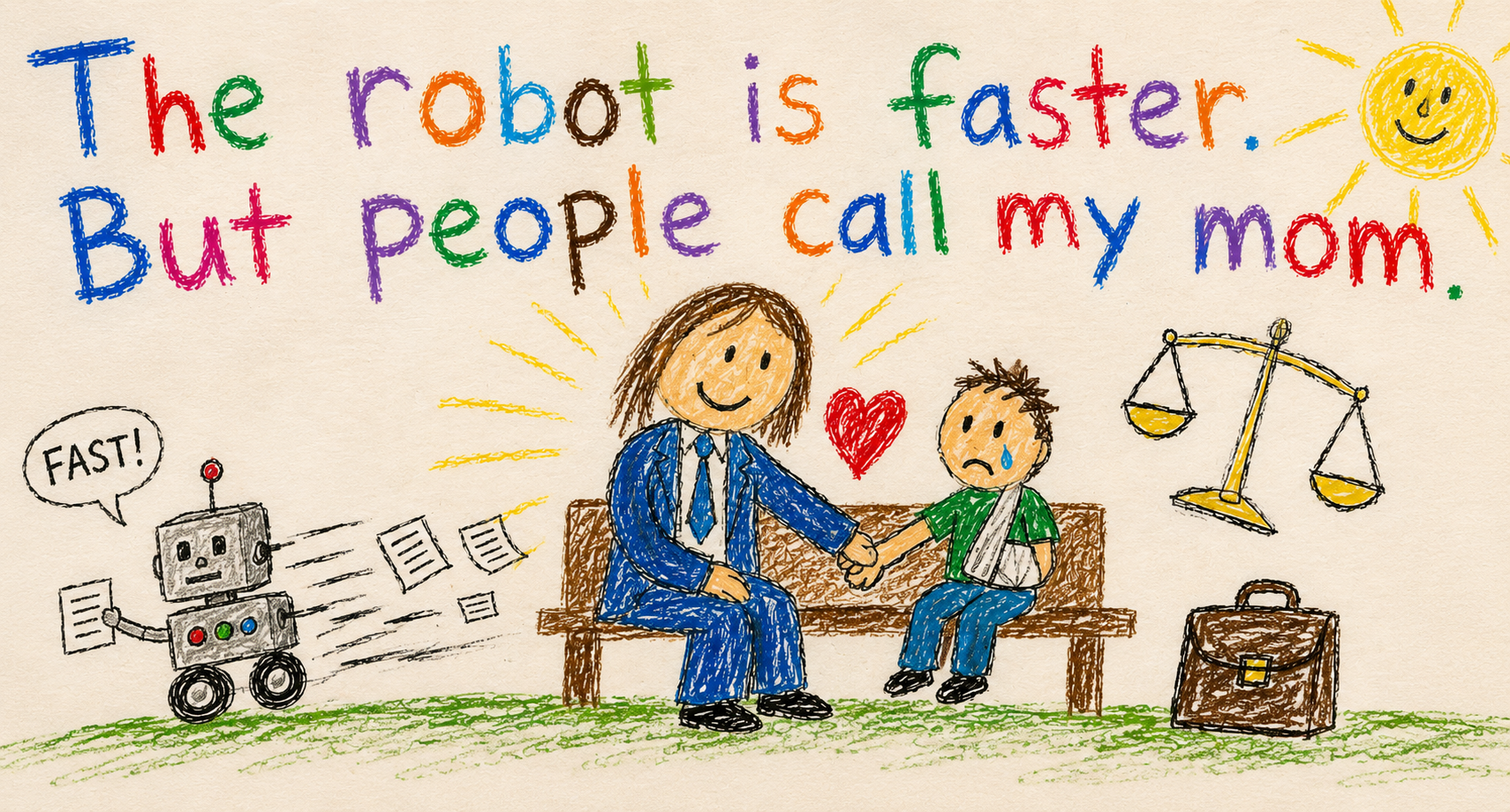
AI has changed how law firms work — it writes faster, designs faster, and analyzes faster than any team could a few years ago. But it has not changed why clients hire. People retain a firm because they trust a human being, not because an algorithm was efficient. The firms that win the next decade will use AI to scale and people to build trust — and never confuse the two roles.
I build AI tools for a living. Not as a hobby, not as a side experiment — production systems that move real ad spend and real cases every day. So when I say what I'm about to say, understand it isn't coming from someone afraid of the technology. It's coming from someone elbow-deep in it. (If you want the long version, I'm writing it all down in A Lawyer's Guide to AI.)
Here it is: AI has changed how we work. It has not changed why people buy.
Nobody Hires a Lawyer Because of an Algorithm
Think about the last serious decision you trusted someone else with. Picking a doctor. Hiring a lawyer. Handing your business to an agency. You didn't choose them because their automation was impressive. You chose them because you believed them — because something in how they showed up made you think, "These are my people. They'll actually fight for me."
That feeling has never been generated by a model. It's generated by a human being who looks you in the eye and means what they say.
In legal marketing this is brutally obvious. A person who's been injured, who's scared, who's been ignored by the system for months, does not retain a firm because the intake form loaded quickly. They retain the firm because somewhere in the process, a human made them feel seen. Convenience got them to the door. Connection is what made them walk through it.
The Mistake Leaders Are About to Make
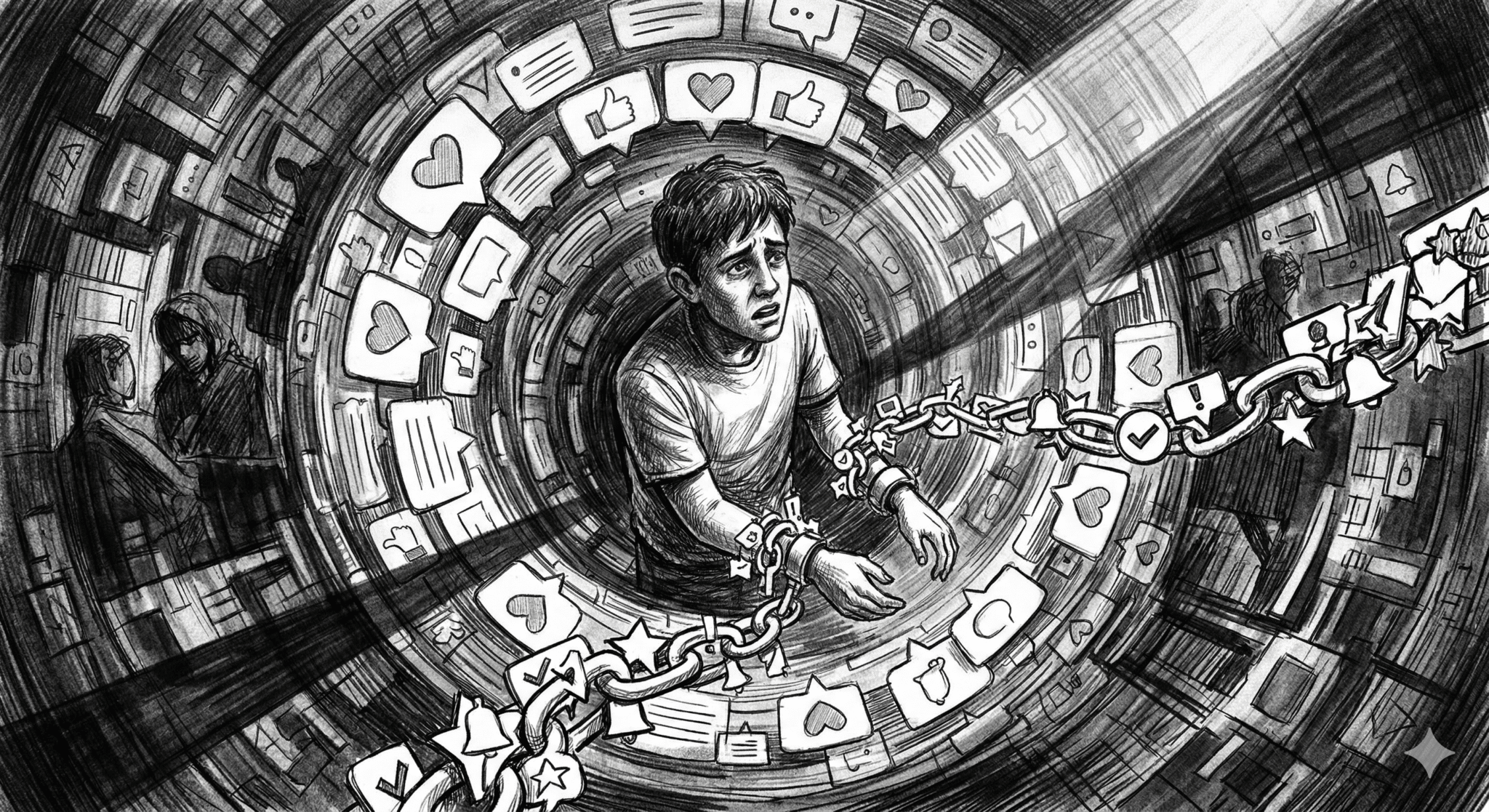
A lot of leaders are quietly handing trust-building over to machines right now. They're automating the relationship itself — the follow-up, the "personal" note, the check-in — and calling it efficiency. They're not building brands. They're building products.
A product is something people use. A brand is something people believe in. And belief has never once been manufactured by automation. You can automate the delivery of a message. You cannot automate the credibility behind it.
- Efficiency doesn't create loyalty.
- Automation doesn't win hearts.
- Data doesn't tell your story.
Those three sentences are where most "AI strategies" quietly fall apart. They optimize the machine and forget the human — and then wonder why the numbers go up while the relationships go cold.
The Answer Isn't Either/Or. It's Both — With the Roles Kept Straight.
Here's where I land, and it's not the anti-AI take you might expect from the rest of this article. The strongest brands of the next decade won't be the ones who picked a side. They'll be the ones who mastered both — and never confused the two jobs:
- AI to scale. Let it do the volume, the speed, the heavy lifting, the 2 a.m. work no human should be doing by hand.
- People to connect. Keep humans on the part that's actually human — the trust, the judgment, the moment that makes someone feel like they matter.
The danger isn't using AI. The danger is letting AI quietly take over the one job it was never built to do. Master both, keep the roles clean, and you get the reach of a machine with the warmth of a person. Confuse them, and you get a fast, scalable, forgettable brand that nobody trusts.
Convenience Attracts. Connection Keeps.
That's the simplest way I can put it. AI is the best convenience engine ever built. Use it — I do, relentlessly. But the moment you let it stand in for the human trust that actually closes the deal and keeps the relationship alive, you've automated away the only thing your competitors can't copy.
The technology isn't killing human connection. If anything, it's doing the opposite. It's stripping away the busywork we used to hide behind and exposing the real question underneath: when the speed and the scale and the convenience are all handled, what are you — the human — actually bringing to the table?
That's not a threat. For a plaintiff firm whose entire reputation is built on fighting for people, it's the best opportunity in a generation to be more human, not less. That's the same belief that runs through how we build campaigns for law firms: let the machine scale the reach, and keep a human on the trust.
So I'll leave you with the question I keep asking myself: is AI killing the human side of this business — or is it finally forcing us to double down on the part that made us human in the first place?
AI won't build trust — but it shapes the first impression — When a client asks AI to recommend a lawyer, what does it say about you? See what AI tells them with a free AdaptLegal visibility check. No signup.