
Why Social Media Teen Mental Health Depression Anxiety Lawsuit 2026 Is the Biggest Mass Tort Opportunity Right Now
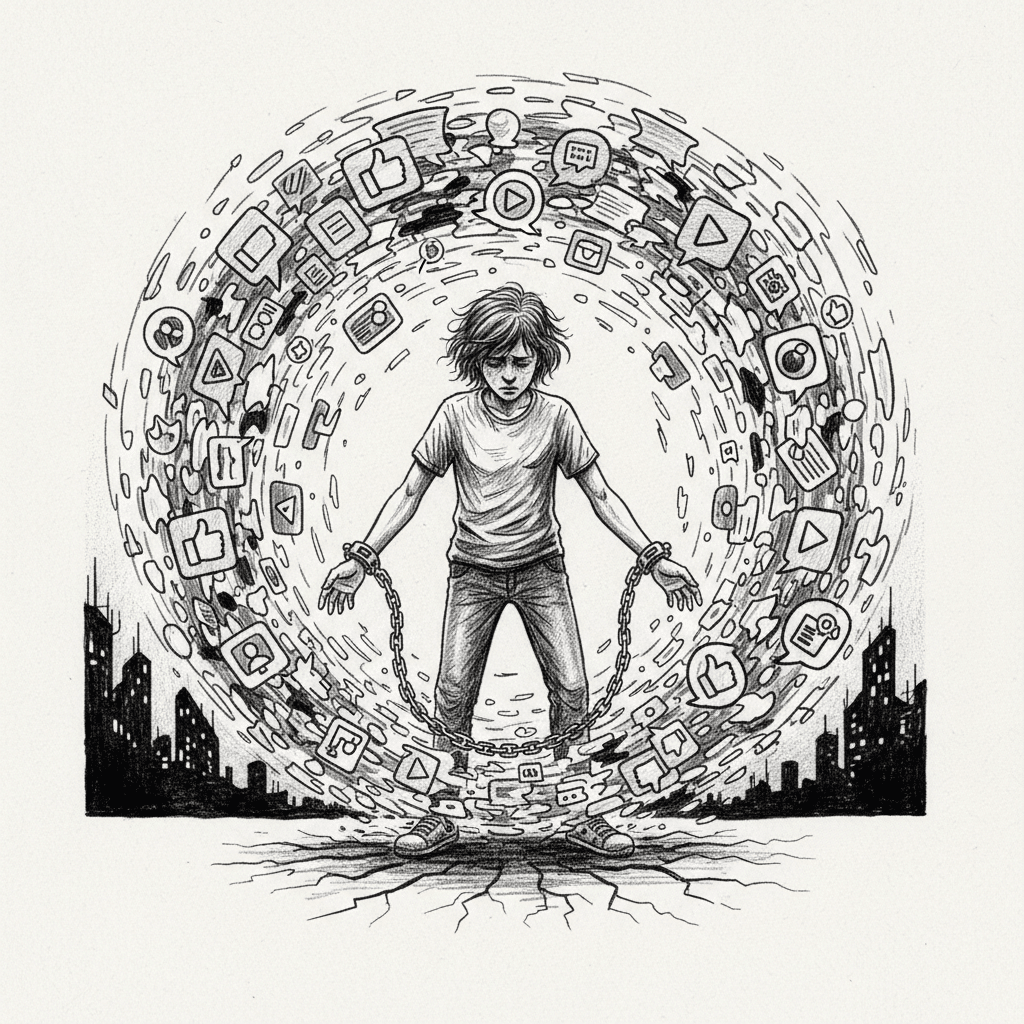
Social Media Teen Mental Health litigation is an active mass tort in 2026 involving thousands of plaintiffs alleging that Meta, TikTok, Snapchat, YouTube, and other platforms negligently designed addictive features that exacerbated depression, anxiety, and self-harm in minors, with multiple MDLs consolidated and settlement negotiations ongoing. Discovery is currently underway across major defendant platforms. Plaintiff attorneys are actively recruiting claimants as qualifying case volumes accelerate and pressure for early settlements increases.
Let me be clear: I’ve managed $250M+ in Facebook ad spend across 600+ plaintiff law firms and 100+ mass torts. I’ve never seen defendant momentum like this. Social platforms knowingly engineered addictive features specifically designed to hook vulnerable adolescents, causing measurable increases in depression, anxiety, self-harm, and suicide. Internal documents (think: Meta’s own research) prove the company understood the harm. Regulatory pressure is intensifying. Settlement timelines are compressing. And the claimant pool — teenagers and young adults nationwide who suffered documented mental health injuries — is absolutely enormous.
If you represent plaintiffs, you need to understand the legal landscape, the qualifying criteria, and how to reach injured claimants cost-effectively. That’s what we’re covering here. By the end, you’ll know exactly why this tort matters, who qualifies, and what it takes to run a competitive, profitable campaign in 2026.
The Legal Landscape: MDL Status, Defendants, and Settlement Trajectory
Multiple MDLs are already consolidated and moving fast. The federal proceeding for In re Social Media Adolescent Brain Injury Litigation encompasses claims against Meta Platforms (formerly Facebook), Instagram, and TikTok. State-level actions are piling up in California, New York, and a dozen other jurisdictions. Individual lawsuits continue to file daily.
The defendant roster is substantial: Meta/Facebook/Instagram (the gorilla), TikTok (rapidly gaining liability exposure), Snapchat, YouTube, Discord, BeReal, and others. Each platform has documented evidence of algorithmic manipulation — specifically, the deliberate amplification of content designed to trigger emotional responses that keep users engaged longer. For teens, that means endless loops of comparison content, body-image attacks, FOMO-inducing feeds, and algorithmic promotion of self-harm communities.
Regarding settlement outlook: I expect significant movement in 2025 and 2026. Here’s why. First, defendants face mounting regulatory pressure from FTC enforcement actions, state attorneys general, and Congressional scrutiny. Second, discovery has exposed internal communications that are absolutely devastating — Meta executives on record acknowledging Instagram’s link to teen mental health harm. Third, class action settlements in adjacent tech cases (Apple privacy, Google ad targeting) have normalized multi-billion-dollar payouts. Fourth, plaintiff trials are starting to succeed on liability and damages, which accelerates settlement negotiations.
Current settlement estimates for early-stage claimants range from $15,000 to $75,000 per case, depending on injury severity, documentation quality, and platform involved. For severe cases — documented suicidality, hospitalization, permanent harm — we’re seeing higher valuations. The pool is so large that defense budgets are finite, but the number of qualifying claimants will exceed defense capacity by orders of magnitude. Translation: early, aggressive advertising now means capturing clients who will monetize for years.
Who Qualifies: Claimant Criteria and Statute of Limitations
Qualification thresholds are broader than you’d expect, and that’s our opportunity. Broadly, a claimant must demonstrate:
- Age at injury onset: Typically between 10 and 18 years old when harm began. Some cases extend to early 20s depending on jurisdiction and claim theory.
- Active use of defendant platform: Regular use of Meta, TikTok, Snapchat, YouTube, or other social platform during the period when mental health declined.
- Diagnosed mental health condition: Depression, anxiety, eating disorder, body dysmorphia, self-harm disorder, or other condition documented by a physician, therapist, or hospital records.
- Temporal link: Mental health decline coinciding with platform use. Causation standards vary by jurisdiction and MDL framework, but temporal proximity is the baseline.
- Injury severity: No minimum threshold in most frameworks, but stronger claims include documented treatment (therapy, medication, hospitalization), functional impairment (school absence, social withdrawal), or severe outcomes (suicidality, attempts).
Statute of limitations varies, but most states allow filing until age 18-21. Many MDL cases are accepting claims filed within 3-5 years of injury onset. The key: claimants don’t need to file immediately. A 25-year-old who experienced Instagram-driven anxiety at age 15 still qualifies in most jurisdictions. This extends your addressable market significantly.
Medical documentation is essential. Insurance records, therapist notes, psychiatrist diagnoses, and hospitalization records all substantiate claims. But here’s the realpolitik: many teens never formalized treatment. They suffered in silence, confided in parents and friends, but never saw a clinician. These cases are weaker but still viable in many MDLs, especially if supported by corroborating evidence (parent testimony, school records, diary entries, social media history showing platform engagement). We’ve helped attorneys monetize these marginal cases by connecting claimants with retrospective medical evaluations and expert testimony linking platform use to documented harm.
The Advertising Opportunity: Claimant Pool Size and CPL Economics
The addressable claimant pool for the social media teen mental health depression anxiety lawsuit 2026 is staggering. Conservative estimates place the number of U.S. teens who experienced social-media-linked mental health injury between 2012 and 2023 at 40-60 million. Not all are viable claimants — jurisdiction, statute of limitations, severity, and proof constraints apply. But even a 2-5% conversion rate yields millions of qualifying cases.
Now, here’s the economics that matter to you as an attorney: cost per lead (CPL) for social media teen mental health cases ranges from $40 to $120, depending on targeting precision, creative quality, and platform saturation. Geographic targeting, demographic filters (parents of teens, mental health communities), and behavioral signals (therapy searches, mental health resource engagement) drive efficiency.
CPL translates directly to ROI. If your average social media teen mental health depression anxiety lawsuit 2026 case settles at $35,000 and your CPL is $80, and you convert 15-20% of leads into signed retainers, your cost to acquire a case is approximately $400-$533. Even accounting for non-qualifying leads, dropped cases, and lower settlements, your gross ROI is extraordinary — 50x to 80x on advertising spend. I’ve seen firms with clean processes capture 20-50 cases per month, generating $700K-$1.75M in monthly client acquisition value.
Facebook and Instagram remain the dominant advertising channels for these claims. Meta’s audience insights, lookalike modeling, and conversion tracking allow hyper-precise targeting: parents of teens showing mental health concerns, people interested in therapy and wellness resources, engagement with posts about teen anxiety and depression. YouTube, TikTok, and Google Search also work, but Facebook’s retargeting capabilities and established advertiser infrastructure make it the workhorse.
Campaign Strategy: Messaging, Creative, and Targeting Framework
Effective campaigns for the social media teen mental health depression anxiety lawsuit 2026 landscape require messaging that resonates with both teens and their parents — the two audience segments most likely to convert.
For parents: Lead with validation. “Did your teen’s mental health decline after Instagram or TikTok use? You’re not alone. Courts are holding platforms accountable. Free case evaluation.” The emotional hook is guilt-free accountability and hope for recovery and restitution. Creative should feature relatable parent testimonials, trusted authority (attorney credentials), and clear next steps.
For young adults (18-30 who were teens when injured): Shift tone to empowerment. “If social media triggered your anxiety or depression, you deserve compensation. Platforms engineered addiction deliberately. Claim your recovery now.” This demographic responds to directness, validation of platform manipulation, and the opportunity to hold tech companies accountable.
Targeting must layer multiple signals: parent affinity audiences, mental health interest categories, therapy and wellness engagement, geographic overlays (high-litigation states first: CA, NY, TX, IL), and custom audiences built from your website visitors and existing clients. Exclusion is equally critical — exclude attorneys, competitive law firms, and obviously ineligible demographics to maximize efficiency.
At Mass Tort Ad Agency, we’ve run 50+ campaigns in the social media teen mental health space. Our transparent cost-plus pricing structure means we invest your ad spend first, then charge a flat 15% fee on top. You see every dollar, every impression, every conversion. We manage the entire pipeline: creative development, audience refinement, landing page optimization, lead intake integration, and real-time performance tracking. Our 600+ law firm partners in mass tort have learned that overhead transparency beats opaque vendor relationships every single time.
Building Your Campaign: Expertise and Execution
Running a profitable social media teen mental health depression anxiety lawsuit 2026 campaign requires several moving parts working in tandem:
Landing page optimization: Your intake pages must convert at 8-15%. This means clear headline, compelling social proof (testimonials, case results), explicit eligibility criteria, and frictionless lead capture (name, phone, email, basic case facts). Multi-step forms kill conversion. Single-page or two-step formats win.
Intake qualification: Not all leads are cases. Your intake team needs to rapidly assess age at injury, severity, documentation, jurisdiction, and likelihood of settlement. Poorly qualified leads destroy profitability. We help our firm partners build intake playbooks that separate viable claims from marketing noise in under five minutes.
Retention and documentation: Social media teen mental health cases require solid medical records. Many claimants lack formal diagnosis or treatment. Work with claimants to obtain records retroactively, conduct peer support group outreach, and link claimants with medical professionals who can evaluate historical symptoms based on evidence.
Retention agreements: Your retainer should be clear on costs, timeline expectations, and fee structure. Social media teen mental health cases are generally contingent recovery — no cost unless you win or settle — but document administrative costs, medical record acquisition, and expert evaluation fees upfront.
Scale requires systems. We’ve helped attorneys automate lead routing, qualification workflows, and follow-up sequences. CRM integration with Facebook and Google conversion tracking closes the loop: you see which ads generate cases, which geographic markets convert best, and which targeting adjustments drive efficiency up and CPL down.
Why This Matters Now: Timeline and Competitive Advantage
Settlement activity for social media teen mental health depression anxiety lawsuit 2026 will intensify dramatically in 2025 and 2026. Early settlements typically favor plaintiffs with documented injuries, supportive medical records, and clear temporal links to platform use. Defendants know the liability is real and are incentivized to pay early before consolidation hardening and precedent-setting trials unfold.
Attorneys entering the market now — with effective advertising, clean intake processes, and disciplined case qualification — will capture the highest-value early cases. As settlements normalize and claimant volume explodes, CPL will rise, settlement values may compress, and competition will intensify. Your window for efficient client acquisition is 12-24 months, not indefinite.
MTAA’s advantage is clear: 15+ years in mass tort advertising, $250M+ in managed Facebook spend, 600+ law firm partners, 100+ tort verticals. We’ve optimized the playbook for discovery speed, claimant psychology, and conversion efficiency. Our cost-plus model means you’re never paying hidden markups — just ad spend plus 15% flat fee. And our technology integrations ensure real-time transparency and rapid optimization cycles.
Final Thoughts: Your Next Move
The social media teen mental health depression anxiety lawsuit 2026 opportunity is real, immediate, and enormous. Claimants are suffering. Platforms have known about the harm for years. Litigation is accelerating. Settlement timelines are compressing. And plaintiff attorneys with effective acquisition campaigns are converting this window into eight-figure recoveries.
If you’re not actively advertising for social media teen mental health depression anxiety lawsuit 2026 cases, your competitors are. If you’re advertising but seeing weak CPL or low conversion rates, your strategy likely needs optimization. Either way, a consultation with our team costs nothing and takes an hour. We’ll analyze your current campaign (if you have one), benchmark your metrics against our 600+ law firm portfolio, and outline a path to aggressive, profitable growth.
Reach out today. Let’s talk about how to dominate your market in the social media teen mental health space.
Frequently Asked Questions: Social Media Teen Mental Health Lawsuits
What is the current status of the social media teen mental health MDL in 2026?
Multiple consolidated cases are proceeding through discovery with significant defendant momentum, settlement pressure mounting, and coordinated litigation against Meta, TikTok, Snapchat, and YouTube. Federal courts are actively managing these cases with expedited timelines and early settlement discussions already underway.
What are the basic qualification criteria for claimants in the social media mental health mass tort?
Qualifying claimants are typically teenagers and young adults who suffered documented mental health injuries (depression, anxiety, self-harm, or suicidal ideation) during periods of active social media use, with medical records or therapeutic documentation supporting the diagnosis. Claimants must generally demonstrate a causal link between their platform use and the documented mental health harm.
What evidence proves social media companies knowingly caused teen mental health harm?
Internal company documents—particularly Meta’s own research studies—demonstrate that platform executives understood their algorithms and features were designed to maximize engagement and addiction in vulnerable adolescents, despite knowing the documented mental health risks. This evidence of knowledge and intent significantly strengthens causation arguments in litigation.
How should plaintiff firms cost-effectively advertise for social media mental health claimants?
Target digital advertising toward parents and young adults in high-engagement demographics using mental health-related keywords, social media platforms themselves (ironically), and clinical/therapy-related search terms, while emphasizing the massive qualifying claimant pool and eight-figure settlement potential. Partner with mental health organizations and educational platforms to build credibility and reach injured parties at lower CAC than traditional mass tort channels.
What is the estimated settlement timeline for social media teen mental health cases?
Settlement discussions are accelerating with timelines compressing significantly—many defendants are showing willingness to resolve within 12-24 months as discovery reveals damaging internal communications and regulatory pressure intensifies. Early movers in case acquisition and claimant pipeline development will capture disproportionate value as settlement windows narrow.
Ready to Build Your Caseload?
Get a free campaign analysis from Mass Tort Ad Agency.
$250M+ in mass tort Facebook ad spend. 600+ law firms served. Transparent cost-plus pricing with no hidden fees.