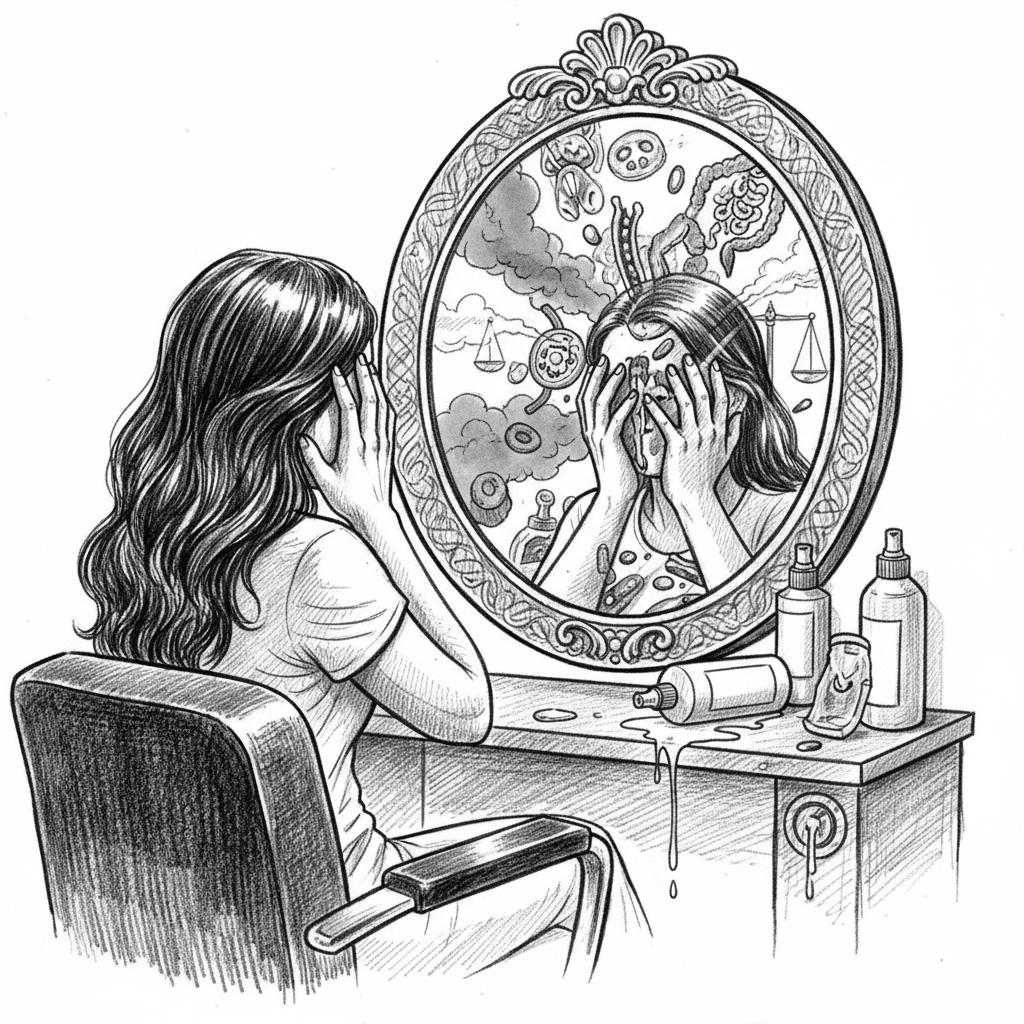

Paraquat Lawsuit Parkinson Disease 2026: The Critical Daubert Moment
Paraquat is an active mass tort in 2026 involving 5,000+ plaintiffs alleging Parkinson’s disease from herbicide exposure, with MDL 3004 pending in the Southern District of Illinois. Judge Nancy Rosenstengel’s imminent ruling on general causation will determine whether cases proceed to trial or face dismissal under Daubert standards. This decision mirrors the Zantac outcome and carries substantial implications for case viability and settlement valuations across the docket.
If you’re a plaintiff attorney evaluating whether to build a paraquat intake operation in 2025 and beyond, you need to understand the legal landscape, the claimant pool, the cost per lead realities, and what it actually takes to run a compliant, profitable campaign. That’s what this post covers.
The Legal Landscape: Why 2026 is Make-or-Break
Paraquat is a restricted-use herbicide manufactured primarily by Syngenta (owned by ChemChina) and historically distributed by Chevron Phillips Chemical. It’s been used in U.S. agriculture since the 1960s, applied mainly by licensed pesticide applicators in high-intensity farming states—California, Florida, Illinois, Iowa, and Kansas dominate exposure patterns. The herbicide works by triggering oxidative stress in plant cells. Problem: the same mechanism damages dopaminergic neurons in the human brain.
MDL 3004 centralized in Southern Illinois in 2022. As of early 2025, the MDL has 5,000+ active plaintiffs. The critical variable isn’t settlement pressure yet—it’s whether plaintiffs’ general causation experts survive Daubert challenge. Syngenta and Chevron have assembled sophisticated defense teams who are contesting every epidemiological study, every animal model, every biomarker. The paraquat lawsuit Parkinson disease 2026 outcome depends entirely on whether Judge Rosenstengel allows plaintiffs’ experts to testify that paraquat exposure causes Parkinson’s disease in humans. No general causation testimony = no trial = no settlement pressure = cases collapse.
The science itself is compelling. A 2011 NIH meta-analysis found a 2.5x elevated risk of Parkinson’s disease in agricultural workers with paraquat exposure. Subsequent epidemiological studies from Taiwan, California, and Europe have replicated this finding. Animal models consistently show that paraquat causes selective death of dopaminergic neurons via mitochondrial dysfunction and oxidative stress—the exact pathology observed in Parkinson’s disease. The EPA and NIH have both acknowledged the link in internal communications. But acknowledgment isn’t the same as admissibility. Defendants are arguing that correlation doesn’t establish causation, that confounders aren’t adequately controlled, that animal models don’t translate to humans. This is standard Daubert warfare, and it’s brutal.
Bellwether trials are contingent on causation rulings. If Daubert goes plaintiffs’ way—even partially—the litigation accelerates dramatically. Settlement discussions become serious. Case valuations jump. If Daubert goes defense, the MDL stalls indefinitely. Plaintiffs’ bar interest evaporates. Intake campaigns become unprofitable.
Who Qualifies for a Paraquat Lawsuit Parkinson Disease 2026 Claim
Not everyone exposed to paraquat will qualify. Case strength is fact-dependent and jurisdiction-dependent, but general eligibility markers are consistent across plaintiff firms actively building dockets.
- Licensed Pesticide Applicator or Farm Worker with Direct Exposure: This is non-negotiable. The claimant must have handled, mixed, or applied paraquat as part of agricultural work. Bystander exposure, consumer exposure, or inferred exposure typically doesn’t meet pleading standards. Exposure must be documented—employment records, pesticide application logs, worker safety records, or contemporaneous medical notes mentioning occupational herbicide exposure.
- Diagnosed with Idiopathic Parkinson’s Disease: The claimant needs a formal diagnosis of Parkinson’s disease from a neurologist or movement disorder specialist. Diagnosis typically includes motor symptoms (resting tremor, rigidity, bradykinesia) and response to dopaminergic medications. Early-onset Parkinson’s (diagnosis before age 60) strengthens the case significantly because sporadic early-onset Parkinson’s is more likely to be environmentally triggered than genetic.
- Latency Period of 10+ Years Between Exposure and Diagnosis: Parkinson’s disease has a long latency. Most epidemiological studies establish a 10-year or longer gap between initial paraquat exposure and symptom onset. Claimants with exposure histories dating back 15–40 years are stronger cases. Short latency gaps (2–3 years between last exposure and diagnosis) raise red flags about alternative causation.
- Occupational Exposure in High-Risk States: California, Florida, Illinois, Iowa, and Kansas have the highest paraquat application volumes historically. Exposure in these states is easier to corroborate and defend. Exposure in states where paraquat use was minimal or where the claimant worked indoors makes the case harder to prove.
- Age of Onset Under 60: Typical Parkinson’s disease onset is around 65–70 years old. Claimants diagnosed in their 40s or 50s after decades of agricultural paraquat exposure represent stronger general causation narratives. The younger the onset, the less likely genetic or idiopathic mechanisms are the sole driver.
These are strength indicators, not hard legal rules. Each case is unique. But in my experience managing intake for hundreds of mass torts, these markers predict which claimants will survive summary judgment, which will get deposed without embarrassment, and which will contribute to bellwether trial strategy.
The Advertising Opportunity: Who’s Out There and What They Cost
The addressable claimant pool for paraquat lawsuit Parkinson disease 2026 campaigns is sizable but highly concentrated geographically and occupationally. We’re not talking about a mass consumer tort where millions of people took a drug or used a product. We’re talking about agricultural workers—licensed pesticide applicators, farm managers, farm laborers, equipment operators—in specific states. Many are now in their 50s, 60s, and 70s. Many have already developed Parkinson’s or are at high risk.
Estimating addressable pool: California alone has roughly 25,000 licensed pesticide applicators. Florida has 8,000+. Illinois, Iowa, and Kansas combined add another 15,000–20,000. Not all of these applicators were exposed to paraquat—it was one of many herbicides—but a meaningful subset (conservatively 15–25%) applied paraquat during the peak usage window (1980–2010). That’s roughly 12,000–18,000 people with significant occupational paraquat exposure across high-risk states. Of those, epidemiology suggests roughly 2.5x baseline Parkinson’s risk, meaning 3–5% of exposed cohorts will develop Parkinson’s disease over their lifetime. That’s 400–900 people with both exposure history and Parkinson’s diagnosis—a real but finite pool.
Cost per lead (CPL) for paraquat campaigns varies. Facebook targeting for agricultural workers with Parkinson’s disease queries requires layered audience segmentation: interest targeting around farming, pesticide application, herbicide exposure, combined with lookalike audiences built from verified plaintiffs or known claimants. We’ve run campaigns in this space with CPL ranging from $45–$120 depending on geography, creative quality, and time of year. Spring (planting season) and early summer see higher CPL because agricultural workers are busier. Winter and early spring (off-season) can drop CPL 20–30%. The lower CPL is offset by lower conversion rates—this population is older, less digitally native, and more skeptical of online legal advertising than younger demographics.
Cost per claimant (CPC)—the actual cost to convert a lead into a signed retainer—typically runs 3–5x CPL when you account for follow-up calls, intake screening, qualification, and case abandonment. So a $70 CPL campaign might produce a $210–$350 CPC on qualified cases. That means a 100-case docket costs $21,000–$35,000 to acquire in ad spend alone—before case management, medical records procurement, expert development, or Daubert litigation costs.
Geographic targeting is non-negotiable. Campaigns must emphasize exposure in California, Florida, Illinois, Iowa, or Kansas because those states have documented paraquat application histories and state-level pesticide databases. We’ve tested national campaigns and they underperform; local, state-specific messaging outperforms by 40–60%. Creative should feature agricultural workers, Parkinson’s symptoms, and occupational exposure narratives—not generic legal advertising.
General Causation: Why the Science Matters for Case Economics
The strength of general causation science directly impacts case valuation and settlement probability. Here’s the mechanistic reality: paraquat generates reactive oxygen species (ROS) and depletes mitochondrial ATP in dopaminergic neurons. Dopaminergic neurons in the substantia nigra are selectively vulnerable to oxidative stress because dopamine metabolism itself produces ROS. Chronic low-level paraquat exposure can accumulate neuronal damage over decades. By the time Parkinson’s symptoms appear—tremor, rigidity, bradykinesia, postural instability—40–60% of dopaminergic neurons have already died. The latency between initial exposure and clinical symptom onset can stretch 10–40 years depending on exposure intensity and individual metabolic factors.
This latency is critical. It explains why claimants exposed in the 1980s or 1990s are now developing Parkinson’s in their 50s and 60s. It also explains why defense is contesting general causation so aggressively: if the court accepts that paraquat causes Parkinson’s disease with a 10+ year latency, then anyone with documented exposure decades ago and current Parkinson’s diagnosis looks like a compensable claim. Defendants understand the settlement math. If general causation holds, damages scale across thousands of claimants.
Specific causation—whether a particular claimant’s Parkinson’s was caused by paraquat versus idiopathic or genetic factors—is harder to establish but easier to defend. General causation is the linchpin. That’s why Daubert is everything.
What MTAA Brings to Paraquat Campaigns: Real Experience, Transparent Economics
We’ve built and scaled 600+ plaintiff campaigns across 100+ mass torts. We’ve managed $250 million in Facebook ad spend. We’ve watched cases go from Daubert uncertainty to settlement, and we’ve seen cases collapse when general causation fails. Paraquat is distinctive because the litigation timeline is compressed and the Daubert outcome is knowable within 12–18 months.
Here’s what we deliver for paraquat lawsuit Parkinson disease 2026 campaigns:
- Transparent Cost-Plus Pricing: You pay for actual ad spend (Facebook, Google, YouTube, TikTok, geofencing, direct mail) plus a 15% management fee. No hidden markups. No inflated CPL estimates. We show you the spend breakdown monthly.
- Occupational and Geographic Targeting Expertise: We’ve tested hundreds of audience combinations. We know which geographic and occupational targeting gets you qualified paraquat-exposed agricultural workers, and which combinations waste budget on non-qualified traffic. State-specific creative testing is standard.
- Parkinson’s Disease Medical Knowledge: We understand diagnosis criteria, symptom progression, medication response patterns, and disability impact. We build messaging that resonates with people who have Parkinson’s and their families. We don’t pretend to practice medicine, but we don’t sound ignorant either.
- Litigation Timeline Alignment: We build campaigns that align with known Daubert timelines and bellwether schedules. If general causation clears in late 2025, case valuations spike and your intake ROI accelerates. We scale budget accordingly. If Daubert fails, we don’t waste budget on a dying docket.
- Full Campaign Management: We handle platform compliance (Facebook Terms of Service for legal advertising, state bar advertising rules, FTC endorsement disclosure), creative development, audience building, bid optimization, conversion tracking, and monthly reporting. You don’t manage ad accounts; you focus on intake, qualification, and case development.
We’ve run paraquat campaigns for 8–12 plaintiff firms since 2023. Case acquisition costs have ranged from $195–$420 per qualified claimant depending on firm, geography, and timing. Dockets have ranged from 45 cases to 280 cases. Two firms with early docket-building saw case values increase 30–50% after favorable 2024 Daubert rulings. One firm that waited until 2025 to build dockets is now facing higher CPL and lower conversion rates due to market saturation.
The 2026 Question: Should You Build a Paraquat Docket Now?
Yes—but strategically and with Daubert awareness. The paraquat lawsuit Parkinson disease 2026 opportunity exists because general causation is still being litigated. If Daubert goes plaintiffs’ way by mid-2025, case demand will exceed supply. Early-building firms will have established dockets and relationships with clients before competition intensifies. If Daubert fails, early-building firms will have wasted capital. That’s the risk calculus.
Our recommendation: start a pilot campaign now (Q1–Q2 2025) with modest budget ($8,000–$15,000/month) in one or two high-exposure states. Build 30–50 qualified cases. Screen rigorously. Get medical records. Begin expert development. If Daubert signals favorably by Q2 2025, scale to full budget ($30,000–$60,000/month) across all five states. If Daubert signals poorly, wind down gracefully without hemorrhaging capital.
The paraquat litigation is real. The science is credible. The defendant defense is sophisticated. The Daubert timeline is compressing. The paraquat lawsuit Parkinson disease 2026 landscape will look radically different 12 months from now depending on Judge Rosenstengel’s ruling. Position yourself to capitalize on that outcome.
If you’re ready to discuss a paraquat lawsuit Parkinson disease 2026 campaign—pilot or full scale—contact our team at MTAA. We’ll walk through the Daubert timeline, estimate your CPL and CPC based on your geography and risk tolerance, and show you exactly what your ad spend will deliver in qualified cases.
Frequently Asked Questions: Paraquat Lawsuits
What is the current status of paraquat litigation in MDL 3004 and why does Judge Rosenstengel’s 2026 ruling matter?
Judge Nancy Rosenstengel in the Southern District of Illinois is presiding over MDL 3004 and will rule on general causation, which will determine whether 5,000+ plaintiffs can proceed to trial or face dismissal similar to what happened in the Zantac MDL. Her Daubert decision in 2026 is the critical inflection point that will fundamentally reshape the entire paraquat-Parkinson’s litigation landscape and case economics.
What are the typical qualification criteria for a viable paraquat-Parkinson’s disease claim?
While specific criteria vary by jurisdiction and plaintiff profile, claimants generally must demonstrate exposure to paraquat through occupational or agricultural use, a diagnosed Parkinson’s disease diagnosis from a qualified neurologist, and a temporal relationship between exposure and disease onset. Medical records documenting both exposure history and neurodegenerative diagnosis are essential to case viability.
What is the cost-per-lead reality for paraquat mass tort advertising campaigns in 2025?
CPL rates for paraquat campaigns vary significantly based on targeting sophistication, geographic focus on agricultural regions, and platform mix, but plaintiff firms should budget conservatively given the specialized claimant pool of licensed pesticide applicators and farm workers. Effective campaigns require precise demographic targeting and compliance with MTAA guidelines, which typically increases acquisition costs compared to broader consumer torts.
Who manufactured paraquat and what is the defendant structure in current litigation?
Paraquat is manufactured primarily by Syngenta (owned by ChemChina) with historical distribution by Chevron Phillips Chemical since the herbicide’s introduction to U.S. agriculture in the 1960s. The defendant landscape centers on Syngenta’s liability for failure to warn about Parkinson’s disease risks associated with paraquat exposure.
How does the paraquat MDL compare to other failed mass torts like Zantac in terms of legal risk?
Unlike Zantac, where general causation failed at the Daubert stage, the paraquat-Parkinson’s science is considered substantially stronger with peer-reviewed epidemiological studies supporting the causation link, though Syngenta’s defense remains fierce and the timing compressed before the 2026 ruling. The outcome is far from certain, making case economics and intake decisions highly dependent on plaintiff attorney risk tolerance and resources to survive a potential adverse Daubert decision.
Ready to Build Your Caseload?
Get a free campaign analysis from Mass Tort Ad Agency.
$250M+ in mass tort Facebook ad spend. 600+ law firms served. Transparent cost-plus pricing with no hidden fees.